
Laser Knowledge Center

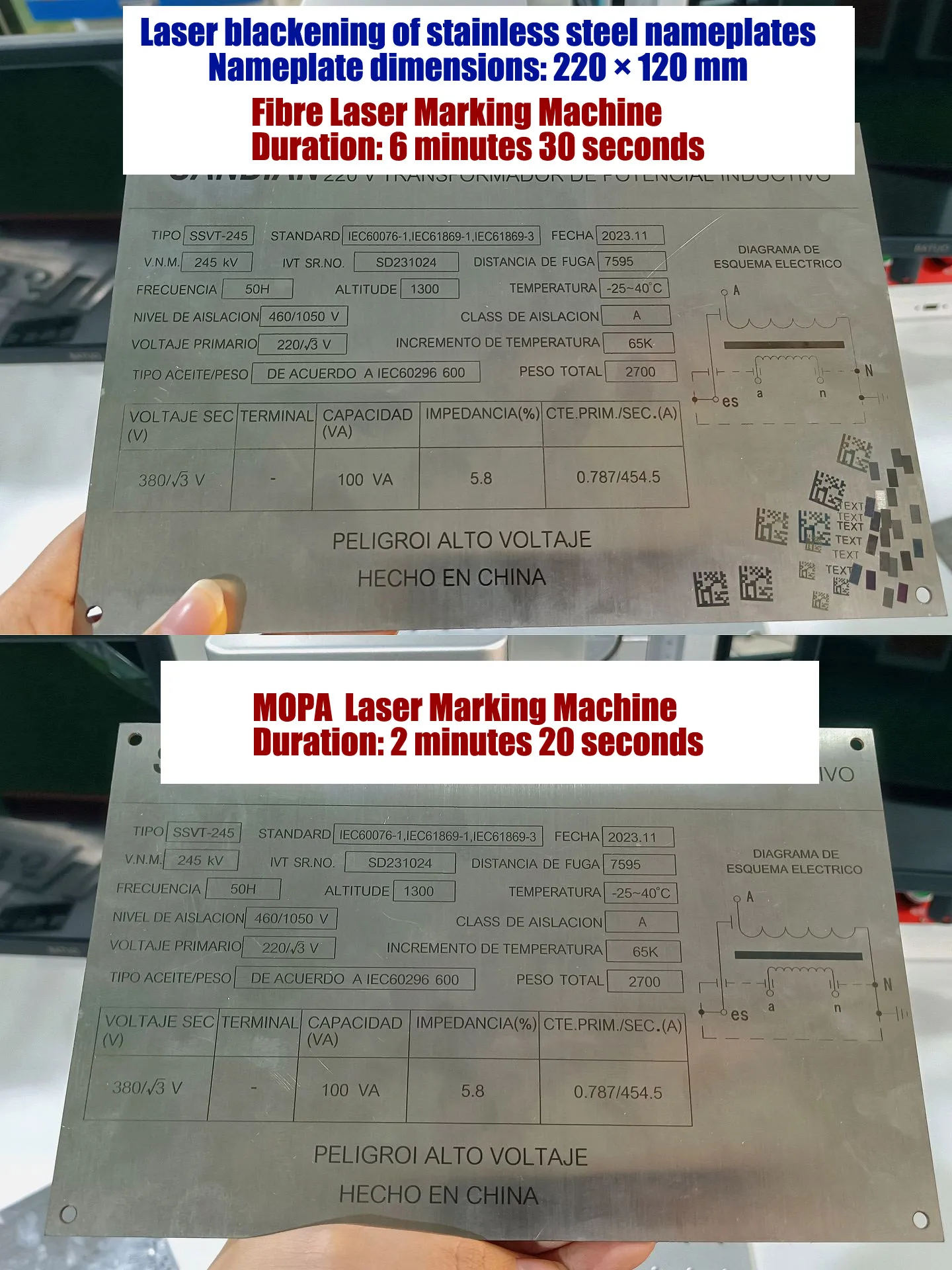
Why Is a MOPA Laser Marking Machine Better for Black Marking on Stainless Steel?
STAINLESS STEEL BLACK MARKING GUIDE A MOPA fiber laser is often a better choice when the job requires a dark, even black mark on stainless steel rather than simple text or a light surface mark. Its adjustable pulse duration gives the operator another way to control how laser energy interacts with the metal surface. That extra control can help develop a more suitable black-marking process, especially for nameplates, instrument panels and traceability codes. However, MOPA is not automatically faster or better on every part. The real decision should come from a side-by-side test using the same stainless steel grade, artwork,…

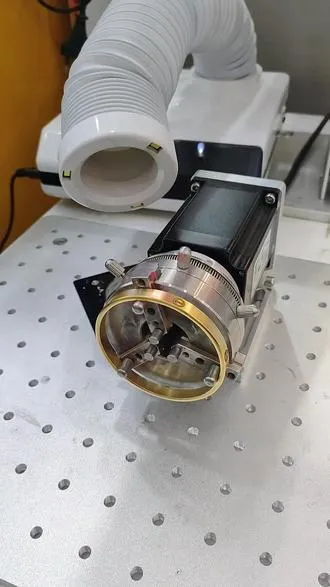
How a Rotary Axis Marks Rings and Cylindrical Metal Parts
ROTARY LASER MARKING TECHNICAL GUIDE How a Rotary Axis Marks Rings and Cylindrical Metal Parts A rotary axis turns a ring, shaft or cylindrical workpiece in a controlled way while the laser marks the exposed surface. The laser controller coordinates the artwork with rotary movement, allowing logos, serial numbers and selected 2D codes to be placed on curved parts. The key is matching the fixture to the workpiece, setting the correct diameter and focus, and checking the marking path before production. A rotary attachment does not automatically solve every curved-surface problem: ring interiors, tapered parts, eccentric workpieces and full-circumference designs…

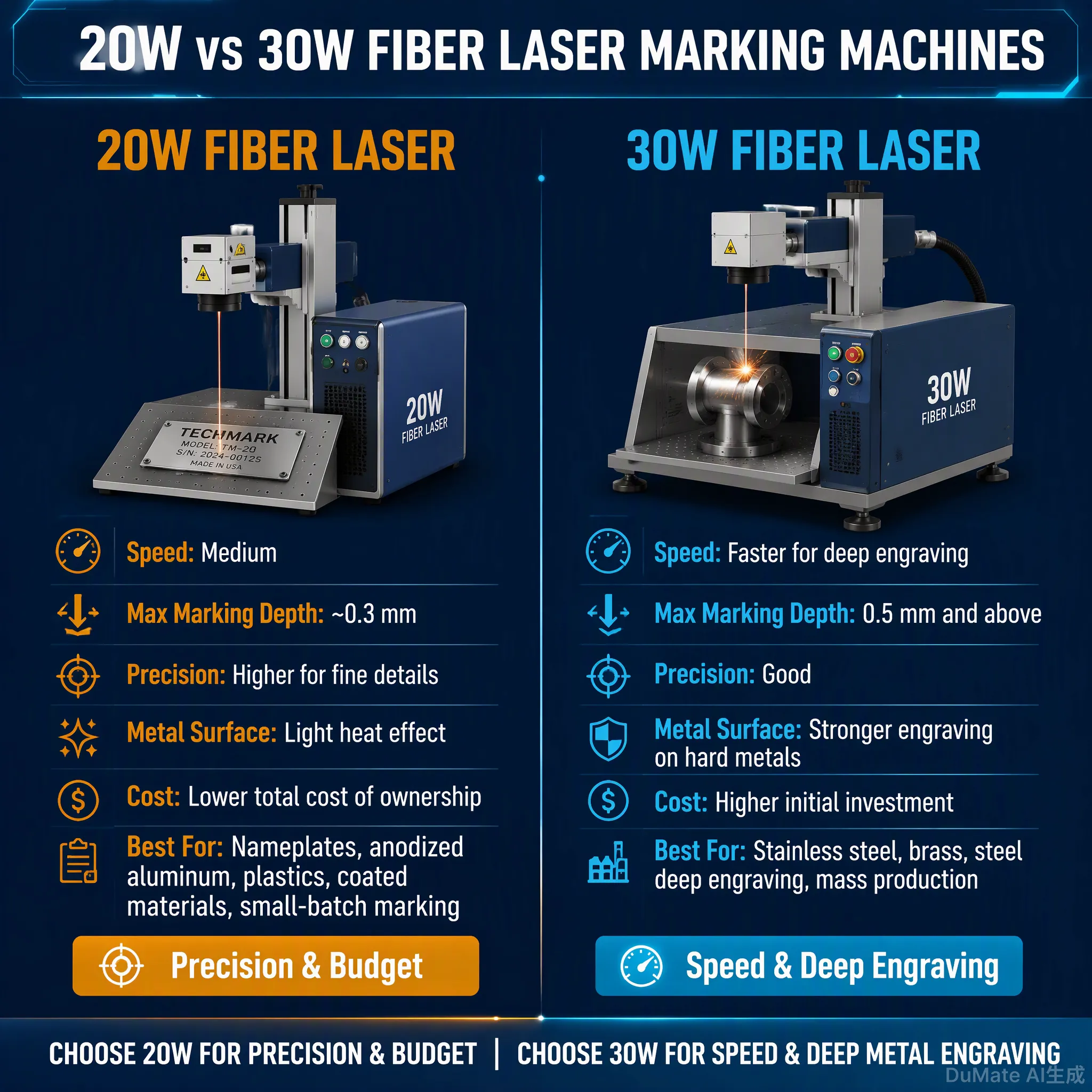
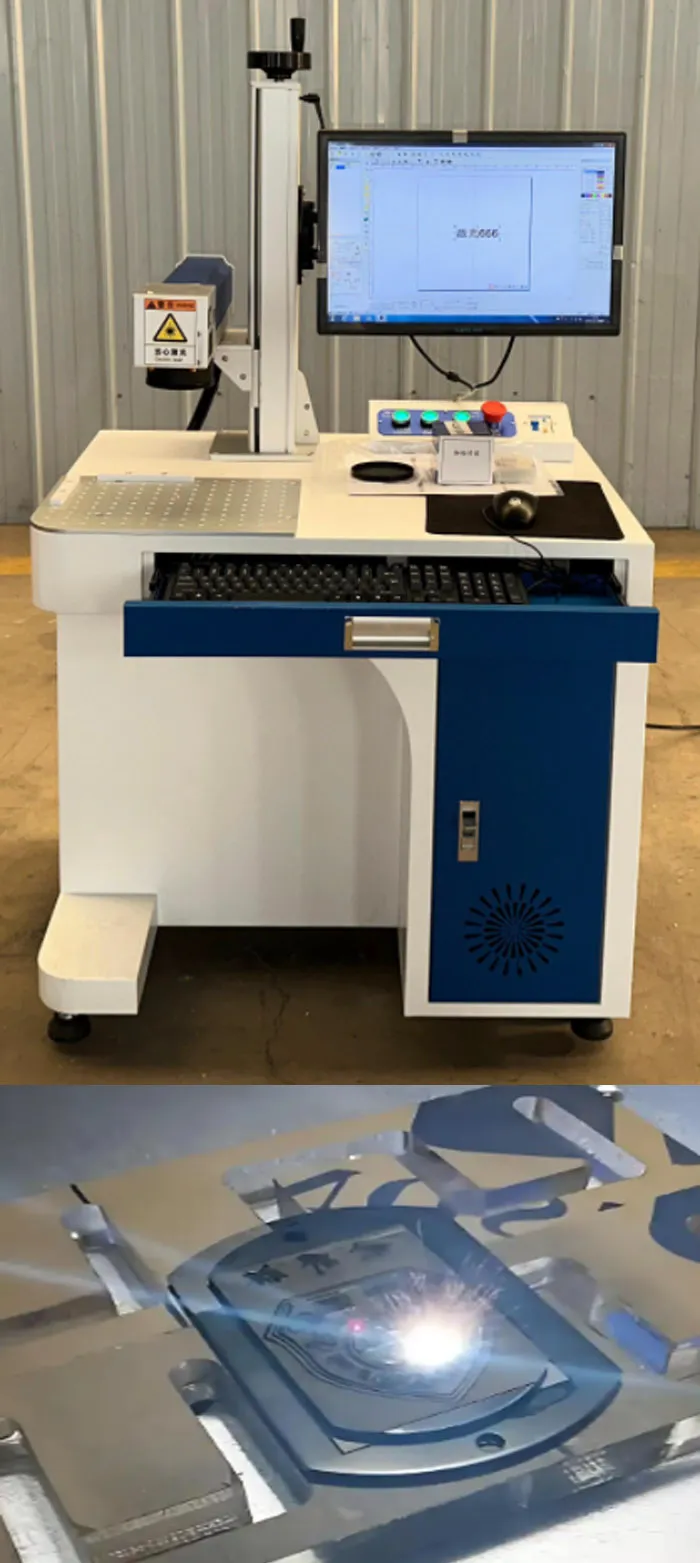
20W vs 30W Fiber Laser Marking Machines: Which Power Fits Your Work?
Practical Fiber Laser Buying Guide 20W vs. 30W Fiber Laser Marking Machines: Which Power Fits Your Work? Choose a 20W fiber laser if you mainly mark serial numbers, QR codes, logos and product identification on metal, and your current production speed is acceptable. Choose 30W when you need more processing capacity, run repeated batches throughout the day, or want more flexibility for light engraving and tighter cycle times. A 30W machine has 50% more rated average laser power than a 20W machine, but that does not mean every job will finish 50% faster. Material, marking artwork, pulse settings, hatch spacing,…

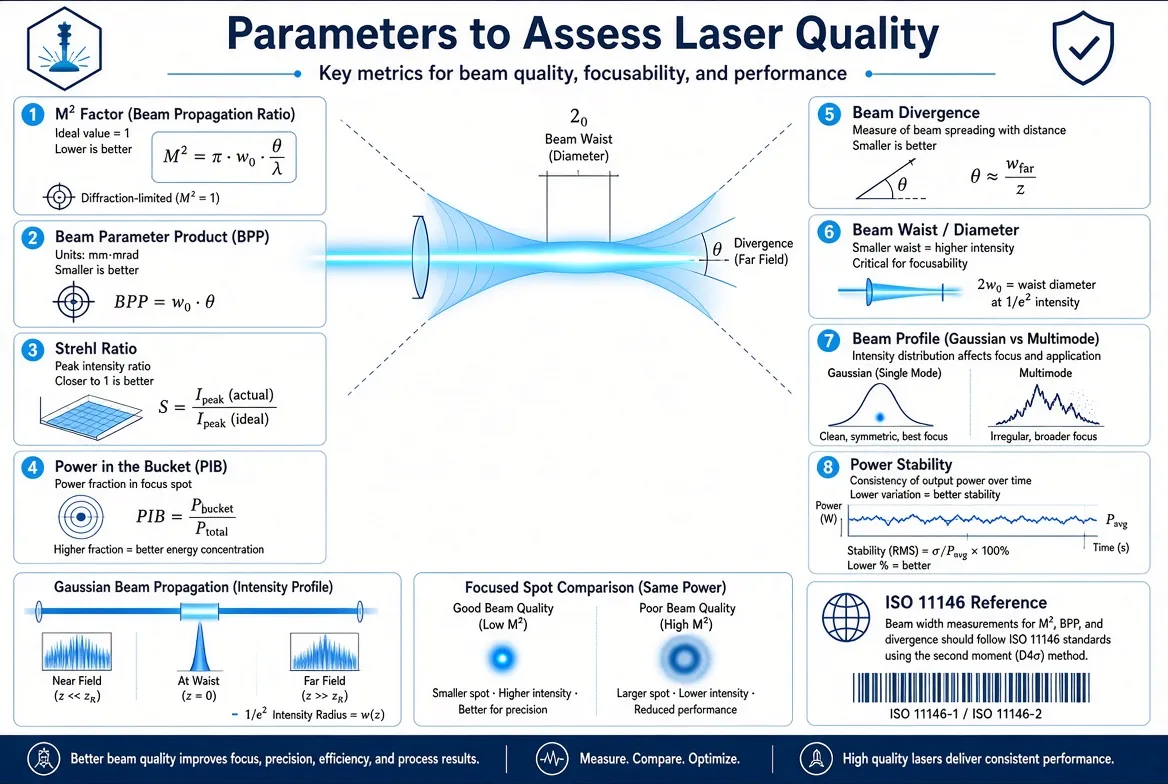
What parameters can be used to assess the quality of a laser?
We have previously discussed many laser application scenarios, but there is one more fundamental question that has never been systematically addressed: how does one determine whether a laser is actually good or not? Many people buying lasers focus solely on power—how many watts or how much energy it delivers. However, power is merely a ‘nominal value’, much like the top speed displayed on a car’s dashboard; it does not indicate whether the car drives smoothly or is fuel-efficient in practice. What truly measures the quality of a laser is a set of interrelated parameters. 1. Power Stability: The ‘Heartbeat’ of…

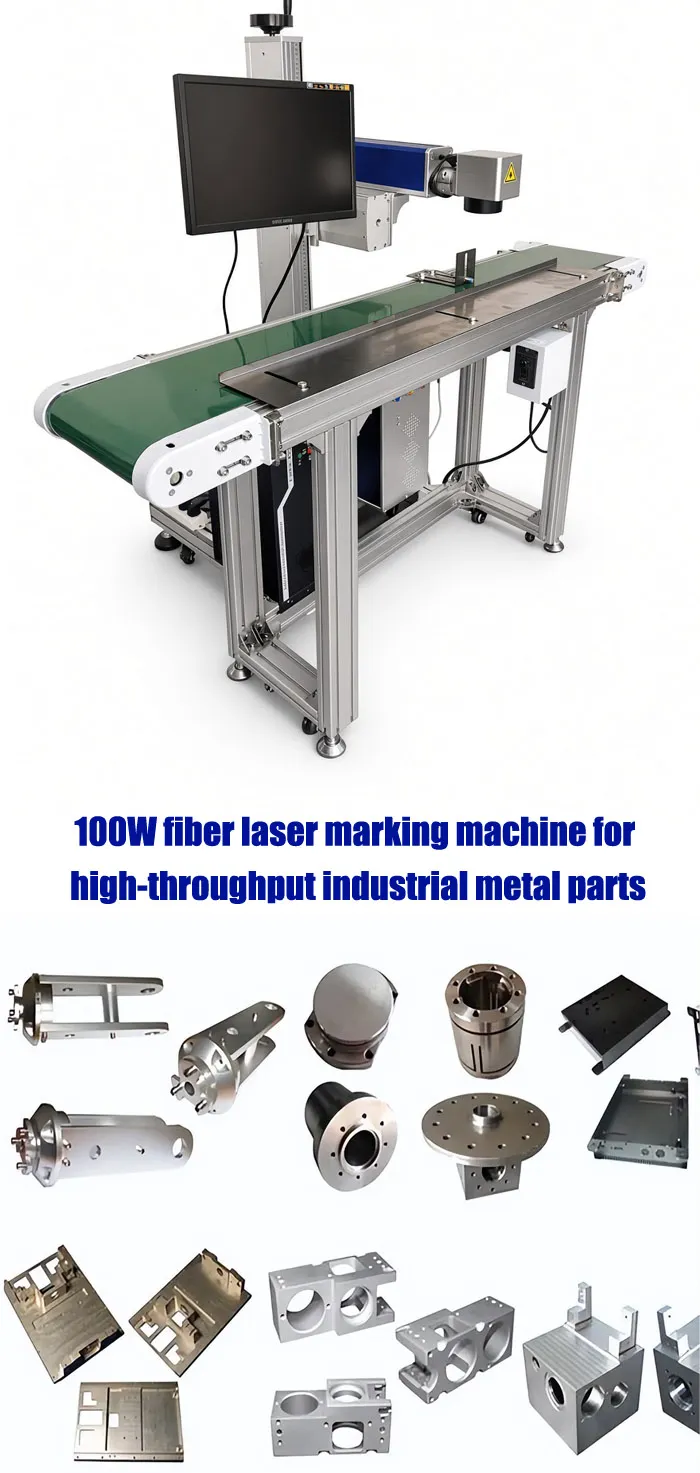
100W Fiber Laser Marking Machines for High-Throughput Industrial Parts
High-Throughput Industrial Laser Marking 100W Fiber Laser Marking Machines for High-Throughput Industrial Parts A 100W fiber laser marking machine makes sense when your production line needs more than basic identification: higher material-removal capacity, deeper engraving, shorter processing time, or repeated marking of large batches of metal parts. It is not automatically the best choice for every factory. If your job is only a serial number, QR code or logo, a 20W or 30W machine may already be sufficient. For high-throughput work, the better question is not “How powerful is the laser?” but “How many finished parts can the complete system…

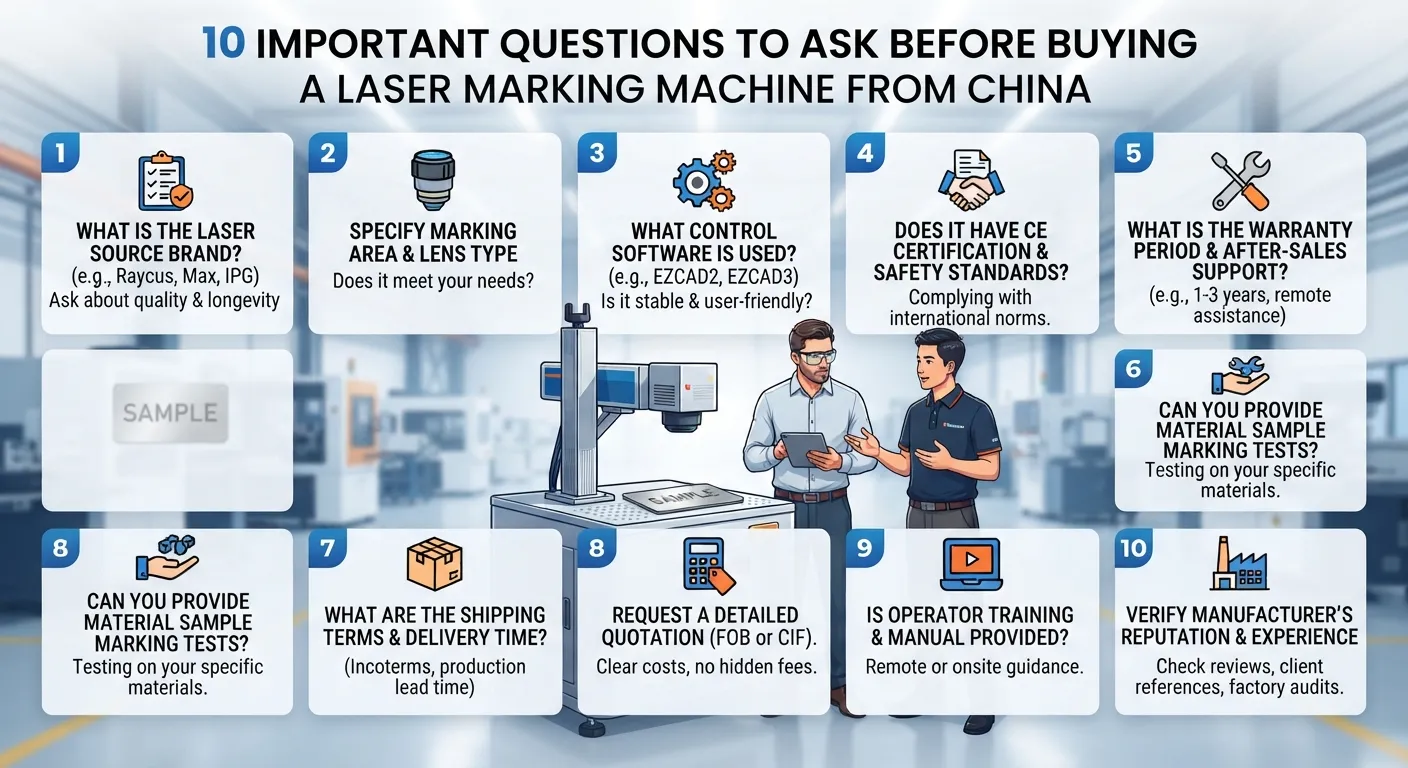
How to Evaluate Chinese Laser Marking Machine Manufacturers: 10 Questions Buyers Should Ask
Buyer’s Guide for Global Industrial Buyers How to Evaluate Chinese Laser Marking Machine Manufacturers: 10 Questions Buyers Should Ask If you are buying a laser marking machine from China, do not choose the supplier only because it has a low price, a large factory, or a famous laser source. Ask ten practical questions: who actually builds the machine, what components are installed, can they test your real material, how is the machine inspected, what happens if something fails after delivery, and what exactly is included in the quotation? A good supplier should be able to show configuration details, marking samples,…

When to Choose a 50W Fiber Laser for Deep Metal Engraving
50W FIBER LASER DEEP ENGRAVING GUIDE When to Choose a 50W Fiber Laser for Deep Metal Engraving Choose a 50W fiber laser when your metal-marking job has a real reason to need more processing capacity: deeper engraving, more material removal, shorter cycle times or repeated industrial production. If you only need serial numbers, QR codes, logos or normal surface marking, a 20W or 30W machine may already be enough. A 50W system does not guarantee a specific engraving depth because material type, hardness, pulse characteristics, scan speed, hatch strategy, number of passes and focus all affect the result. The right…
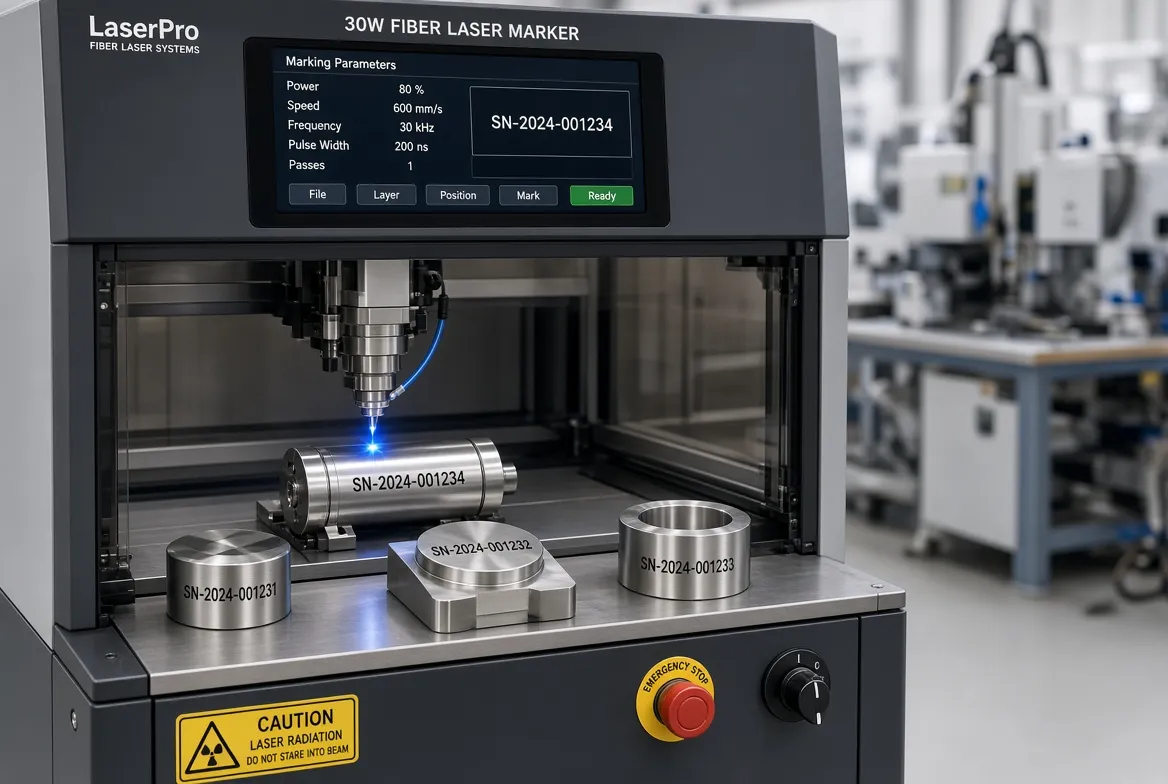
30W Fiber Laser Marking for Serial Numbers: Speed, Contrast, and Setup
30W FIBER LASER • SERIAL NUMBER MARKING 30W Fiber Laser Marking for Serial Numbers A 30W fiber laser is a practical choice when serial-number marking has to be permanent, readable, repeatable and fast enough for regular production. It is commonly used for serial numbers, QR codes, Data Matrix codes, part numbers and logos on stainless steel, aluminum, brass and other suitable metals. The important point is that 30W does not automatically mean 7,000 mm/s production speed. Actual cycle time depends on the code, material, marking parameters, lens, fixture and loading process. For most customers, I would start with the actual…

Is a 20W Fiber Laser Marking Machine Enough for Stainless Steel?
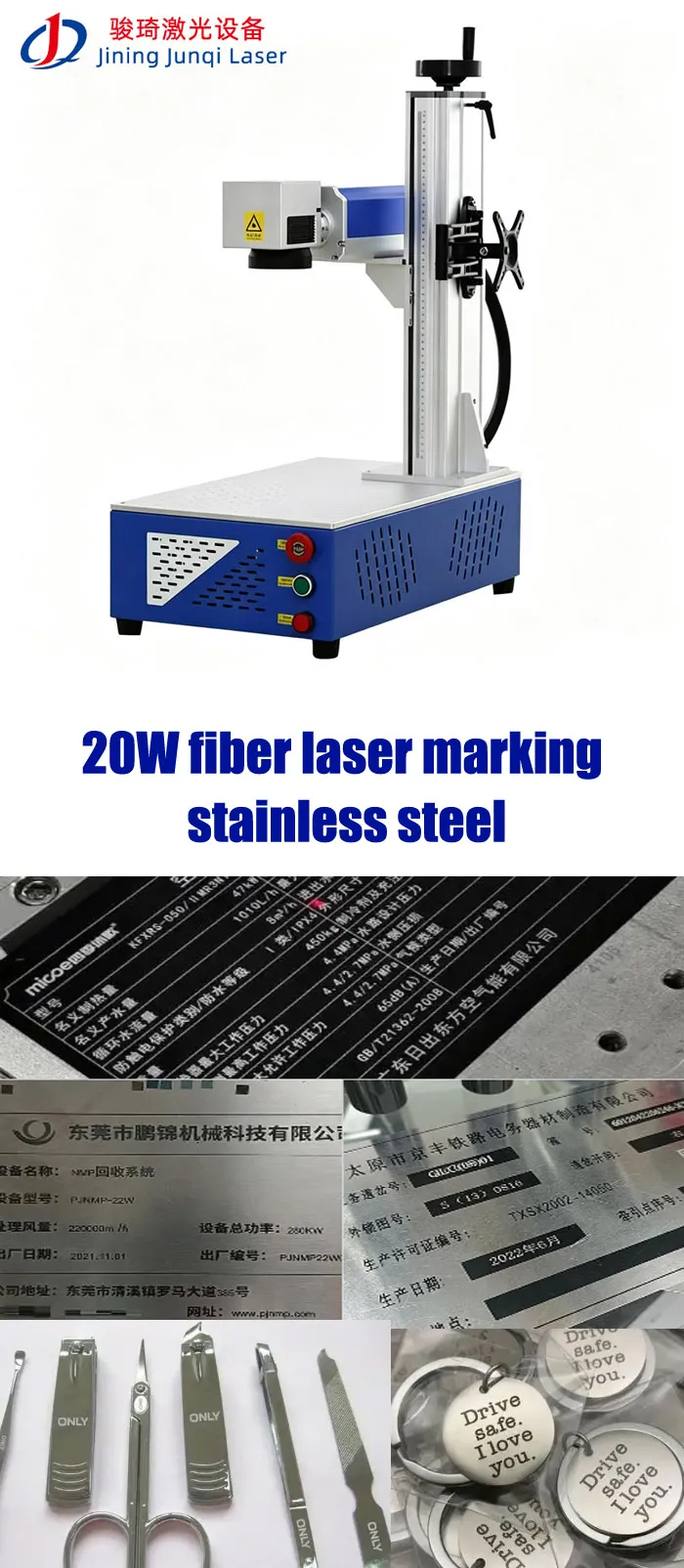
20W FIBER LASER • STAINLESS STEEL Is a 20W Fiber Laser Marking Machine Enough for Stainless Steel? Yes — for many stainless-steel marking jobs, a 20W fiber laser is enough. If your requirement is serial numbers, QR codes, Data Matrix codes, logos, text, nameplates or permanent identification on stainless steel, 20W is often a practical starting point. It can also produce black annealed marks when the material and process are suitable. Where 20W starts to become limiting is deep engraving, very short cycle times, heavy material removal or large-volume production. In those cases, I would test 30W or 50W rather…

How to Choose a Fiber Laser Marker for Small Metal Parts?
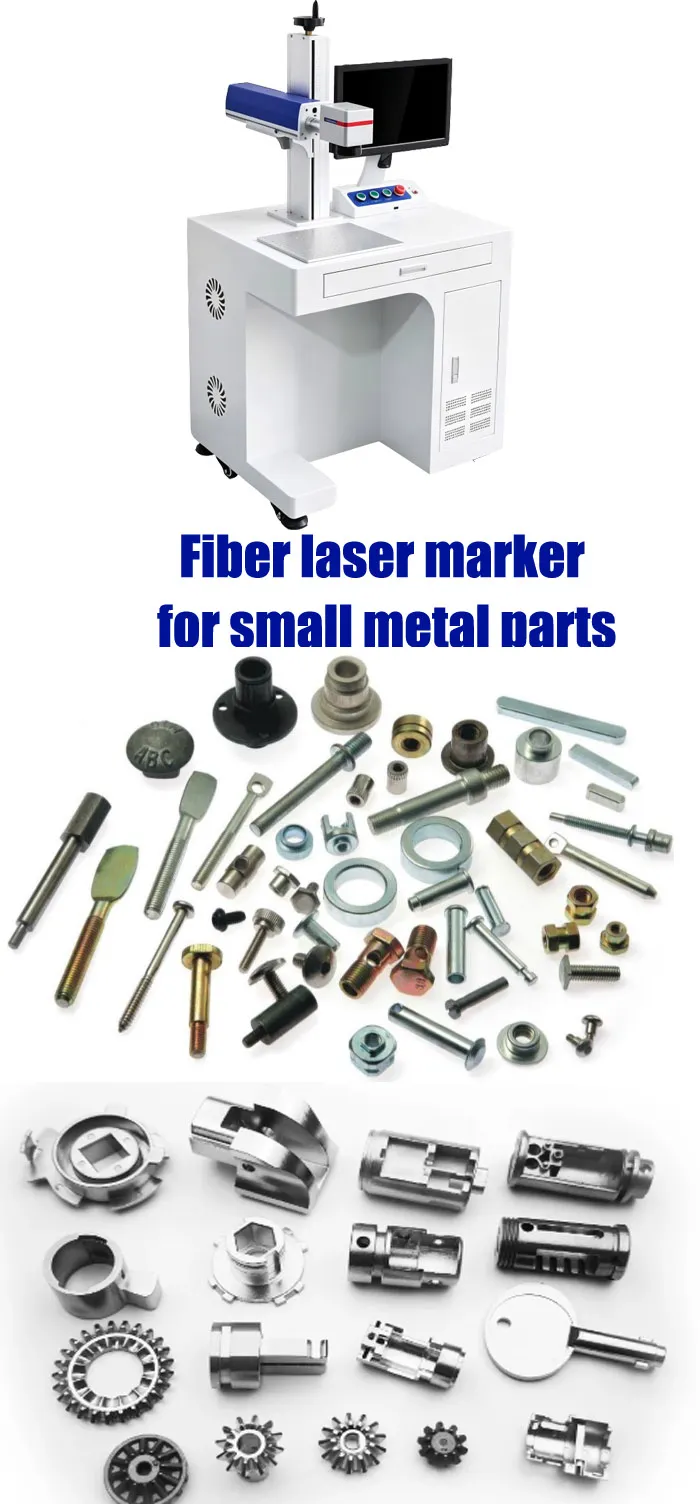
SMALL METAL PARTS • FIBER LASER MARKING For small metal parts, I would not choose a fiber laser marker by wattage alone. Start with the actual part, marking size, material, required contrast, cycle time and production volume. For serial numbers, QR codes, logos and basic traceability, a 20W system can often be enough. If you mark hundreds or thousands of parts every day, 30W gives you more processing headroom. If you need deeper engraving or shorter cycle times, 50W becomes more relevant. Then decide whether you really need a rotary axis, vision camera, enclosure or automation. The safest buying method…

Can markings made by a laser marking machine pass salt spray and high-temperature tests?
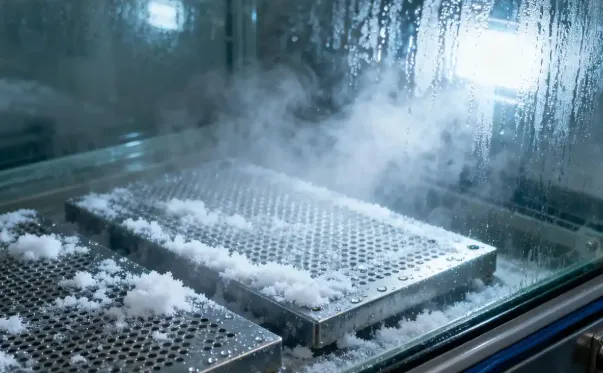
Salt Spray Compliance Analysis: Laser Marking vs Inkjet Coding This technical guide compares laser marking and inkjet coding under salt spray testing conditions. It covers corrosion mechanisms, marking durability, substrate compatibility, post-treatment processes, salt spray performance at different exposure times, and process selection for different industrial environments. Technical Overview Applicable Standards: GB/T 10125-2021 Neutral Salt Spray Test (NSS), Acetic Acid Salt Spray Test (AASS), and Copper-Accelerated Acetic Acid Salt Spray Test (CASS). Core Acceptance Criteria: The substrate must show no red rust, white rust, pitting corrosion, or corrosion propagation. Marking characters must remain complete and clear, without blurring, peeling, bleeding…

Can Laser Marking on Medical Equipment Support UDI, DataMatrix & High-Contrast Marking?
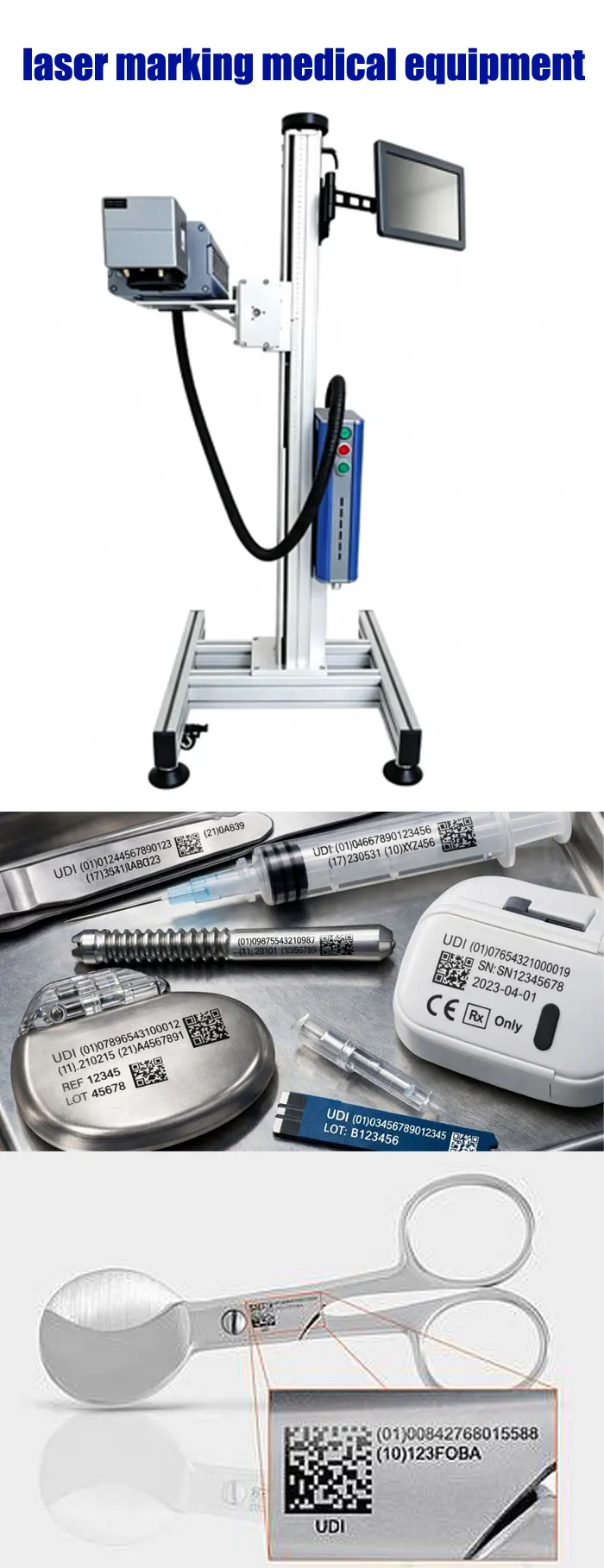
MEDICAL DEVICE TRACEABILITY · UDI · DATAMATRIX Yes, laser marking can support UDI and DataMatrix marking on many medical devices, but the laser itself does not make a device UDI-compliant. The practical question is whether the selected laser, wavelength, lens, marking parameters and material can produce a permanent, machine-readable and human-readable mark on the actual device. Fiber or MOPA is commonly evaluated for stainless steel and titanium instruments, while UV can be worth testing on suitable medical plastics and heat-sensitive components. For UDI projects, we recommend testing the actual part and validating code readability before finalizing the machine configuration. Request…
Laser Knowledge Center
Explore professional knowledge about laser marking machines, laser engraving technology, material processing, industrial applications and machine selection guides.
Get Expert Laser AdviceProfessional Laser Marking Knowledge Center
Laser marking technology is widely used in manufacturing industries including automotive, electronics, hardware, medical, battery and consumer products.
Choosing the correct laser machine requires understanding different factors such as:
- Material characteristics
- Laser wavelength
- Processing requirements
- Marking speed
- Production environment
JQ Laser Knowledge Center provides practical technical information to help manufacturers select suitable laser marking solutions and improve production efficiency.