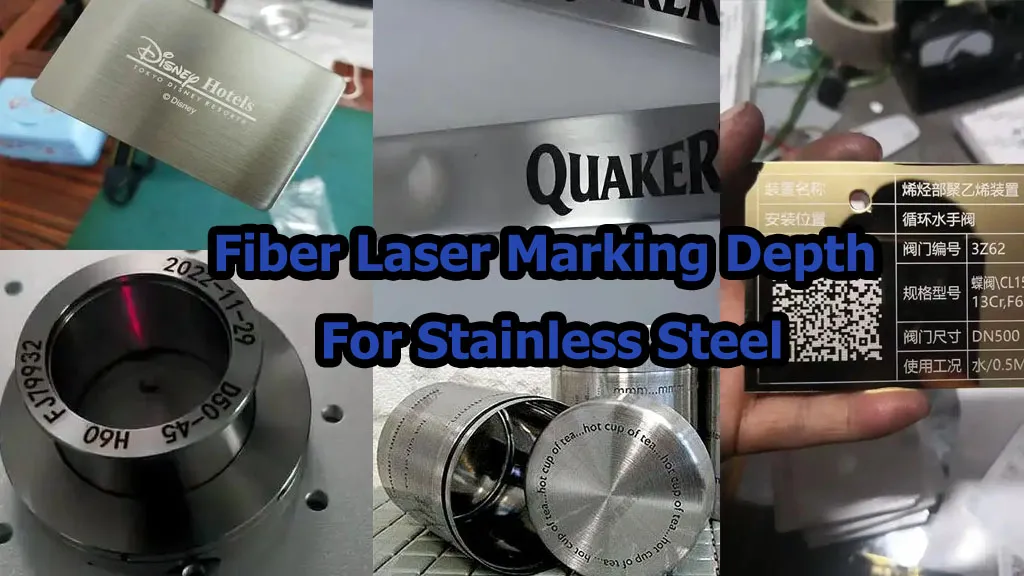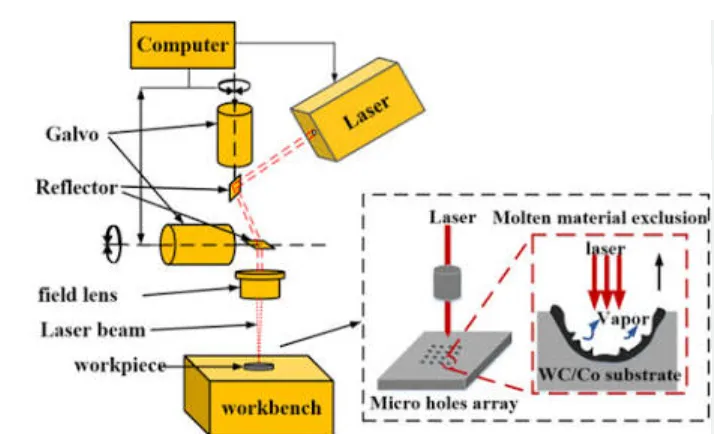
100W Fiber Laser Marking Machines for High-Throughput Industrial Parts
A 100W fiber laser marking machine makes sense when your production line needs more than basic identification: higher material-removal capacity, deeper engraving, shorter processing time, or repeated marking of large batches of metal parts. It is not automatically the best choice for every factory. If your job is only a serial number, QR code or logo, a 20W or 30W machine may already be sufficient. For high-throughput work, the better question is not “How powerful is the laser?” but “How many finished parts can the complete system process per hour while maintaining the required mark quality?” That answer should come from a real sample test using your material, marking file, fixture and target cycle time.

I have worked with laser marking applications for more than 10 years, including metal marking, industrial identification, automation marking and application testing. When a customer asks me whether they need 100W, I normally do not answer immediately. I first ask what material they are marking, what result they need, how many parts they produce and how long one part is allowed to stay in the marking station.
Table of Contents
When Does a 100W Fiber Laser Actually Make Sense?
In my experience, 100W becomes worth considering when a factory is losing production time because a lower-power laser needs too many passes, cannot remove enough material in the required cycle time, or has to run close to its practical limit all day. Typical applications include deep identification on steel parts, heavy-duty tools, automotive components, industrial machine parts, molds, large batches of metal components and automated traceability lines. A 100W laser can provide more processing capacity, but it does not automatically double production speed. Galvo speed, pulse characteristics, lens size, hatch strategy, workpiece positioning and loading time still matter. If your requirement is only a small serial number or QR code, 100W may simply be unnecessary capital.
My short answer as a supplier engineer:
Buy 100W when you have a measurable production problem that 20W, 30W or 50W cannot solve economically. Do not buy 100W simply because “more watts must be better.”
What Is a 100W Fiber Laser Marking Machine Designed to Do?
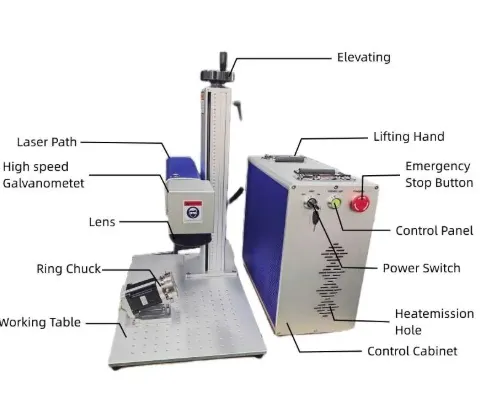
A 100W pulsed fiber laser is still fundamentally a 1064nm fiber laser marking system. The difference is the available laser power and the resulting process window for demanding applications.
In practical production, that extra power can be useful for:
- Deeper engraving of metal parts
- Higher material removal per pass
- Shorter processing time for demanding marks
- Repeated batch production
- Large quantities of industrial identification marks
- Heavy-duty steel and stainless-steel components
- Tooling and industrial hardware
- Production-line traceability
- Large or more complex marking files
But there is an important distinction between laser power and production throughput.
If your operator spends 20 seconds positioning a part and only 2 seconds actually marking it, increasing laser power may not solve the real bottleneck.
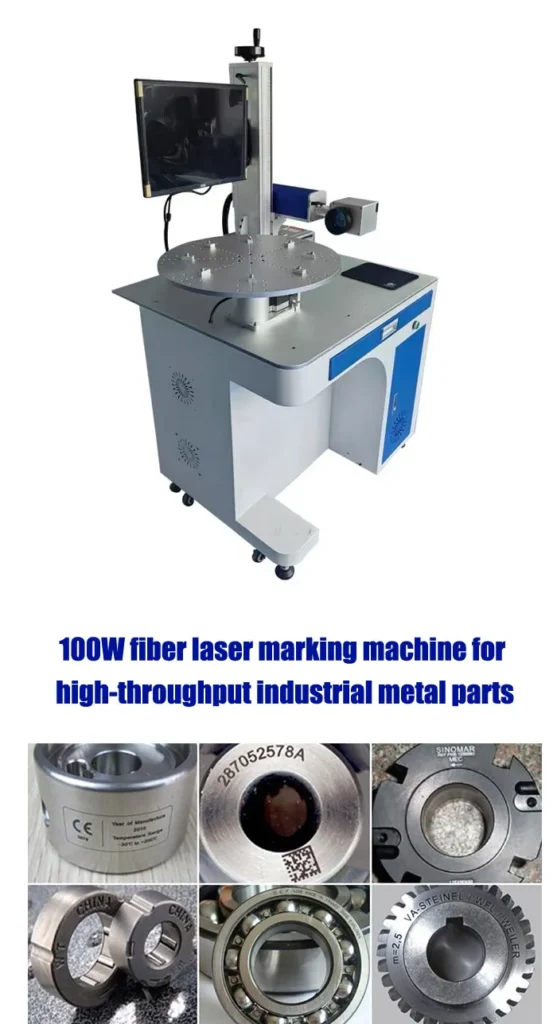
100W Fiber Laser Marking Machine: Real Reference Parameters
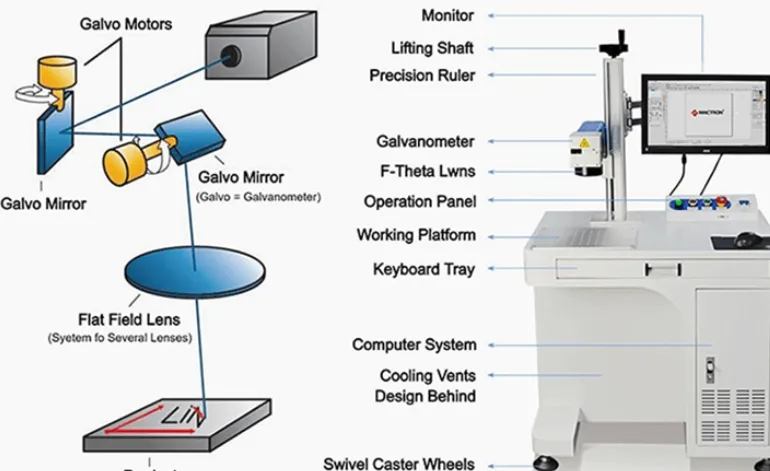
The following table is based on the current JQ Laser 100W product configuration and the more conservative production references used across its current fiber/automation pages. The final configuration should always be confirmed against the quotation and sample-test record.
| Parameter | 100W Reference | Buyer Should Confirm |
|---|---|---|
| Laser Type | High-power pulsed fiber laser | Exact source technology and model |
| Laser Power | 100W | Rated output and source model |
| Wavelength | 1064nm | Confirm for the actual material |
| Laser Source Lifetime | 100,000+ hours reference | Manufacturer and warranty conditions |
| Typical Marking Field | 110 × 110mm | Actual required marking size |
| Optional Field | 175 × 175 / 200 × 200 / 300 × 300mm | Lens and working distance |
| Reference Scanning Speed | Up to approximately 7,000mm/s reference | Actual cycle time on your workpiece |
| Cooling | Industrial air cooling / configuration dependent | Exact laser-source cooling requirement |
| Positioning | Red-light positioning | Actual fixture and positioning system |
| Controller | JCZ-compatible configuration | Exact control card and software |
| Software | EZCAD-compatible configuration | Version and required functions |
Note: specifications can vary according to laser source, lens, scanner, cooling, automation and application requirements. The final purchase specification should be stated on the quotation.
100W vs 20W, 30W and 50W: Which One Should You Buy?
This is the question I hear most often.
My answer is simple: start from the job, not the wattage.
| Power | Typical Use | When It Makes Sense | When It May Be Overkill |
|---|---|---|---|
| 20W | Serial numbers, logos, QR codes, normal metal marking | Small batches and standard identification | Deep engraving and very high production volume |
| 30W | General industrial metal marking | Balanced production and marking capability | Heavy deep engraving or demanding throughput |
| 50W | Faster metal marking, deeper engraving | Higher production and deeper material removal | Simple low-volume identification |
| 100W | High-throughput, deep engraving, demanding industrial parts | High production load and material removal requirements | Simple serial numbers with low production volume |
For a normal serial number, there is no prize for using 100W.
If a 30W machine can produce your required mark in 2 seconds and meets your production target, spending more on 100W may not improve your business.
Calculate Throughput Before Buying 100W
Before you ask for a quotation, calculate the production requirement.
But actual cycle time should include more than laser exposure time.
- Part loading
- Positioning
- Laser marking
- Rotary movement if used
- Inspection
- Part unloading
- Data transfer
For example, if the laser takes 2 seconds to mark a part but loading and positioning take another 5 seconds, your production cycle is closer to 7 seconds—not 2 seconds.
This is why I normally recommend testing the complete workflow, not just measuring the laser’s scanning speed.
Materials and Industrial Workpieces Suitable for 100W Fiber Laser Marking
| Material / Part | Typical Application | Why 100W May Help | What Must Be Tested |
|---|---|---|---|
| Carbon steel | Machine parts, tools, shafts, fixtures | Deeper material removal and production capacity | Depth, heat effect and surface condition |
| Stainless steel | Automotive, hardware, medical and industrial parts | Fast marking and deeper engraving where required | Contrast, annealing vs engraving and heat-affected area |
| Aluminum | Housings, machine parts, nameplates | Fast processing of large batches | Anodized layer, contrast and surface finish |
| Brass | Fittings, electrical components, industrial parts | Higher processing capacity | Reflectivity and required mark contrast |
| Copper | Electrical components, busbars, industrial parts | Higher available power can widen the process window | Surface condition and thermal behavior |
| Titanium | Aerospace and medical components | Industrial identification and controlled engraving | Required contrast, depth and heat effect |
| Industrial tools | Saw blades, cutting tools, hand tools | Higher production capacity for repeated marking | Coating, hardness and cycle time |
Where Does a 100W Fiber Laser Make the Most Sense?
1. Automotive and Machinery Components
Automotive and machinery factories often need permanent identification on steel and aluminum components.
Typical content includes:
- Part number
- Serial number
- QR code
- Data Matrix
- Batch number
- Logo
- Production information
If the marking is only a small QR code, 100W may not be necessary. But if the same workstation needs deeper identification, repeated batch production or shorter cycle time, 100W becomes much more interesting.
Automotive Parts Laser Marking →
2. Industrial Tools and Saw Blades
Tools are a good example of why power should be evaluated together with cycle time.
JQ Laser has published a Bosch Netherlands production case involving a 50W fiber laser marking product identification information directly onto metal saw blades, with an actual reported marking cycle of approximately 1 second per blade.
The lesson is important: a 50W machine can already be fast enough for some high-throughput applications.
Therefore, do not assume that every high-volume application requires 100W. Test the actual marking file first.
View laser marking customer cases →
3. Deep Engraving of Metal Components
This is where the 100W configuration can provide a more obvious advantage.
Deep engraving is fundamentally different from surface marking. The laser needs to remove more material, normally through multiple passes and carefully controlled process parameters.
The required depth depends on material hardness, laser parameters, hatch strategy, focus, scan speed and number of passes.
There is no honest universal statement such as “100W can always engrave 2mm.”
If a supplier gives you a fixed depth without testing your material, ask for a sample.
Deep Metal Engraving Laser Solution →
4. High-Volume CNC Machined Parts
CNC factories may have thousands of identical or similar parts that need permanent identification.
Here, the laser is only one part of the system.
The bigger opportunity may be:
- Fixed fixtures
- Multiple-part fixtures
- Automatic positioning
- Rotary marking
- Barcode or QR generation
- PLC integration
- MES or production-data integration
A 100W laser with a poor fixture can still be slower than a 30W laser with a well-designed multi-part fixture.
100W Fiber Laser + Automation: Where the Real Throughput Gains Come From
For high-volume production, I would not evaluate the laser separately from the production system.
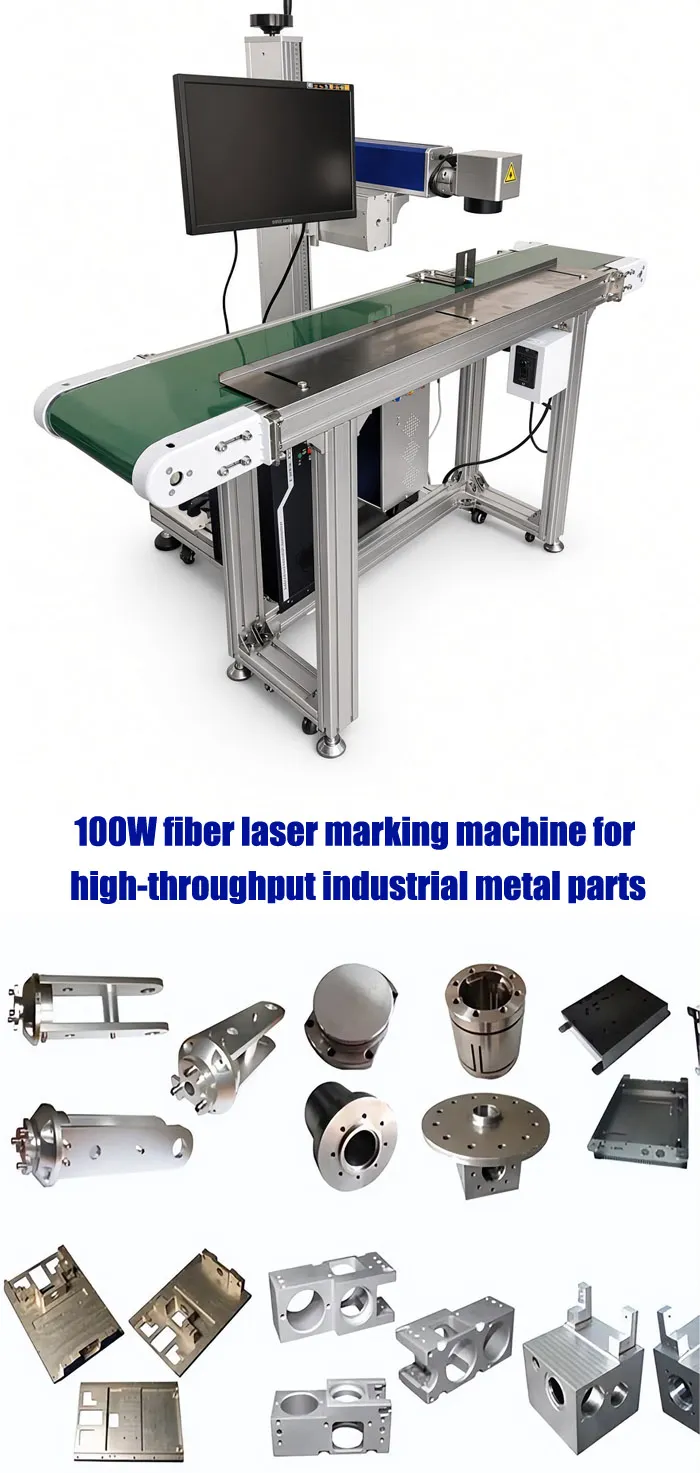
JQ’s current automatic marking platform supports 20W–100W fiber configurations, conveyors, rotary systems, PLC and sensor integration, optional vision, and stop-and-mark or mark-on-the-fly workflows.
Sensor
Detects when the workpiece reaches the marking position.
PLC
Coordinates machine actions and production signals.
Encoder
Useful for controlled movement in mark-on-the-fly applications.
Vision
Can help locate parts or verify the marking when properly engineered.
Fixture
Keeps every part in the correct position and orientation.
The goal is not simply to make the laser faster. The goal is to remove unnecessary waiting between parts.
Explore Automation Marking Solutions →
How 100W Changes the Deep-Engraving Process
Deep engraving is not simply “turn the power to 100%.”
A practical deep-engraving process usually requires several variables to be balanced.
- Power: determines available energy for material removal.
- Speed: controls energy delivered over the surface.
- Frequency / pulse behavior: affects interaction with the material.
- Hatch spacing: determines how densely the surface is processed.
- Hatch angle: can be changed between passes to improve removal consistency.
- Number of passes: determines total material removal.
- Focus: becomes increasingly important as the engraved area gets deeper.
This is why deep engraving should be treated as an application-development project rather than a simple machine purchase.
Common Production Problems
| Problem | Don’t Do This | Better Solution |
|---|---|---|
| Marking takes too long | Immediately buy a larger laser | Measure laser time, positioning time and loading time separately |
| Engraving is too shallow | Only increase power | Optimize speed, hatch, frequency, passes and focus, then compare higher power |
| Parts are inconsistently positioned | Increase laser power | Improve fixture or add positioning/vision |
| Production operator makes data errors | Ask operator to type every serial number manually | Use barcode/data import, PLC or production-system integration |
| Mark is readable but production rejects it | Make the mark darker without testing | Define acceptance criteria for contrast, dimensions and code readability |
| Machine stops production | Wait until something fails before buying spares | Identify critical spare parts and support procedure in advance |
100W Sample Testing: What Should the Supplier Actually Test?
If you are considering a 100W machine, I recommend sending at least 5–20 actual workpieces if the project is important.
Test Procedure
Use the actual production material and surface condition.
Use your real logo, serial number, QR or Data Matrix.
Test several speed, power, frequency and hatch combinations.
Measure mark quality, depth and actual cycle time.
Test repeated parts rather than only one perfect sample.
The last step is important. A supplier may produce one excellent sample after spending several minutes adjusting the parameters. That does not automatically mean the machine is ready for a 5,000-part production order.
What Factory Capability Matters for a 100W Industrial System?
A 100W machine is more demanding than a simple desktop marker because the application often involves higher production loads, deeper processing or automation.
When evaluating a supplier, I would check these areas:
Laser Integration
Can the factory correctly integrate the source, scanner, lens and controller?
Application Engineering
Can engineers develop parameters for the customer’s actual material?
Automation
Can the system integrate fixtures, rotary axes, conveyors, PLC or vision?
QC
Is there a final marking and configuration inspection before shipment?
After-Sales
Can engineers troubleshoot software and marking parameters remotely?
Spare Parts
Can commonly required replacement components be supplied after delivery?
Jining Junqi Intelligent Technology Co., Ltd. states that it was established in 2011 in Qufu, Jining, Shandong, and its published company information describes machine assembly, laser testing, sample testing, OEM/ODM and automation capabilities.
See JQ Laser Factory & Company Information →
100W Fiber Laser OEM & ODM Options
OEM becomes more important when you are a distributor or want to sell the machine under your own brand.
Possible OEM / ODM Items
- Company logo
- Machine appearance
- Laser source configuration
- Marking field
- Rotary axis
- CCD vision system
- Automatic fixtures
- Conveyor integration
- Packaging
- User manuals
- Labels and documentation
MOQ should not be quoted blindly because customized machines can require different production and packaging arrangements.
For standard machines, one-unit orders may be possible depending on configuration. For private-label or more extensive ODM projects, MOQ should be agreed based on the actual customization.
100W Lead Time, Delivery and Production Planning
Lead time should be discussed before payment, not after the order is placed.
For standard fiber laser machines, JQ’s current shipping information lists approximately 5–7 working days for common 20W/30W/50W/100W fiber configurations. Customized 100W systems with automation, special fixtures, larger enclosures or OEM requirements can take longer.
Ask These Questions
- When does production officially start?
- Is sample testing included?
- Is final QC included in the lead time?
- Does custom packaging add time?
- Does automation integration add time?
- When will final machine photographs be provided?
See Shipping & Delivery Information →
100W Fiber Laser Machine QC Checklist Before Shipment
| QC Area | What Should Be Checked? |
|---|---|
| Laser Source | Brand, model, rated power and configuration |
| Optics | Lens specification and marking field |
| Galvo | Scanner operation and positioning |
| Controller | Communication and software operation |
| Marking Test | Customer sample or agreed reference sample |
| Electrical System | Power supply, wiring and safety functions |
| Accessories | Rotary, foot switch, cables and agreed accessories |
| Final Inspection | Overall configuration against the final quotation |
Spare Parts and After-Sales Support for a 100W Machine
A 100W machine used in a production line should be treated as production equipment, not just another workshop tool.
Before purchasing, ask the supplier about:
- Optical replacement parts
- Control card
- Power supply components
- Cooling fans
- Cables and connectors
- Foot switch
- Emergency stop components
- Lens and protective optical parts where applicable
You do not necessarily need to purchase every spare part together with the machine. The important thing is knowing what can be replaced, how it is diagnosed and how quickly the supplier can provide support.
Don’t Compare 100W Machines by Price Alone
A 100W fiber laser quotation can change significantly depending on the source, optics, cooling, enclosure, rotary axis, fixture, vision system and automation.
For example, these are completely different purchases:
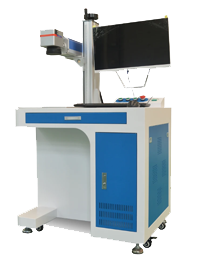
- Basic 100W open-frame marking machine
- 100W machine with rotary axis and custom fixture
- 100W enclosed Class 1-style production workstation
- 100W automated conveyor system with PLC and vision
They should not be compared as if they were the same machine.
Ask for a Line-by-Line Quotation
- Laser source
- Galvo
- Lens
- Marking field
- Controller
- Software
- Fixture
- Rotary
- CCD
- Enclosure
- Automation
- Training
- Warranty
- Shipping terms
Need to Know Whether 100W Is Right for Your Production?
Send us your actual workpiece and tell us what you need to mark, how many parts you produce per day, your target cycle time and whether you need deep engraving or simple identification. We can test the application first and compare 50W vs 100W when appropriate.
What to Include in Your RFQ
- Material and surface condition
- Workpiece dimensions
- Marking content
- Marking size
- Required depth, if applicable
- Parts per hour or day
- Target cycle time
- Photos or CAD drawings
- Automation requirements
- Destination country and voltage
FAQ About 100W Fiber Laser Marking Machines
Is a 100W fiber laser better than a 50W fiber laser?
Not automatically. A 100W laser provides more available processing capacity, which can be useful for deeper engraving and demanding production. But if a 50W machine already meets your required marking quality and cycle time, the additional power may not provide enough return to justify the higher investment.
What materials can a 100W fiber laser mark?
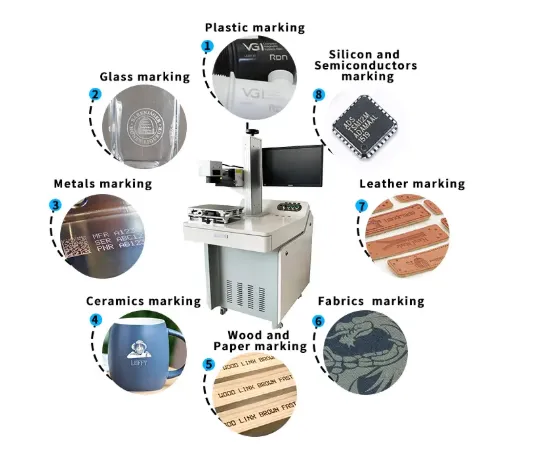
Typical applications include stainless steel, carbon steel, aluminum, brass, copper, titanium and other industrial metals. Some engineering plastics and coated materials can also be processed, but suitability depends strongly on the material formulation and desired result.
Can a 100W fiber laser perform deep engraving?
Yes, 100W fiber systems are suitable for demanding deep-engraving applications, but there is no universal engraving depth. Material, hardness, pulse characteristics, speed, hatch strategy, focus and number of passes all affect the result. The required depth should be verified through actual sample testing.
Does 100W mean the machine can mark at 12,000mm/s?
A supplier may publish a higher maximum scanner-speed figure for a specific configuration, but that should not be interpreted as actual production throughput. For procurement, it is safer to compare tested cycle time using the real workpiece and marking file.
Is 110×110mm the only marking field available for a 100W machine?
No. Larger lenses can provide larger marking fields. Current JQ reference configurations include 175×175mm, 200×200mm and 300×300mm options. The correct field depends on the actual marking area, workpiece geometry and required optical performance.
Can a 100W fiber laser be integrated into an automatic production line?
Yes. A production system can combine the laser with conveyors, sensors, PLC control, rotary fixtures, robots and optional vision depending on the workflow. The engineering requirement should be defined around the actual cycle time and product-handling process.
How long does a 100W fiber laser marking machine take to produce?
Common standard fiber machines may have a production lead time of approximately 5–7 working days according to current JQ reference information. Customized automation, fixtures, OEM branding or special configurations may require additional time.
Should I buy 100W if I plan to increase production in the future?
Possibly, but calculate the expected production increase first. If your current 30W or 50W machine already meets today’s requirement, buying 100W only for a hypothetical future volume may tie up capital unnecessarily. A better approach is to compare current demand, expected growth and the cost of upgrading later.
Can JQ Laser test my workpiece before I buy a 100W machine?
Yes. JQ Laser publishes a sample-testing process covering laser selection, marking quality, processing speed and production feasibility. For an important industrial project, we recommend testing the actual production material and marking content rather than relying on a generic sample.
Related Laser Marking Resources
- Fiber Laser Marking Machine
- 50W Fiber Laser Marking Machine
- 30W Fiber Laser Marking Machine
- Deep Engraving Laser Machine
- Automatic Laser Marking Machine
- Laser Marking Automation Solution
- Laser Marking Machine OEM & ODM
- Laser Marking Customer Cases
- After-Sales Support
- Shipping & Delivery
- Fiber Laser Marking Machine Maintenance
Technical Information & Traceability Notes
The technical information on this page is based on current published JQ Laser product and automation information, together with industrial laser application references. Product specifications are configuration-dependent and should be confirmed on the final quotation.
JQ Laser’s current 100W product information identifies a 100W, 1064nm fiber system with a typical 110×110mm field and optional 175×175mm, 200×200mm and 300×300mm fields. Its current automation page lists 20W–100W fiber options and uses approximately 7,000mm/s as a reference scanning speed while explicitly warning that maximum scanner speed is not equivalent to production throughput.
External industrial references also support the broader application logic used in this article: high-power fiber systems are commonly used where fast metal marking or deeper engraving is required, while industrial 100W systems can be integrated into repeatable batch-production workflows.
The Bosch Netherlands saw-blade case is presented as a specific customer application and is not used as a universal production-speed claim.
Lead time, MOQ, OEM/ODM scope, component brands and final technical parameters can change according to project requirements. Buyers should treat the final signed quotation and sample-test record as the controlling project documents.