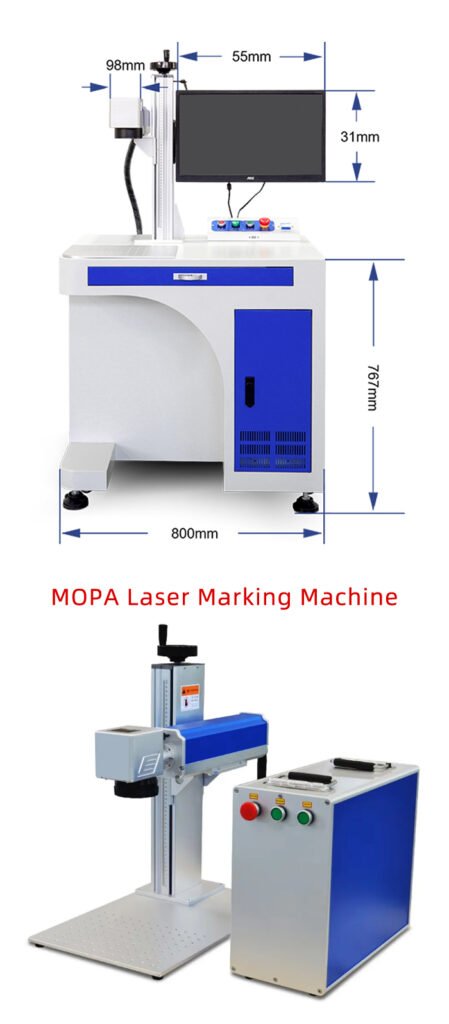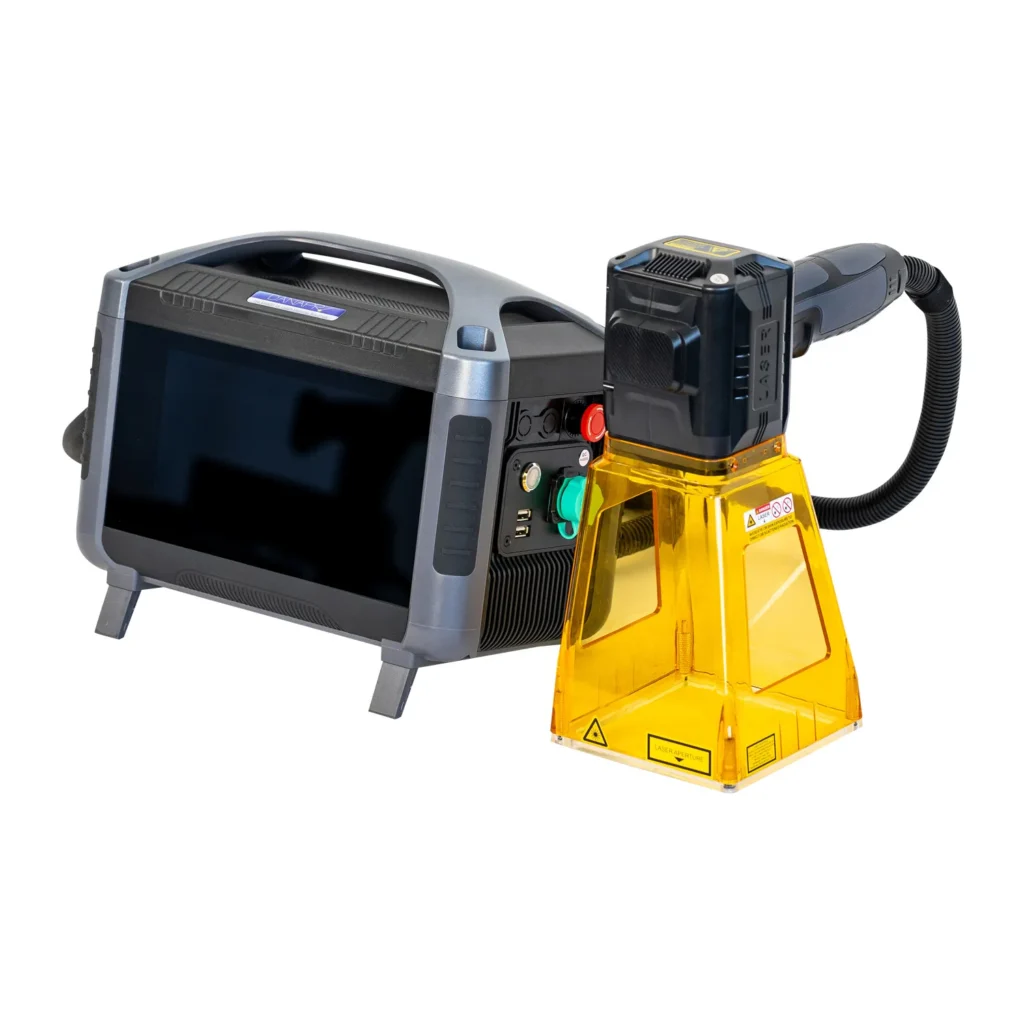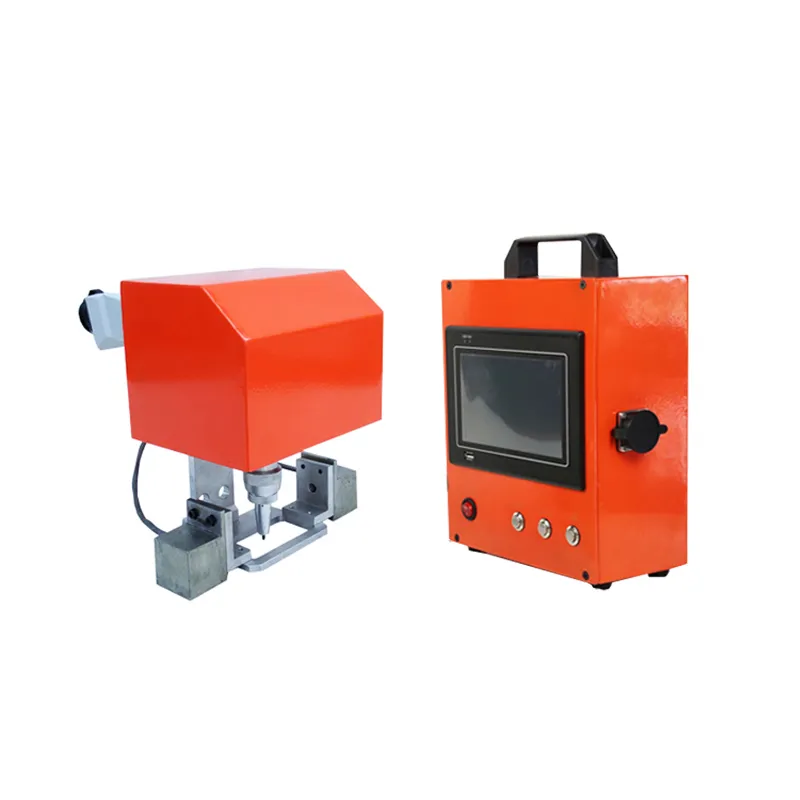
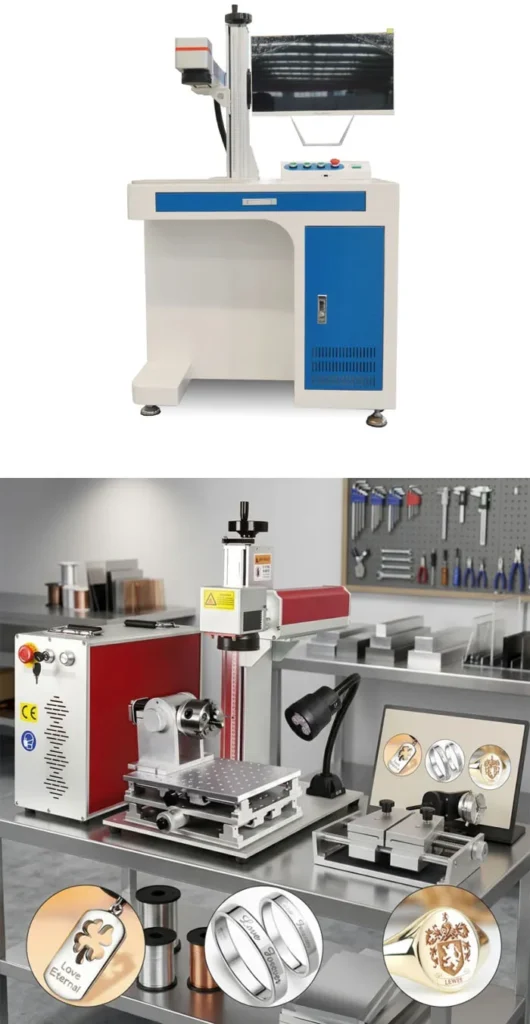
*Marking area, power and machine configuration can be changed according to the application. Confirm the final specification before ordering.
Explore Our Fiber Laser Marking Machines
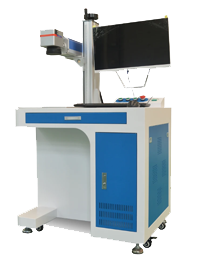
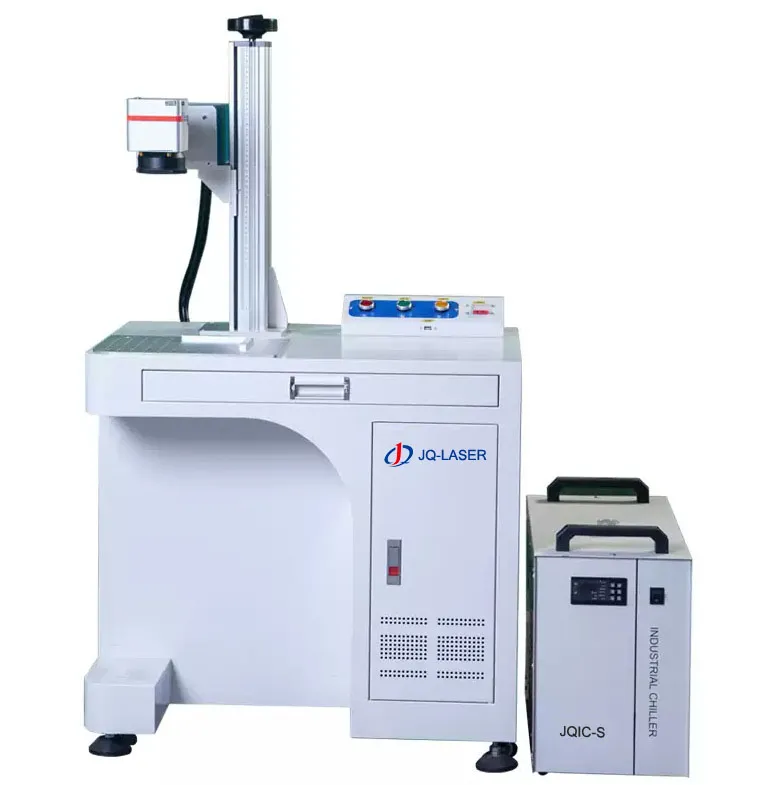
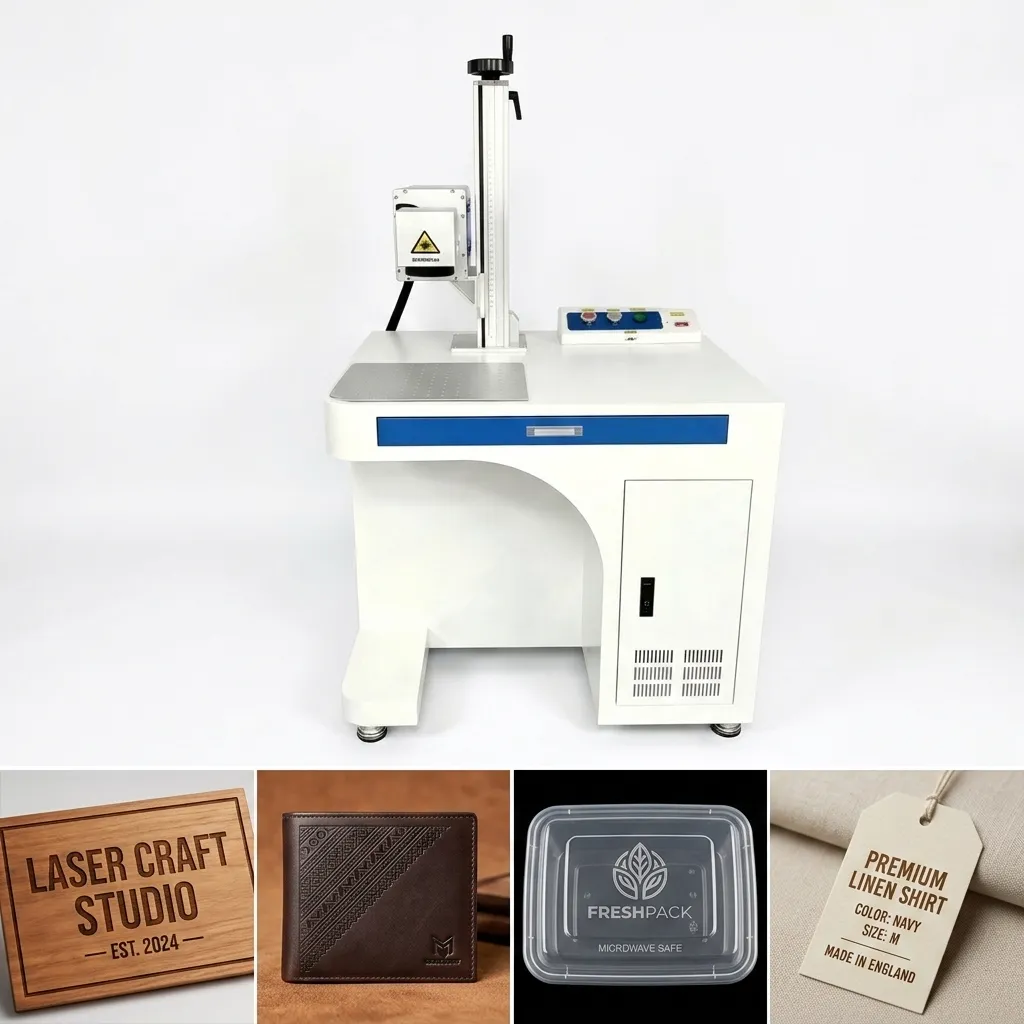
If you are mainly looking for a fiber laser marking machine rather than a specific metal application, you can compare our main fiber laser models first.We offer different power configurations for general metal marking, deeper engraving and higher-production applications.
Why Use a Fiber Laser for Metal Marking?
For most common industrial metals, a 1064nm fiber laser is a practical starting point because it can produce permanent marks without physical contact with the workpiece.For a manufacturer, the important question is not simply whether the laser can mark metal. It is whether the mark has the required contrast, depth, size, cycle time and repeatability.
Permanent Identification
Suitable for serial numbers, QR codes, Data Matrix codes, logos and product identification.
No Physical Contact
The laser marks the surface without a mechanical engraving tool touching the part.
Flexible Marking
One system can handle text, logos, serial numbers, barcodes, QR codes and graphics.
Low Consumable Use
Unlike mechanical engraving tools, there is no cutting bit that needs regular replacement.
Fast Digital Setup
Artwork and variable data can be changed through the marking software without changing mechanical tooling.
Suitable for Automation
Fiber marking systems can be integrated with rotary devices, vision systems, conveyors and production lines.
Why Use a Fiber Laser for Metal Marking?
For most common industrial metals, a 1064nm fiber laser is a practical starting point because it can produce permanent marks without physical contact with the workpiece.For a manufacturer, the important question is not simply whether the laser can mark metal. It is whether the mark has the required contrast, depth, size, cycle time and repeatability.
Permanent Identification
Suitable for serial numbers, QR codes, Data Matrix codes, logos and product identification.
No Physical Contact
The laser marks the surface without a mechanical engraving tool touching the part.
Flexible Marking
One system can handle text, logos, serial numbers, barcodes, QR codes and graphics.
Low Consumable Use
Unlike mechanical engraving tools, there is no cutting bit that needs regular replacement.
Fast Digital Setup
Artwork and variable data can be changed through the marking software without changing mechanical tooling.
Suitable for Automation
Fiber marking systems can be integrated with rotary devices, vision systems, conveyors and production lines.
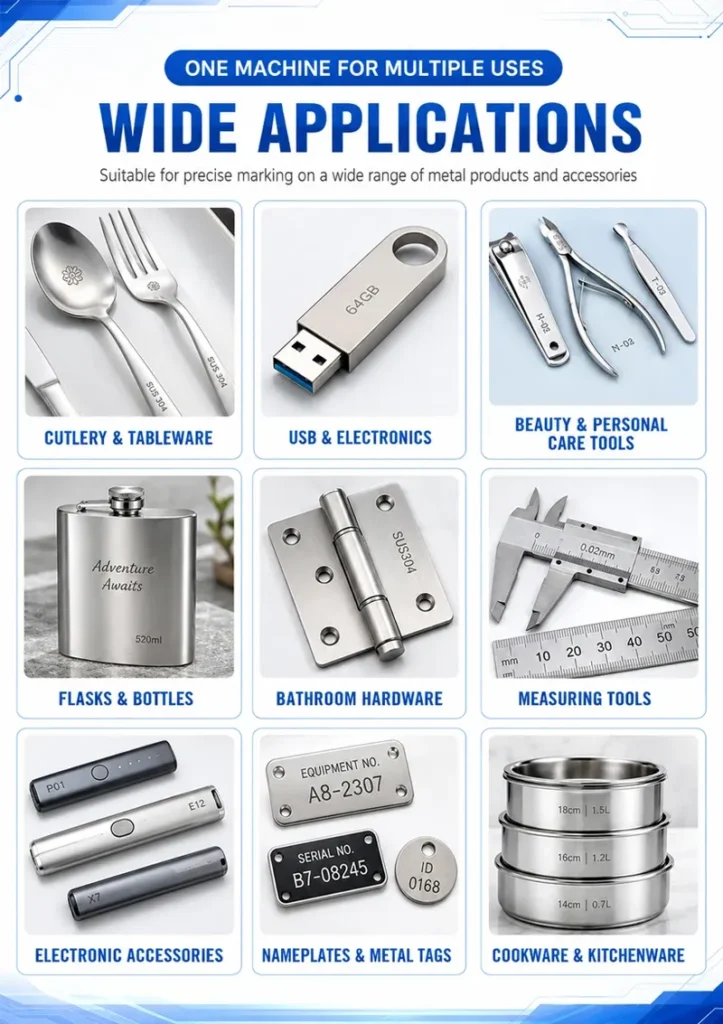
Real Metal Marking Applications
Automotive Parts
Part numbers, serial numbers, QR codes, traceability information and component identification.
Metal Tools
Brand logos, model numbers, specifications and permanent identification.
Hardware
Fasteners, fittings, components and hardware identification.
Electrical Components
Serial numbers, model codes, logos and traceability information.
Machine Parts
Equipment numbers, component IDs and maintenance information.
Jewelry & Accessories
Small logos, identification marks and customized text on suitable metals.
Metal Nameplates
Serial numbers, specifications, QR codes and product information.
Industrial Equipment
Permanent identification for machinery, components and installed equipment.
Medical Metal Components
Identification and traceability marking on suitable metal components.
Fiber Laser Marking Machine for Metal Specifications
| Parameter | Typical Configuration | Buyer Note |
|---|---|---|
| Laser Type | Fiber Laser | 1064nm class |
| Laser Power | 20W / 30W / 50W / 100W | Choose according to material, depth and cycle time |
| Wavelength | 1064nm | Typical fiber laser wavelength |
| Marking Area | 110×110mm standard | Other lenses available |
| Marking Speed | Up to configuration limit | Actual production speed depends on artwork and material |
| Cooling | Air Cooling | Common for 20W–50W configurations |
| Software | EZCAD / JCZ | Confirm controller and software version |
| Rotary Axis | Optional | For cylindrical parts |
| Vision System | Optional | Useful for positioning |
| Power Supply | 110V / 220V | Confirm before shipment |
Why Does the Same Fiber Laser Produce Different Marks on Metal?
This is one of the first things we explain to customers.A 30W fiber laser does not produce exactly the same result on every piece of metal.Even two stainless-steel parts can require different parameters because of surface finish, alloy composition, polishing, coating and heat treatment.
Surface Finish
Polished, brushed, sandblasted and coated surfaces can react differently. Always test the actual production surface.
Material Alloy
“Stainless steel” or “aluminum” describes a broad material category. Different grades can produce different results.
Marking Objective
A black surface mark, white mark, annealing mark and deep engraving are different processes and should not use the same parameters.
Production Speed
A parameter that produces the darkest possible mark may not be the best parameter for a high-volume production line.
Lens Selection
Changing the marking field changes the optical setup. A large marking area and a small marking area should not automatically be treated as equivalent.
Fiber Laser vs Pneumatic Marking for Metal
| Factor | Fiber Laser | Pneumatic |
|---|---|---|
| Marking Method | Laser | Mechanical impact |
| Mark Appearance | High-detail surface marking | Dotted / indented marking |
| QR / Data Matrix | Very suitable | Application dependent |
| Deep Identification | Possible | Strong application |
| Consumables | Low | Stylus replacement required |
| Best For | Flexible digital marking | Deep dot-peen identification |
Fiber Laser vs Pneumatic Marking for Metal
| Factor | Fiber Laser | Pneumatic |
|---|---|---|
| Marking Method | Laser | Mechanical impact |
| Mark Appearance | High-detail surface marking | Dotted / indented marking |
| QR / Data Matrix | Very suitable | Application dependent |
| Deep Identification | Possible | Strong application |
| Consumables | Low | Stylus replacement required |
| Best For | Flexible digital marking | Deep dot-peen identification |
Fiber Laser Marking Machine for Metal FAQ
What metals can a fiber laser marking machine mark?
Common applications include stainless steel, carbon steel, aluminum, brass, copper, titanium and many other metal materials. The actual marking result depends on the alloy, surface condition and parameters.
What power fiber laser is best for metal?
For general metal marking, 20W and 30W are suitable for many applications. 50W is more attractive when deeper engraving or higher throughput is required. 100W is generally aimed at more demanding industrial applications.
Is 30W enough for stainless steel?
For many stainless-steel marking applications, 30W is sufficient. The correct choice depends on the required mark, artwork, cycle time and production volume.
Can a fiber laser engrave metal deeply?
Yes. Fiber lasers can be configured for engraving and deeper material removal, but the achievable depth depends on power, material, scan parameters, number of passes and production time.
Can a fiber laser mark aluminum?
Yes. Aluminum is a common fiber laser application. However, anodized, coated and bare aluminum can require different parameters.
Can a fiber laser mark copper?
Yes, but copper’s optical and thermal properties make parameter selection more important. A sample test is recommended.
Can a fiber laser mark brass?
Yes. Brass can be marked with a fiber laser, with the final appearance depending on the alloy and surface finish.
What is the typical marking area?
110×110mm is a common standard configuration. Other marking fields can be selected by changing the F-theta lens.
How fast can a fiber laser mark metal?
The scanner and laser system may support high scanning speeds, but the actual production cycle depends on the artwork, material, required contrast and marking depth. A sample test provides a more useful number.
How much does a metal fiber laser marking machine cost?
Pricing depends on laser power, laser source, scanner, lens, rotary axis, enclosure, automation and shipping terms. A complete configuration should be compared rather than comparing only the machine’s advertised wattage.
Should I buy a fiber laser or UV laser for metal?
For general metal marking, fiber laser is usually the first technology to evaluate. UV becomes more relevant when the application also involves heat-sensitive materials or requires a different marking process.
Choose the Right Fiber Laser Configuration
The best configuration depends on the metal, marking depth, production volume and required cycle time. Start with the power range that matches your actual application.
20W Fiber Laser Marking Machine
A practical option for fine marking, serial numbers, logos and many general metal identification applications.
View 20W Machine →30W Fiber Laser Marking Machine
A balanced configuration for general metal marking, production work and applications requiring more processing capacity.
View 30W Machine →50W Fiber Laser Marking Machine
A stronger option when deeper engraving or higher production throughput becomes more important.
View 50W Machine →Not Sure Which Fiber Laser Is Right for Your Metal Parts?
Send us your metal sample, material type, marking artwork, required marking size and production quantity.We can help compare 20W, 30W, 50W and 100W configurations based on the actual application rather than simply recommending the highest-power machine.