Battery QR Code & Serial Number Marking
Permanent laser marking for battery QR codes, Data Matrix codes, serial numbers, production information and traceability identifiers on battery cells, modules, packs and components.
JQ Laser helps battery manufacturers select a suitable laser marking system based on the battery material, marking position, code size, production speed and traceability requirements.
Typical Battery Identification
Digital identification and traceability
Unique battery or component identification
Manufacturing and production tracking
Product identification and management
Table of Contents
Why Do Batteries Need QR Codes and Serial Numbers?
Why Do Batteries Need QR Codes and Serial Numbers?
Battery identification is becoming an important part of modern battery manufacturing. A unique serial number can distinguish an individual battery, while a QR code or Data Matrix code can connect the physical product with production, quality and traceability information stored in a digital system.
Product Traceability
A unique identifier can help manufacturers associate a battery with production information, batch data, inspection records and other manufacturing information.
Quality Management
Individual or batch-level identification can make it easier to trace products through inspection, assembly and quality-control processes.
After-Sales Identification
A permanent serial number can help identify a battery or battery assembly during service, maintenance and lifecycle management.
Production Tracking
Machine-readable codes can be integrated into manufacturing workflows where each workpiece needs a unique identification record.
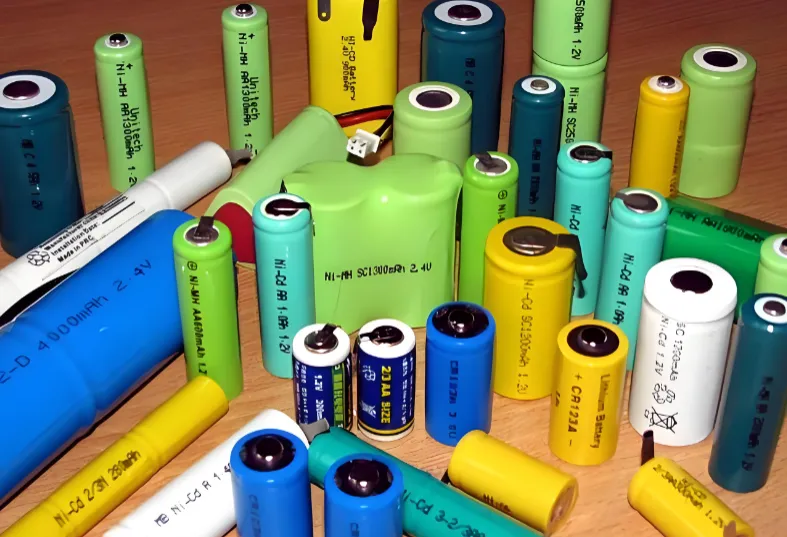
QR Code, Data Matrix or Serial Number?
The right identification method depends on the battery product, available marking area, data structure and traceability system. A laser marking machine can be configured to mark different types of machine-readable codes and human-readable identifiers.
What Information Can Be Laser Marked on Batteries?
QR Code
A machine-readable code used to connect the physical battery with digital information.
Data Matrix
Compact 2D identification for applications where marking space is limited.
Serial Number
Unique identification assigned to an individual battery, module or component.
Batch Number
Production batch or lot information used for manufacturing traceability.
Production Date
Date or production code used to identify when a battery was manufactured.
Model Number
Battery model, product code or specification information.
Manufacturer Logo
Permanent company or product identification.
Inspection Code
Identification used within production or quality-control processes.
Battery QR Code & Serial Number Marking Applications
The marking method should be selected according to the battery structure, material, marking surface and production process.
Cylindrical Battery Cells
Small identification codes, model numbers, production codes and other information may need to be marked on cylindrical cell surfaces or related components.
Typical consideration:Small marking area and cylindrical geometry.
Prismatic Battery Cells
Laser marking can be considered for identification on aluminum or other metal surfaces, depending on the actual battery design.
Typical consideration:Flat metal surfaces and available marking area.
Pouch Battery Components
Marking requirements may involve identification on selected metal components, tabs, housings or other suitable surfaces.
Typical consideration:Material sensitivity and marking location.
Battery Modules
Module-level serial numbers, QR codes and production information can support assembly and traceability processes.
Typical consideration:Larger marking area and production-line integration.
EV Battery Packs
Battery pack identification can include QR codes, serial numbers, model information and production or inspection codes.
Typical consideration:Large components, automation and traceability requirements.
Energy Storage Batteries
Industrial energy-storage systems may require permanent identification for equipment management and lifecycle traceability.
Typical consideration:Housing material, code size and production environment.
Choosing the Right Laser for Battery QR Code Marking
Laser selection should be based on the actual battery material and required marking effect. A material that looks similar on the outside can behave differently because of coatings, anodizing, surface treatment or formulation.
| Battery Material / Part | Common Laser Option | Typical Marking Requirement |
|---|---|---|
| Aluminum Battery Shell | Fiber Laser | QR code, serial number, model and production information |
| Stainless Steel Components | Fiber Laser | Identification and permanent traceability marks |
| Copper Components | Fiber Laser | Identification marking; testing recommended |
| Plastic Battery Parts | UV / CO2 Laser | Fine identification depending on plastic formulation |
| Coated / Treated Surfaces | Depends on coating and substrate | Sample testing should determine the final process |
From Physical Marking to Battery Traceability
A QR code or serial number becomes more useful when it is connected to a manufacturer’s production and traceability system.
The laser marking machine creates the physical identifier. The customer’s MES, ERP, quality system or traceability platform determines what information is associated with that identifier.
This means the laser marking system is one part of a larger traceability workflow rather than the complete traceability system itself.
Example Traceability Flow
Model / batch / production information
Serial number / QR code / Data Matrix
Permanent physical identification
Connect the physical battery to digital records
EU Battery Regulation and QR Code Marking
Regulation (EU) 2023/1542 includes QR-code requirements for batteries. From 18 February 2027, batteries are required to carry a QR code under Article 13. For light means of transport batteries, industrial batteries above 2 kWh and electric vehicle batteries, the QR code provides access to the battery passport.
The regulation also states that the QR code and relevant markings should be visible, legible and indelible on the battery, unless the nature or size of the battery makes marking on the battery unsuitable.
- QR code marking should be considered during battery product design.
- The physical mark needs to remain readable during the intended product lifecycle.
- The code should be tested on the actual battery surface.
- The marking process should be compatible with the manufacturer’s traceability workflow.
- Regulatory requirements should be confirmed for the specific battery category and destination market.
A QR Code Is Not Useful If It Cannot Be Read Reliably
For battery traceability, marking appearance alone is not enough. The code needs to be readable by the intended scanner under the actual production conditions.
Contrast
The laser process should create sufficient contrast between the marked code and the surrounding surface.
Focus
Correct focus is important for small modules and fine code structures.
Code Size
The code must fit the available marking area while maintaining the required readability.
Surface Condition
Coatings, oxidation, curvature and surface finish can affect the final marking result.
Marking Speed
Production speed needs to be balanced against the required code quality.
Verification
The final marking should be checked using the customer’s actual scanning and verification process.
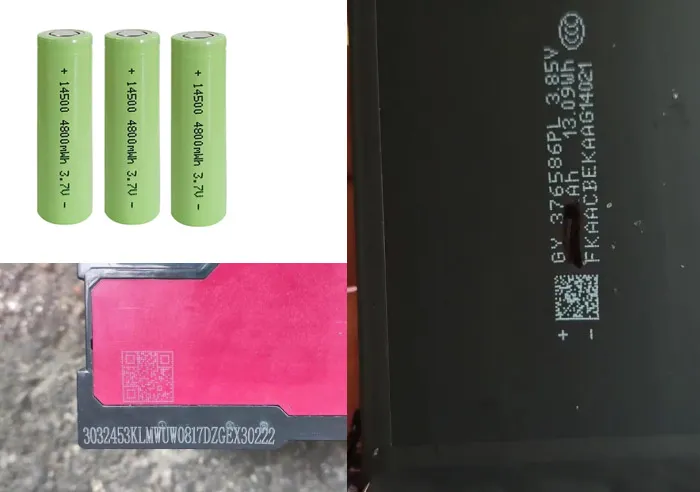
Manual vs. Automatic Battery QR Code Marking
| Factor | Manual Marking | Automatic Marking |
|---|---|---|
| Production volume | Suitable for lower or variable volumes | Better suited to repeat production |
| Workpiece positioning | Operator positioning | Fixture / sensor / vision positioning |
| Code generation | Manual or semi-automatic | Can be connected to production data |
| Production integration | Limited | Suitable for production-line integration |
| Typical JQ solution | Fiber / UV / other suitable system | Automatic laser marking system |
Recommended Laser Marking Systems for Batteries
The final machine should be selected according to the battery material, code size, marking location, production volume and required marking effect.
Fiber Laser Marking Machine
A common choice for aluminum, stainless steel and other metal battery components.
UV Laser Marking Machine
Considered for fine marking and selected plastic or heat-sensitive battery components.
MOPA Fiber Laser
Provides additional pulse-control options for specialized surface marking applications.
Automatic Laser Marking Machine
Suitable when QR marking needs to be integrated into a repeatable production process.
How to Start a Battery QR Code Marking Project
Send Your Battery
Provide battery photos or actual samples when available.
Define the Code
Confirm QR, Data Matrix, serial number or other required information.
Test the Marking
Test the actual material and required marking size.
Verify Readability
Check the code using the intended scanning or verification process.
Select the System
Choose the laser and machine configuration according to the application.
Battery QR Code & Serial Number Marking FAQ
What laser is commonly used for battery QR code marking?
Fiber lasers are commonly considered for metal battery housings and components such as aluminum and stainless steel. UV lasers may be considered for selected plastics and applications requiring fine or lower-thermal-impact marking. The actual choice should be confirmed through sample testing.
Can a laser marking machine mark both QR codes and serial numbers?
Yes. A suitable laser marking system can mark QR codes, Data Matrix codes, serial numbers, batch numbers, model numbers, logos and other text or graphics.
Can you mark a unique serial number on every battery?
Yes. Unique serial numbers can be generated according to the customer’s production workflow and sent to the marking system through the appropriate software or integration method.
Can the QR code be linked to our battery traceability system?
The laser marking system creates the physical QR code. Integration with an MES, ERP or traceability database depends on the customer’s software architecture and the required communication method. The integration requirements should be discussed during system design.
Can you mark QR codes on aluminum battery cases?
Yes. Fiber laser marking is commonly considered for aluminum battery housings. The actual marking parameters should be established through testing because aluminum alloy, surface finish and coating can affect the result.
Can you mark batteries with very small QR codes?
Small QR or Data Matrix codes can be tested, but the achievable code size depends on the laser source, optical configuration, material, required contrast and scanning requirements. The actual battery sample should be tested before confirming the final configuration.
Is laser marking permanent on batteries?
Laser marking can create permanent identification on suitable battery materials and surfaces. The durability of the mark depends on the material, marking method, depth, surface treatment and environmental conditions.
Is QR code marking required for batteries?
Requirements depend on the battery category and market. For batteries covered by the EU Battery Regulation, Article 13 provides for QR-code marking from 18 February 2027, with specific information-access requirements for different battery categories.
How can I make sure the marked QR code can be scanned?
Test the actual battery material, code size and marking parameters, then verify the finished code using the scanner or verification method used in your production process. Code readability should be confirmed before mass production.
Related Battery Laser Marking Solutions
Need a Battery QR Code Marking Solution?
Send us your battery sample, material information, QR code or serial number requirements and marking size. JQ Laser can evaluate the marking process and recommend a suitable laser system.