Automotive Parts Marking Solution For Vehicle Component Manufacturers
JQ Laser provides professional Automotive Parts Marking Solutions for global automotive manufacturers and suppliers.Our Fiber Laser, MOPA Laser and UV Laser Marking Machines deliver permanent identification, high precision engraving and complete traceability for automotive components.
Request Automotive Marking SolutionTable of Contents
Professional Automotive Parts Marking Solution
Automotive manufacturing requires strict quality control and complete product traceability.Every vehicle contains thousands of individual components, including engine parts, transmission components, electronic modules, brake systems and interior parts.Manufacturers need reliable identification methods to record production information, supplier data and quality inspection history.
Traditional marking methods such as ink printing, labels and mechanical engraving cannot always meet modern automotive production requirements.Labels may fall off, ink may fade, and mechanical engraving may reduce production efficiency.
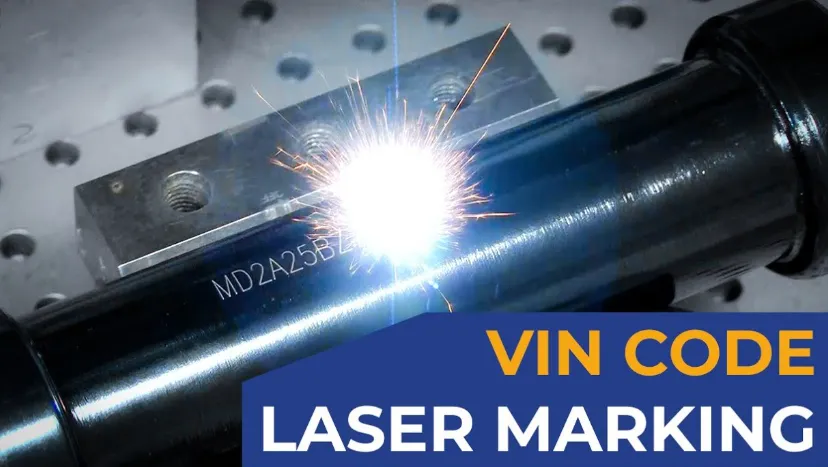
Laser marking technology provides a better solution by directly creating permanent marks on automotive components.The process is contactless, requires no consumables and can easily integrate with automated production lines.
JQ Laser develops customized Automotive Parts Marking Solutions for automobile manufacturers, OEM suppliers and automotive component factories.
Why Use Laser Marking For Automotive Parts?
01. Permanent Identification
Automotive components experience:
• Heat
• Vibration
• Oil contamination
• Mechanical wear
Laser marks remain readable throughout the product lifecycle.
02. Product Traceability
Laser marking allows manufacturers to add:
• Serial numbers
• QR codes
• Data Matrix codes
• Production information
03. Quality Management
Each component can be connected with production databases for better quality control.
04. Automation Integration
Laser marking systems can integrate with:
• Robots
• Conveyors
• Vision systems
• MES systems
05. No Consumables
Compared with ink printing,
laser marking eliminates:
• Ink cost
• Label cost
• Maintenance frequency
06. High Precision
Laser technology can create:
• Small characters
• Detailed logos
• Complex codes
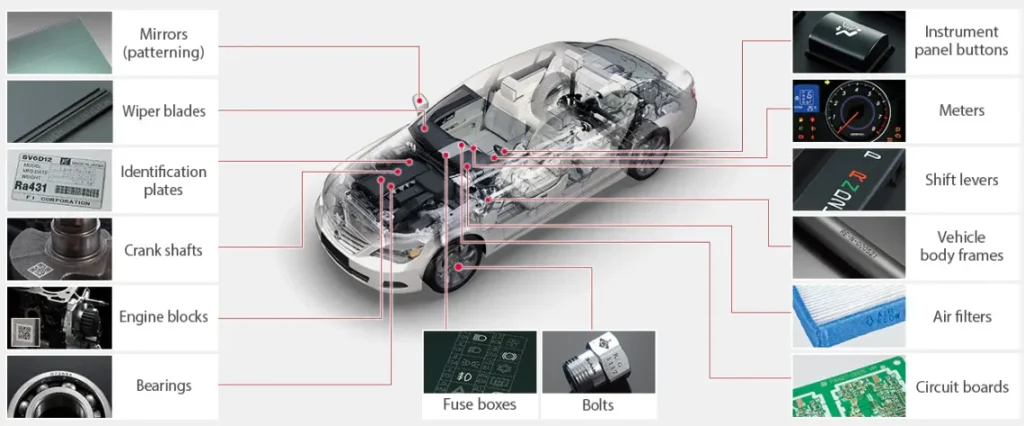
Automotive Components That Can Be Laser Marked
Different automotive parts require different laser technologies.JQ Laser provides optimized marking solutions according to material, size and production requirements.
Engine Components
Applications:
✓ Engine blocks
✓ Pistons
✓ Valves
✓ Cylinder components
✓ Metal housings
Recommended:Fiber Laser Marking Machine
Transmission Parts
Applications:
✓ Gear components
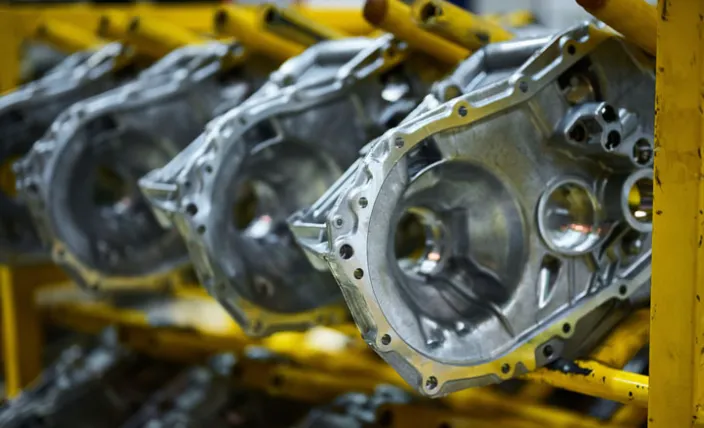
✓ Transmission cases
✓ Mechanical parts
Recommended:Fiber Laser / MOPA Laser
Brake System Parts
Applications:
✓ Brake discs
✓ Brake calipers
✓ Safety components
Recommended:Fiber Laser
Automotive Electronic Parts
Applications:
✓ Sensors
✓ ECU housing
✓ Connectors
Recommended:UV Laser / MOPA Laser
Plastic Automotive Parts
Applications:
✓ Interior panels
✓ Switches
✓ Covers
Recommended:UV Laser
EV Battery Components
Applications:
✓ Battery shell
✓ Modules
✓ Connectors
Recommended:Fiber / MOPA Laser
Best Laser Marking Machine For Automotive Parts
| Laser Type | Applications | Advantages |
|---|---|---|
| Fiber Laser Marking Machine | Metal automotive parts, engine components, tools | Fast speed, deep engraving, high durability |
| MOPA Laser Marking Machine | Aluminum, anodized parts, color marking | Flexible parameters, high contrast |
| UV Laser Marking Machine | Plastic parts, electronic components | Low heat, high precision |
Automotive Parts Traceability Solution With Laser Marking
Modern automotive manufacturing requires complete product traceability throughout the entire supply chain.From raw material processing, component manufacturing, quality inspection to final vehicle assembly,each automotive part needs reliable identification to ensure quality control and production management.
Laser marking provides a permanent connection between physical automotive components and digital production information.Manufacturers can directly mark:
QR Code Marking Solution
QR codes allow automotive manufacturers
to store important information including:
✓ Production date
✓ Supplier information
✓ Inspection records
✓ Material information
✓ Manufacturing process
Data Matrix Marking
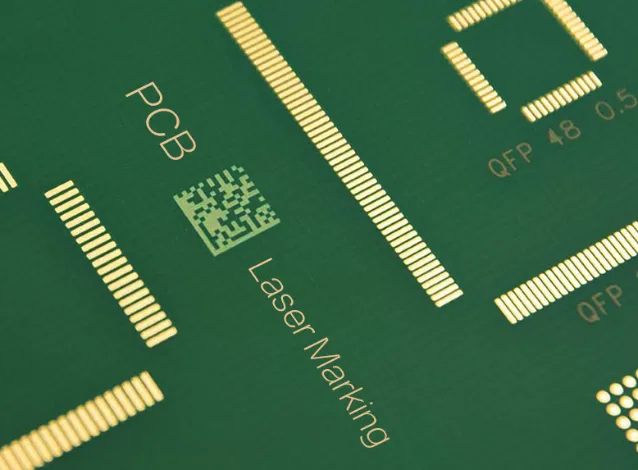
Data Matrix codes are widely used for automotive components because they require less space while maintaining high readability.
Serial Number Marking Solution
Unique serial numbers help manufacturers track every individual component during production and after-sales service.
Barcode Identification
Laser marked barcodes improve warehouse management, inventory tracking and production efficiency.
Automotive Parts Laser Marking Applications
Laser marking technology is widely used in different automotive component manufacturing processes.JQ Laser provides customized marking solutions according to different materials and production requirements.
Engine Components Marking
Engine components require permanent identification because they work under high temperature, pressure and vibration environments.
Common marking:
• Engine number
• Serial number
• Logo
• Production code
Brake System Marking
Brake components require clear identification for safety management and quality control.
Applications:
• Brake discs
• Brake calipers
• Brake pads
Automotive Fastener Marking
Bolts, screws and fasteners require batch identification and manufacturer information.
Laser marking provides:
• Small character marking
• High speed processing
• Permanent results
Aluminum Component Marking
MOPA laser technology is suitable for aluminum automotive components.
Applications:
• Aluminum housings
• Engine covers
• Decorative parts
EV Automotive Components
Electric vehicles require stronger traceability management.
Applications:
• Battery components
• Motor parts
• Charging system parts
Automotive Plastic Components
UV laser marking provides high-quality identification for plastic automotive parts.
Applications:
• Dashboard
• Buttons
• Interior components
Automotive Parts Laser Marking VS Traditional Marking Methods
Automotive manufacturers are continuously improving production efficiency and quality standards.Compared with traditional marking technologies, laser marking provides better performance for modern automotive production.
| Feature | Laser Marking | Ink Printing | Labels |
|---|---|---|---|
| Durability | Permanent marking, wear resistant | May fade over time | May peel off |
| Maintenance | Low maintenance, no consumables | Requires ink replacement | Requires material replacement |
| Automation | Easy integration with production lines | Limited automation | Difficult integration |
| Traceability | QR code, Data Matrix, serial number | Limited | Limited durability |
Automatic Laser Marking System For Automotive Parts Production
High-volume automotive manufacturing requires fast, stable and intelligent production systems.JQ Laser provides automatic automotive parts marking solutions that can integrate with existing production lines.
Robot Integration
Suitable for large components and complex positioning requirements.
Conveyor Marking System
Supports continuous production and high efficiency marking.
Vision Positioning System
Automatically identifies component position and improves marking accuracy.
MES Data Connection
Connect marking information with factory production management systems.
Why Choose JQ Laser For Automotive Parts Marking?
Choosing the right laser marking supplier is important for automotive manufacturers.JQ Laser focuses on providing stable equipment, professional application solutions and customized production systems.
01. Material Testing Support
Test different automotive materials before production to select the best laser parameters.
02. Complete Laser Selection
Fiber, MOPA, UV and CO2 laser systems for different automotive applications.
03. Customized Machines
Provide solutions according to:
Production speed
Component size
Automation requirements
04. Global Service
Professional communication and technical support for international customers.
05. Industrial Experience
Understanding of automotive manufacturing requirements and quality standards.
06. Long-Term Partnership
Supporting customers from machine selection to production application.
Frequently Asked Questions About Automotive Parts Marking
Below are some of the most frequently asked questions from automotive manufacturers, OEM suppliers and industrial buyers regarding automotive laser marking solutions.
What is automotive parts marking?
Automotive parts marking is the process of permanently identifying vehicle components using serial numbers, QR codes, Data Matrix codes, logos, production dates and traceability information. Laser marking is the preferred technology because it creates permanent, wear-resistant marks without consumables.
Why is laser marking widely used in the automotive industry?
Laser marking produces permanent marks that can withstand heat, oil, vibration, corrosion and mechanical wear. It is suitable for both traditional vehicles and electric vehicles.
Which automotive parts can be laser marked?
Engine components, brake systems, gears, bearings, transmission housings, battery cases, sensors, plastic interiors, connectors, fasteners and aluminum components can all be laser marked.
Can QR codes be laser marked on automotive parts?
Yes. Fiber, UV and MOPA laser marking machines can permanently mark QR codes, Data Matrix codes and barcodes for complete product traceability.
Which laser is best for metal automotive parts?
Fiber Laser Marking Machines are the industry standard for steel, stainless steel, iron and most aluminum components because of their high speed and excellent durability.
Can plastic automotive parts be laser marked?
Yes. UV Laser Marking Machines provide high-precision, low-heat marking on ABS, PC, PP, PA and other engineering plastics commonly used in vehicles.
Can laser marking be integrated into automated production lines?
Yes. JQ Laser supports integration with conveyors, robotic arms, PLC systems, industrial vision systems and MES platforms for automated manufacturing.
Does laser marking damage automotive parts?
When appropriate laser parameters are used, laser marking is a non-contact process that minimizes mechanical stress. UV lasers are particularly suitable for heat-sensitive materials.
Related Automotive Laser Marking Solutions
Explore more laser marking applications and solutions designed for different automotive manufacturing scenarios.
EV Battery Marking
Permanent identification for battery cells, modules, busbars and battery packs.
Learn More →Engine Parts Marking
Laser marking solutions for engine blocks, pistons, valves and mechanical components.
Learn More →Automotive Electronics
High precision marking for sensors, ECU housings, PCBs and electronic connectors.
Learn More →Plastic Parts Marking
UV laser marking for automotive dashboards, switches and engineering plastics.
Learn More →Recommended Laser Marking Machines
Fiber Laser Marking Machine
Ideal for steel, stainless steel, cast iron, engine components, bearings, gears and transmission parts.
View Product →MOPA Laser Marking Machine
Recommended for anodized aluminum, black marking, color marking and premium automotive components.
View Product →UV Laser Marking Machine
Perfect for plastic housings, connectors, electronic components and medical-grade plastics.
View Product →Why Global Manufacturers Choose JQ Laser
Customized Engineering
Machine configurations designed according to component size, material and production speed.
Professional Application Testing
Free sample marking helps determine the best laser source and processing parameters.
Automation Integration
Support for conveyors, robots, vision systems and MES communication.
Stable Industrial Performance
Designed for long-term continuous operation in industrial manufacturing environments.
Global Export Experience
Equipment supplied to customers across Europe, North America, Southeast Asia, the Middle East and South America.
Comprehensive Technical Support
Remote assistance, operation training and after-sales service throughout the equipment lifecycle.