Table of Contents
A fiber laser marking machine is an advanced industrial laser system designed for permanent marking, engraving, and identification on various materials, especially metals. Using a high-quality fiber laser source, the machine produces a concentrated laser beam that interacts with the material surface to create precise, durable, and high-contrast marks.
Compared with traditional marking methods such as mechanical engraving, ink printing, and chemical etching, fiber laser marking provides higher accuracy, faster processing speed, lower maintenance requirements, and long-term stability.
Today, fiber laser marking machines are widely used in automotive manufacturing, electronics, hardware production, aerospace, medical devices, jewelry, packaging, and industrial product traceability.
As a professional laser marking machine manufacturer, JQ Laser provides industrial laser marking solutions for metal parts, plastic components, and various manufacturing applications worldwide.
What Is A Fiber Laser Marking Machine?
A fiber laser marking machine is a type of laser engraving system that uses a fiber laser source to generate a powerful and focused laser beam.
The laser beam changes the surface characteristics of the material through:
- Laser ablation
- Surface oxidation
- Annealing
- Engraving
- Color marking
Unlike traditional printing methods, laser marking does not require ink, consumables, or physical contact with the workpiece.
The marking process is controlled by professional laser marking software, allowing users to create:
- Text
- Numbers
- Logos
- Barcodes
- QR codes
- Serial numbers
- Graphics
- Data matrix codes
This makes fiber laser marking machines an ideal solution for industrial identification and traceability.
How Does A Fiber Laser Marking Machine Work?
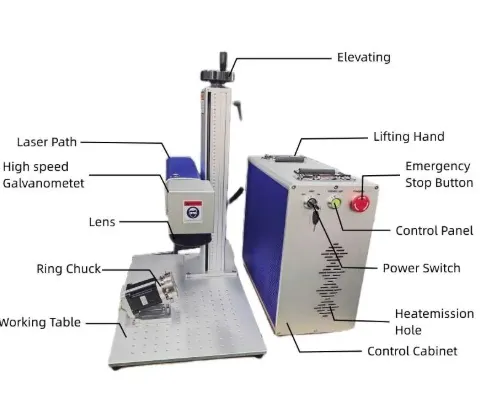
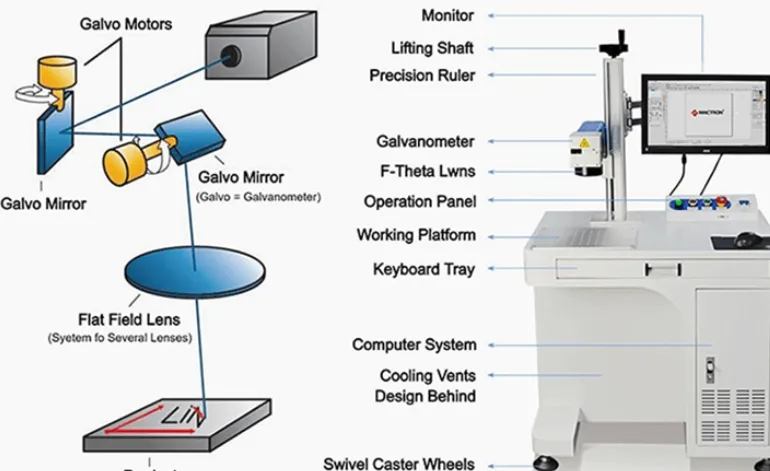
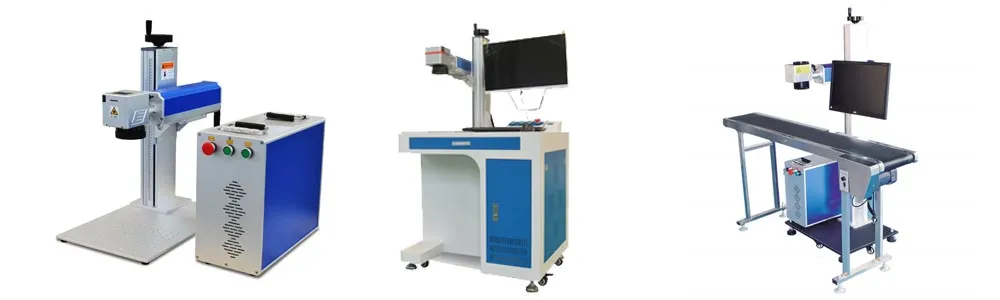
A fiber laser marking machine works through several key components working together.
1. Fiber Laser Source
The fiber laser source is the core component of the system.
It generates a laser beam with a wavelength of approximately:
1064nmThis wavelength provides excellent absorption performance on metals.
Common fiber laser powers include:
- 20W
- 30W
- 50W
- 60W
- 100W
Higher power allows:
- Faster marking speed
- Deeper engraving
- Larger production capacity
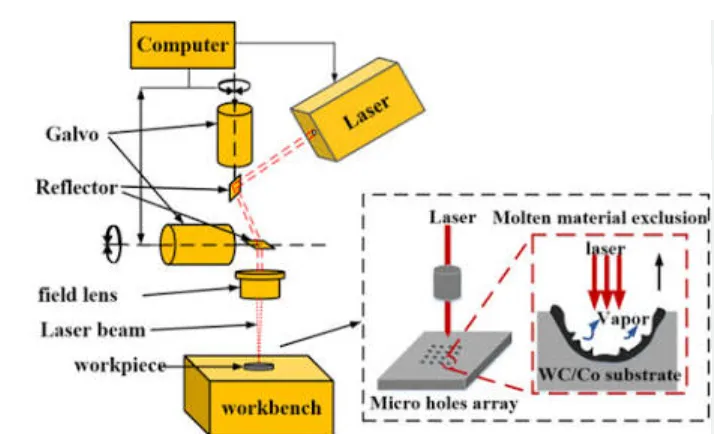
2. Galvanometer Scanner System
The galvanometer system controls the movement of the laser beam.
It allows the laser to move rapidly across the marking area.
Advantages:
- High-speed processing
- Precise positioning
- Smooth marking quality
3. F-Theta Lens
The F-theta lens focuses the laser beam onto the material surface.
Different lens sizes provide different marking areas:
Common options:
- 70×70mm
- 110×110mm
- 175×175mm
- 200×200mm
- 300×300mm
4. Laser Marking Software
The software controls the entire marking process.
Modern laser marking software supports:
- Text editing
- Logo importing
- Barcode generation
- QR code generation
- Serial number automation
- Database connection
This makes fiber laser marking machines suitable for automated industrial production.
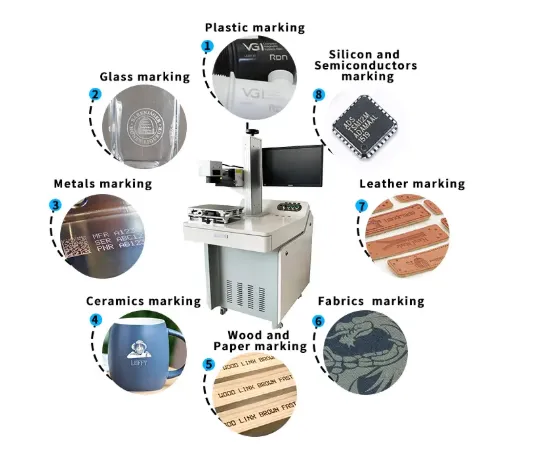
What Materials Can A Fiber Laser Marking Machine Mark?
Fiber laser marking machines are mainly designed for metal materials.
Metal Materials
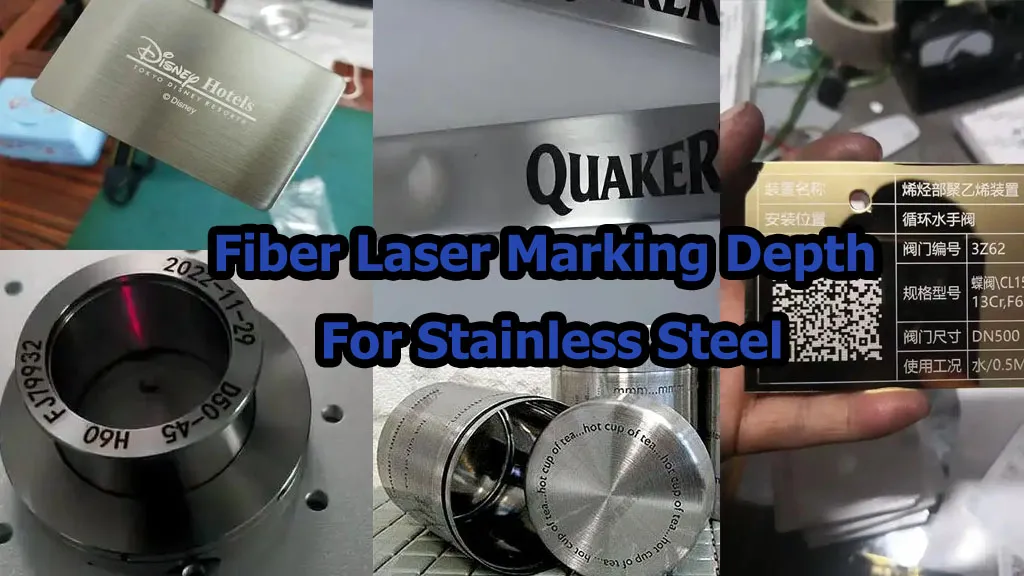
Stainless Steel
Fiber laser marking can create:
- Permanent logos
- Serial numbers
- Product information
- Decorative patterns
Common applications:
- Kitchen equipment
- Hardware products
- Medical instruments
- Industrial components
Aluminum
Aluminum is widely used in electronics and automotive industries.
Fiber laser marking can create:
- High-contrast black marks
- Deep engraving
- Product identification
Applications:
- Aluminum housings
- Machine parts
- Electronic components
Copper
Copper has high reflectivity, but modern fiber laser technology can achieve stable marking results.
Applications:
- Electrical components
- Connectors
- Copper terminals
Brass
Fiber laser marking provides clear and permanent marks on brass products.
Used for:
- Hardware parts
- Decorative products
- Industrial components
Titanium
Titanium marking applications include:
- Aerospace parts
- Medical devices
- High-value components
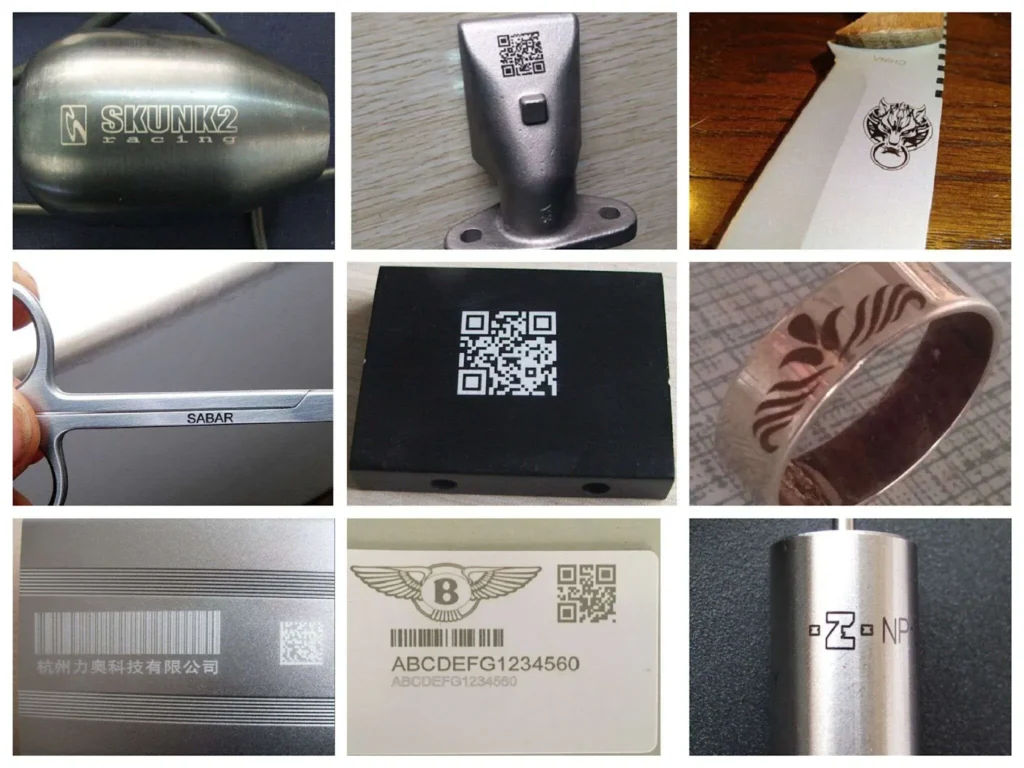
Fiber Laser Marking Machine Applications
Automotive Industry
Automotive manufacturers use fiber laser marking machines for:
- Engine components
- VIN codes
- Metal parts
- Safety identification
Advantages:
- Permanent marking
- High reliability
- Traceability compliance
Electronics Industry
Applications include:
- PCB components
- Connectors
- Electronic housings
- Semiconductor parts
Fiber laser marking provides:
- Small character marking
- High precision
- Fast processing
Hardware Industry
Hardware manufacturers use laser marking for:
- Tools
- Bearings
- Fasteners
- Metal accessories
Benefits:
- Wear-resistant marking
- Chemical resistance
- Long lifetime
Jewelry Industry
Fiber laser marking can process:
- Gold
- Silver
- Stainless steel jewelry
Applications:
- Logos
- Serial numbers
- Custom designs
Advantages Of Fiber Laser Marking Machines
1. Permanent Marking
Laser marks do not fade easily.
They resist:
- Wear
- Heat
- Chemicals
- Environmental conditions
2. High Precision
Fiber laser systems can achieve extremely fine marking details.
Suitable for:
- Small components
- Detailed graphics
- Micro marking
3. Low Maintenance
Compared with traditional methods:
Fiber laser marking machines require:
- No ink
- No chemicals
- Few consumables
4. High Production Efficiency
Fast marking speed improves manufacturing productivity.
Especially suitable for:
- Mass production
- Assembly lines
- Automated systems
Fiber Laser Marking Machine vs Traditional Marking Methods
| Method | Fiber Laser Marking | Traditional Printing |
|---|---|---|
| Consumables | No | Ink required |
| Precision | High | Medium |
| Durability | Permanent | Limited |
| Maintenance | Low | High |
| Environmental Impact | Low | Higher |
How To Choose A Fiber Laser Marking Machine?
Before purchasing a laser marking machine, consider:
1. Material Type
Different materials require different laser parameters.
2. Required Marking Depth
For:
- Surface marking → 20W/30W
- Deep engraving → 50W/100W
3. Production Requirements
For high-volume manufacturing:
Choose:
- Higher power laser
- Automation options
- Rotary marking systems
4. Marking Area
Select suitable lens size according to product dimensions.
Why Choose JQ Laser Fiber Laser Marking Machines?
JQ Laser provides professional industrial laser marking solutions for global manufacturers.
Our advantages include:
Reliable Laser Performance
High-quality fiber laser sources ensure:
- Stable operation
- Long service life
- Consistent marking quality
Wide Material Compatibility
Our machines support marking on:
- Stainless steel
- Aluminum
- Copper
- Brass
- Titanium
- Engineering plastics
Industrial Applications
Solutions for:
- Automotive
- Electronics
- Hardware
- Jewelry
- Packaging
- Aerospace
Professional Support
We provide:
- Machine selection guidance
- Technical support
- Application solutions
- Global service
A fiber laser marking machine is one of the most reliable solutions for modern industrial product identification and engraving.
With advantages including permanent marking, high precision, fast processing speed, and low maintenance requirements, fiber laser marking technology has become an essential tool for manufacturers worldwide.
Whether you need metal engraving, product traceability, barcode marking, or industrial identification, JQ Laser provides reliable fiber laser marking solutions designed for professional manufacturing applications.