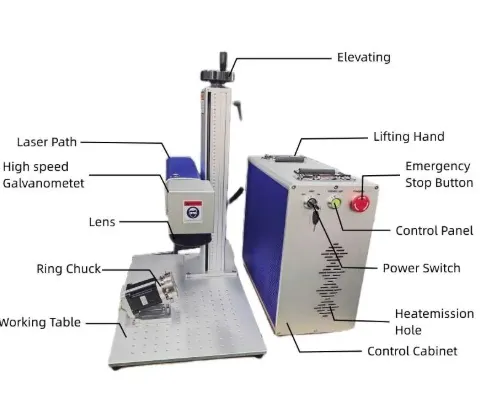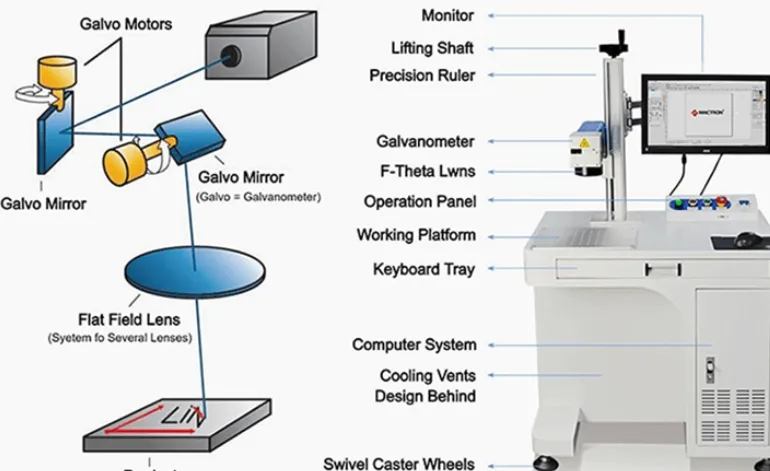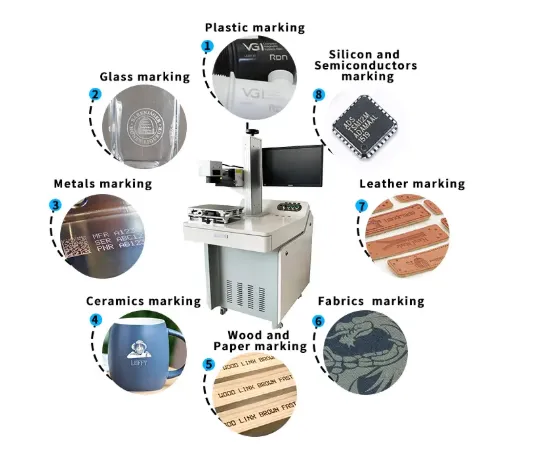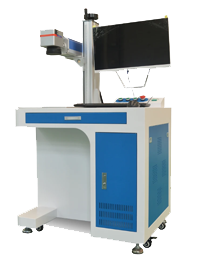
Yes, laser marking can support UDI and DataMatrix marking on many medical devices, but the laser itself does not make a device UDI-compliant. The practical question is whether the selected laser, wavelength, lens, marking parameters and material can produce a permanent, machine-readable and human-readable mark on the actual device. Fiber or MOPA is commonly evaluated for stainless steel and titanium instruments, while UV can be worth testing on suitable medical plastics and heat-sensitive components. For UDI projects, we recommend testing the actual part and validating code readability before finalizing the machine configuration.
Request UDI Sample Testing View UDI Laser Solution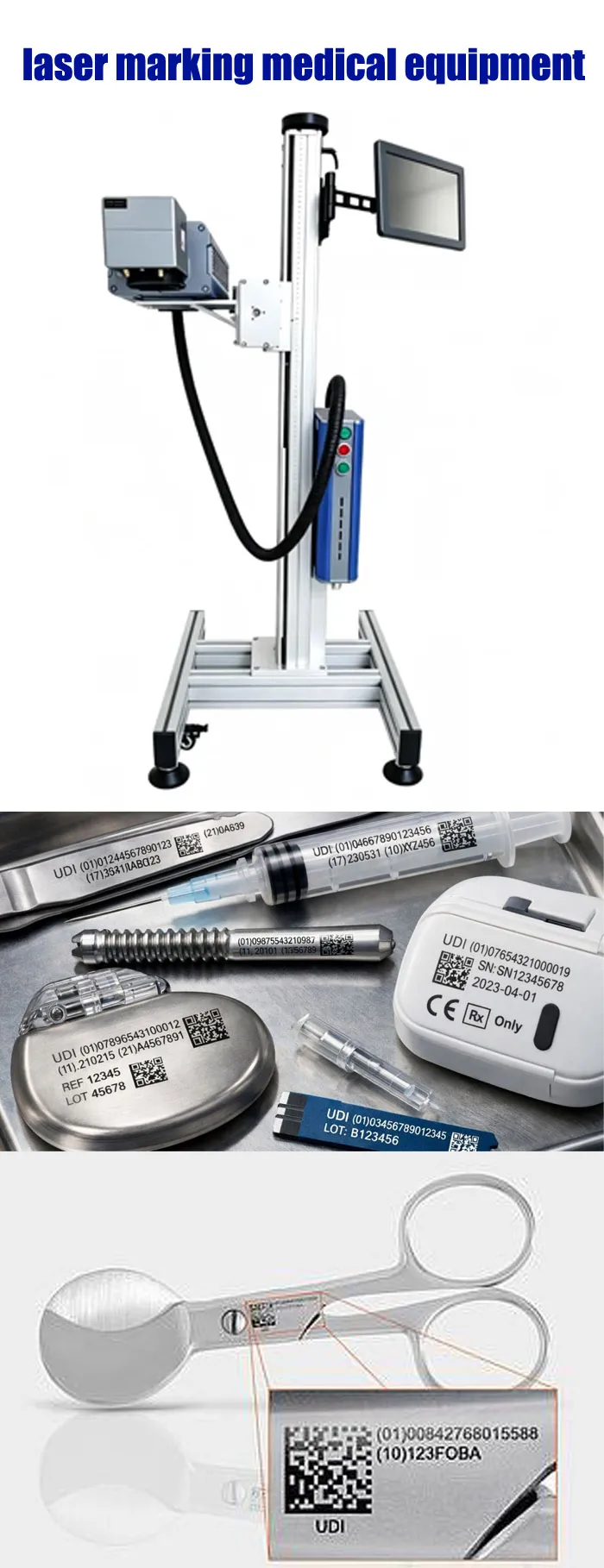
Short Answer: Can Laser Marking Support Medical Device UDI?
Yes. Laser marking is one of the technologies that can be used for direct marking of suitable medical devices, including stainless-steel surgical instruments and other compatible components.
But there is an important distinction: laser marking technology supports the marking process; it does not independently certify the medical device as UDI compliant.
FDA guidance explains that, where the direct-marking requirement applies, the UDI may need to be permanently marked on the device itself. FDA also recognizes exceptions and alternatives in certain circumstances.
What Does UDI Actually Mean for a Laser Marking Project?
UDI means Unique Device Identification. In the United States, FDA’s UDI system is designed to adequately identify medical devices from manufacturing through distribution and patient use.
A UDI can contain a fixed device identifier and, depending on the applicable system and device, production identifiers such as a lot or batch number, serial number, expiration date or manufacturing date.
This means the laser machine is only one part of the complete traceability workflow.
1. Device Identification
The medical device manufacturer defines the applicable identification information and data structure.
2. Data Carrier
A suitable machine-readable carrier such as GS1 DataMatrix may be used depending on the applicable system and product requirements.
3. Physical Mark
The laser creates the physical code, text and other identification information on the device.
Why GS1 DataMatrix Is Commonly Used for Medical Device Identification
Medical devices often have very little available marking space. A DataMatrix can encode multiple pieces of information within a compact two-dimensional symbol, which makes it useful for small instruments and components.
GS1 Healthcare identifies GS1 DataMatrix as an important data carrier for healthcare applications and direct marking. Its guidance also provides specific recommendations for X-dimension and quiet-zone requirements.
| UDI / DataMatrix Element | Why It Matters to Laser Marking |
|---|---|
| GTIN / Device Identifier | Fixed product identification information that must be reproduced correctly in the selected data structure. |
| Serial Number | Variable data requires reliable data transfer and sequence control. |
| Lot / Batch | Variable production information that may change from batch to batch. |
| Expiration / Date Information | Requires correct variable-data generation and date formatting. |
| DataMatrix X-Dimension | Determines the physical module size and directly affects whether the laser system and optical setup can reproduce the symbol reliably. |
| Quiet Zone | The surrounding area must be preserved so the code reader can correctly locate and decode the symbol. |
| Human-Readable Information | May need to accompany the machine-readable carrier depending on the applicable product and regulatory requirements. |
Fiber, MOPA or UV: Which Laser Should You Use?
There is no single “medical laser.” The material and required marking effect should drive the technology choice.
| Laser Type | Typical Medical Application to Evaluate | Main Reason | Important Limitation |
|---|---|---|---|
| Fiber 1064 nm | Stainless steel instruments, titanium components, metal medical parts | Strong candidate for many metal marking applications | Plastic response is highly material-dependent |
| MOPA Fiber | Stainless steel, titanium and applications requiring additional pulse-control flexibility | Adjustable pulse characteristics can provide additional process control | More capability does not automatically mean a better mark |
| UV 355 nm | Suitable medical plastics, polymers and heat-sensitive components | Short wavelength and lower thermal impact can be useful for sensitive materials | Material formulation and required effect still require testing |
KEYENCE and Trotec both describe laser marking applications across stainless steel, titanium, plastics and other medical materials, while emphasizing that the marking process has to preserve the required material and marking characteristics.
See Medical Device UV Laser See MOPA Fiber LaserWhich Medical Materials Can Be Laser Marked?
“Medical equipment” is too broad to select a laser. The actual material, finish, geometry and required mark need to be evaluated.
Stainless Steel
Common in surgical instruments and medical components. Fiber or MOPA can be evaluated for dark annealing, surface marking or controlled engraving depending on the application.
Typical examples:- Forceps
- Surgical scissors
- Clamps
- Medical tools
Titanium
Titanium is used in various medical and implant-related applications. Fiber and MOPA systems can be evaluated for identification marking, subject to the device’s specific material and surface requirements.
Typical examples:- Titanium components
- Orthopedic components
- Dental components
- Medical hardware
Medical Plastics
Plastics require more careful testing because resin formulation, additives, pigments and heat sensitivity can strongly affect the result.
Possible materials:- Engineering plastics
- Medical polymer components
- Plastic housings
- Heat-sensitive parts
PEEK / Engineering Polymers
Some engineering polymers can be laser marked, but the actual grade and required contrast should be tested before production.
Ceramics
Certain medical ceramics can be laser processed, but compatibility depends on composition, surface finish and required marking effect.
Coated Components
If the identification depends on coating removal, the coating thickness, color and adhesion become part of the laser process.
What We Test on the Actual Medical Device
For medical marking projects, a photograph of a similar product is not enough for me to approve the configuration.
The useful sample is the actual device or a representative piece made from the same material, coating and surface finish.
| Sample Test | What We Check | Why It Matters |
|---|---|---|
| DataMatrix Size | Actual module/X-dimension and overall symbol size | Determines whether the required code fits the available surface. |
| Contrast | Visual difference between mark and surrounding surface | Affects human readability and machine readability. |
| Code Readability | Actual scanner/reader verification | A visually good code is not necessarily a reliably decoded code. |
| Surface Damage | Heat effect, melting, deformation or unwanted texture | Important for precision medical components. |
| Marking Depth | Surface removal where engraving is required | Too much depth may be unnecessary or undesirable for some devices. |
| Cycle Time | Time required per complete marking operation | Determines whether the machine can meet production requirements. |
| Position Accuracy | Code placement relative to the defined device area | Important when marking small instruments or tight surfaces. |
Material → Mark → Scan → Verify → Inspect → Measure cycle time → Approve configuration.
High-Contrast Medical Marking: What Does “Good” Actually Mean?
I would not approve a medical DataMatrix simply because it looks black in a product photograph.
The practical question is whether the finished code can be reliably decoded by the scanner used in the customer’s production or quality-control process.
Visual Inspection
- Clean module edges
- Consistent module appearance
- Sufficient visual contrast
- No obvious distortion
- Correct quiet zone
Machine Verification
- Use the actual barcode/DataMatrix reader
- Test actual production orientation
- Check repeated samples
- Record failed reads
- Validate under the intended inspection conditions
DataMatrix X-Dimension: Why Small Codes Need More Attention
For medical direct marking, code size is not simply a graphic-design decision. The X-dimension defines the module size of the DataMatrix and therefore affects the optical and process requirements of the laser system.
GS1’s direct-marking guidance gives a recommended range for non-ink-based laser marking and distinguishes it from other direct-marking methods. The actual permitted or recommended size depends on the applicable specification and application.
| Laser Marking Consideration | What the Buyer Should Specify |
|---|---|
| X-Dimension | Required module size or applicable specification. |
| Overall DataMatrix Size | Total width × height including the required quiet zone. |
| Encoded Data | GTIN, serial, lot, expiry or other required data elements. |
| Marking Surface | Flat, curved, polished, brushed, coated or textured. |
| Reader | Scanner/camera model or verification method used by the customer. |
| Production Speed | Required parts/hour or cycle time. |
Real Medical Device Marking Applications
Reusable Surgical Instruments
Forceps, scissors, clamps and other reusable instruments may require permanent identification after repeated cleaning and sterilization.
Stainless steel is a common candidate for fiber or MOPA evaluation.
Dental Instruments
Small instruments may have limited available marking space. DataMatrix or serial-number marking can therefore require fine, controlled marking and accurate positioning.
Medical Components
Product model, serial number, lot information and identification codes can be marked on suitable metal components.
Titanium Components
Titanium medical components can be evaluated for permanent identification marking using suitable fiber or MOPA processes.
Medical Plastic Housings
UV laser is often worth testing where the plastic is heat-sensitive or where a controlled high-contrast surface effect is required.
Diagnostic Equipment
Serial numbers, product identification, DataMatrix and other traceability information can be integrated into a production workflow.
How Laser Marking Fits Into a Medical Traceability Workflow
A UDI project becomes much more useful when the physical marking system is connected to the production data rather than treated as an isolated engraving operation.
Step 1
Production system generates or provides the device identification data.
Step 2
Laser software receives the variable serial, lot or other production data.
Step 3
Laser marks the DataMatrix and/or human-readable information.
Step 4
Vision or barcode inspection verifies the finished code where required.
Step 5
Marking result and production information can be associated with the production record where the customer’s system supports it.
Step 6
The finished product continues through the customer’s traceability and quality-control workflow.
Example Fiber Laser Configuration for Medical Metal Marking
JQ Laser’s current fiber marking platform provides several power options. The actual medical application should determine the final configuration.
| Parameter | JQ Reference Configuration | Medical Application Relevance |
|---|---|---|
| Laser Type | Pulsed Fiber Laser | Suitable starting technology for many metal medical components. |
| Wavelength | 1064 nm | Common wavelength for fiber marking on metals. |
| Power Options | 20W / 30W / 50W / 60W / 100W | Final selection depends on mark type, depth, code size and production speed. |
| Typical Marking Field | 110 × 110 mm | Suitable for many small components; larger lenses are available where required. |
| Optional Marking Fields | 150 / 175 / 200 / 300 mm class options | Useful when device dimensions require a larger working field. |
| Marking Speed | Up to approximately 7,000 mm/s on the current product overview | Maximum scanner speed is not equivalent to validated medical-device cycle time. |
| Cooling | Air cooling commonly used | Simplifies many standard configurations. |
| Software | EZCAD-compatible configurations | Supports common variable marking and graphic functions. |
These are JQ Laser reference specifications, not a medical-device validation specification. Final configuration should be based on the actual medical product and acceptance criteria.
Does a Higher-Power Laser Produce a Better UDI Code?
Not necessarily.
This is one of the most common mistakes I see during equipment purchasing. A customer may think that a 50W or 100W machine must produce a better DataMatrix than a 20W machine.
For a small medical DataMatrix, the more important variables may include optical spot size, lens selection, pulse characteristics, marking speed, frequency, surface condition, contrast and code size.
20W
Can be a reasonable starting point for fine identification marking where deep material removal is not required.
30W
Provides additional processing headroom for general industrial metal marking and higher production demand.
50W+
Becomes more relevant when material removal, deeper engraving or higher production throughput is important.
Stainless Steel Medical Devices: The Mark Must Survive the Process
Stainless steel is attractive for medical instruments because of its corrosion resistance and durability, but that does not mean every laser marking process is acceptable.
For reusable instruments, the marking method should be evaluated against the customer’s cleaning, sterilization, passivation and use conditions. Trotec and KEYENCE both describe medical laser marking applications where durability and readability after repeated processing are important.
Annealing
Creates a dark surface contrast without necessarily removing large amounts of material. This can be attractive when surface integrity and a clean mark are important.
Engraving
Removes material to create a physical recess. It may be appropriate when deeper identification is required, but the required depth should be established by the device manufacturer.
Medical Plastics: Why UV May Be a Better Starting Point
Medical plastics are more complicated than stainless steel because the polymer formulation can change the laser response.
A material may contain pigments, fillers, flame retardants, glass fiber or other additives. Two plastics that look identical to the operator may therefore behave differently under the same laser parameters.
| Problem | Possible Cause | What to Test |
|---|---|---|
| Plastic melts | Excessive thermal input | Lower thermal input, parameter optimization or UV evaluation. |
| Mark is too light | Material does not absorb the selected wavelength effectively | Different wavelength or material-specific parameters. |
| Edges are rough | Heat-affected material or unsuitable process | Pulse/process adjustment and UV comparison. |
| Code cannot be scanned | Insufficient contrast or module distortion | Smaller/larger X-dimension, optical setup and process optimization. |
Should Medical UDI Marking Use Vision Inspection?
If the medical production process requires automatic verification, vision is worth discussing before purchasing the machine.
Position Verification
The camera can locate the part or confirm that the device is correctly positioned before marking.
Code Verification
The inspection system can verify the finished DataMatrix or other code according to the customer’s inspection workflow.
Variable Data
Serial numbers or production data can be supplied to the laser system from a production-control environment where integration is supported.
Reject Handling
For automated production, the inspection result can be connected to a reject or alarm process when the system is designed accordingly.
What About Curved Medical Instruments?
Surgical instruments are not always flat. Forceps, scissors, tubes, handles and other components may have curved surfaces.
A DataMatrix that looks correct on a flat test plate may become distorted when transferred to a curved surface because the laser focus and geometry change across the marking area.
| Part Geometry | Possible Solution | What Must Be Tested |
|---|---|---|
| Flat | Standard galvo marking | Code size, contrast and positioning |
| Slightly Curved | Suitable lens / positioning strategy | Focus variation and code distortion |
| Cylindrical | Rotary fixture or suitable 3D solution | Diameter, coverage and symbol geometry |
| Complex 3D Surface | 3D marking or specialized fixture | Surface height variation and optical focus |
Example Traceability Workflow: Surgical Instrument
The following is a technical workflow example rather than a claim about a specific customer’s validated production line.
Example: Reusable Stainless-Steel Surgical Instrument
| Stage | Example Requirement |
|---|---|
| Material | Stainless steel surgical instrument |
| Identification | Device identifier + serial number |
| Data Carrier | GS1 DataMatrix where applicable |
| Laser | Fiber or MOPA candidate |
| Marking Goal | Permanent high-contrast identification |
| Inspection | Visual + machine-readable verification |
| Production Record | Associate serial number with production data where required |
| Validation | Customer validates the marking process against its applicable device and regulatory requirements. |
When Laser Marking May Not Be the Right Medical Marking Method
This is an important part of a medical purchasing decision. A good supplier should also tell you when to stop and test another approach.
Material Cannot Produce Required Contrast
If the selected wavelength cannot produce the required visual and machine-readable contrast, changing power alone may not solve the problem.
Mark Could Affect Device Function
If marking changes a critical surface, dimension or functional area, the marking process needs engineering review before production.
Available Area Is Too Small
If the required data cannot physically fit while maintaining the applicable code specifications, the device design or marking strategy may need to be reviewed.
Validation Has Not Been Completed
A successful sample does not automatically prove that a medical production process is validated.
What Should You Ask a Medical Laser Marking Supplier?
Medical marking quotations should contain more than “30W Fiber Laser.” I recommend sending the supplier the following information.
| RFQ Information | What to Provide |
|---|---|
| Medical Product | Instrument, implant component, housing, diagnostic component, etc. |
| Material | Stainless steel grade, titanium grade, polymer/resin, ceramic, coating |
| Surface | Polished, brushed, coated, anodized, molded, textured |
| Data Carrier | GS1 DataMatrix, barcode, text, serial number, etc. |
| Data Structure | GTIN, serial, lot, expiry or other required identifiers |
| X-Dimension | Required DataMatrix module size if already defined |
| Marking Area | Available width × height |
| Part Geometry | Flat, curved, cylindrical or complex 3D |
| Contrast Requirement | Required visual appearance or internal acceptance criteria |
| Reader / Verification | Scanner, camera or verification system used by your QC process |
| Production Volume | Parts/hour or parts/day |
| Automation | Manual, fixture, conveyor, robot, PLC, MES/database |
| Sample | Actual device or representative material sample |
What Changes the Price of a Medical Laser Marking System?
Laser Source
Fiber, MOPA or UV source selection changes the system configuration and price.
Power
Higher power may increase processing capacity but should be justified by cycle time or material-removal requirements.
Lens / Field
The required DataMatrix size and device area determine the optical configuration.
Rotary / Fixture
Curved instruments may require custom fixtures or rotary equipment.
Vision
Automatic positioning and code inspection add hardware and integration requirements.
Automation
PLC, conveyor, robot, database and MES integration can substantially change the system scope.
Medical Device Laser Marking FAQ
Can laser marking support UDI marking on medical devices?
Yes. Laser marking can be used to create permanent identification marks on suitable medical devices. However, the laser machine itself does not make a device UDI compliant. The applicable regulatory requirements, device design, identification system and validation process must also be considered.
Can a fiber laser mark GS1 DataMatrix?
Yes. Fiber laser technology can be used to mark DataMatrix symbols on suitable metal surfaces. The actual code size, contrast, material, optical configuration and marking parameters must be verified on the production device.
Which laser is best for medical devices?
There is no universal answer. Fiber and MOPA are common candidates for suitable stainless steel and titanium components, while UV can be useful for suitable plastics and heat-sensitive materials. Actual sample testing should determine the final configuration.
Can laser marking survive sterilization?
Laser-marked medical instruments can be designed for durable identification, and published medical marking applications describe marks intended to withstand cleaning and sterilization. However, the specific device and marking process must be tested and validated under the customer’s actual conditions.
What medical materials can be laser marked?
Stainless steel and titanium are common candidates for fiber or MOPA evaluation. Suitable medical plastics, polymers and some other materials can be evaluated with UV or other laser configurations depending on composition and required result.
Does a darker DataMatrix always mean a better code?
No. Visual darkness alone does not establish machine readability. The finished code should be checked with the actual inspection method, considering module quality, contrast, distortion, size and the applicable verification criteria.
Do I need a vision system for UDI marking?
Not necessarily. Vision becomes particularly useful when automatic positioning, code inspection or reject handling is required. For simple manually loaded applications, it may not be necessary.
Can medical devices be marked on curved surfaces?
Yes, depending on the geometry. A suitable fixture, rotary system or 3D marking configuration may be required. Curved-surface DataMatrix marking should be tested because focus and geometric distortion can affect readability.
Can UV laser mark medical plastics?
UV is often evaluated for suitable medical plastics and heat-sensitive components because of its shorter wavelength and lower thermal impact. The exact polymer formulation still needs to be tested.
Should I send samples before buying?
Yes. For medical marking, sample testing is strongly recommended. The test should include the actual material, required DataMatrix size, contrast, code readability, position accuracy and production cycle time.
Related JQ Laser Medical Marking Resources
UDI Laser Marking Machine for Medical Devices
Dedicated UDI and DataMatrix marking solution for medical device traceability.
View UDI Laser Solution →Medical Device Laser Marking
Broader medical marking solutions covering surgical instruments, implants and medical components.
View Medical Device Marking →Medical Device UV Laser
UV marking solution for suitable medical plastics and heat-sensitive components.
View Medical UV Laser →Fiber Laser Marking Machine
20W–100W fiber configurations for metal marking applications.
View Fiber Laser →Medical Industry
Explore the broader medical laser marking application structure.
Medical Industry Solutions →Automatic Laser Marking
For automated fixtures, conveyors, vision and production-line integration.
Automatic Marking →
Technical Content by LEO — JQ Laser Sales Engineer
I work with manufacturers on laser marking applications, material testing, machine configuration and automation projects. For medical marking projects, I focus first on the actual device, material, code size, marking effect and production process rather than recommending a laser only from the requested wattage.
Jining Junqi Intelligent Technology Co., Ltd. · JQ Laser
Need to Mark UDI or DataMatrix on Your Medical Device?
Send us the actual medical device or representative sample together with the material, marking area, required DataMatrix size, production volume and target marking effect.
We can evaluate whether Fiber, MOPA or UV is the appropriate technology to test and help define the required lens, power, fixture and inspection setup.
Request UDI Sample Testing Request Medical Laser RFQPlease include: material + surface finish + device dimensions + DataMatrix size + required data + production volume + reader/inspection requirements.
Technical and Regulatory References
This page is intended as a technical and purchasing guide. It does not constitute regulatory, legal or medical-device compliance advice.
Regulatory requirements vary according to device type, market, classification, intended use and applicable regulations. Medical-device manufacturers remain responsible for determining and validating their own requirements.
- U.S. FDA — Unique Device Identification System
- U.S. FDA — Unique Device Identification: Direct Marking of Devices
- U.S. FDA — UDI Form and Content
- GS1 Healthcare — Direct Marking Guide
- GS1 Healthcare — GS1 DataMatrix guidance