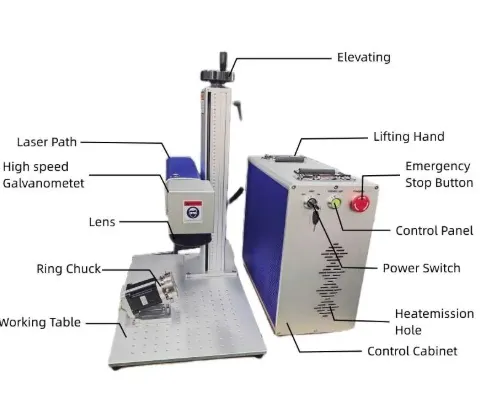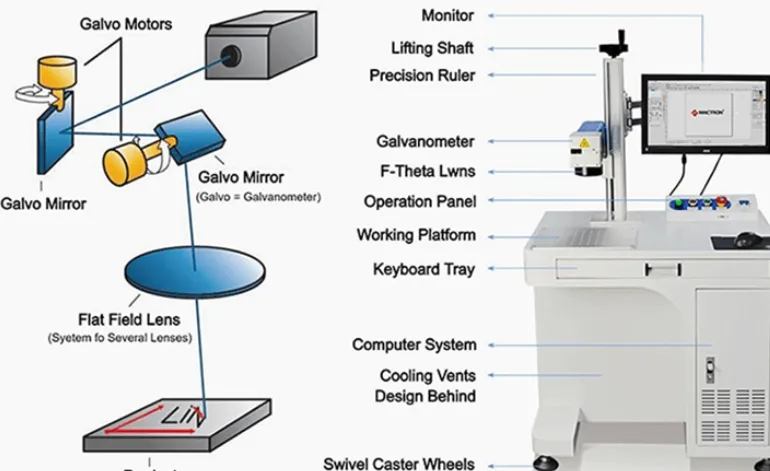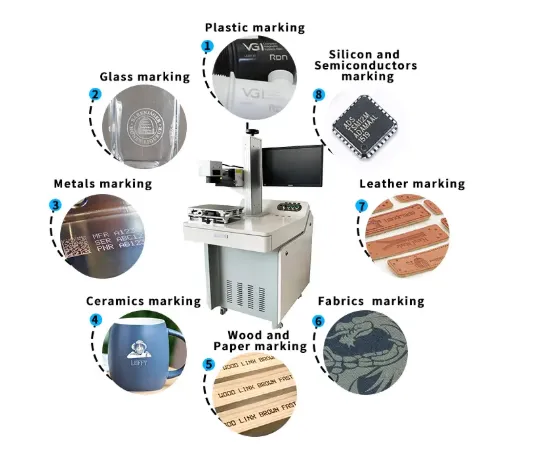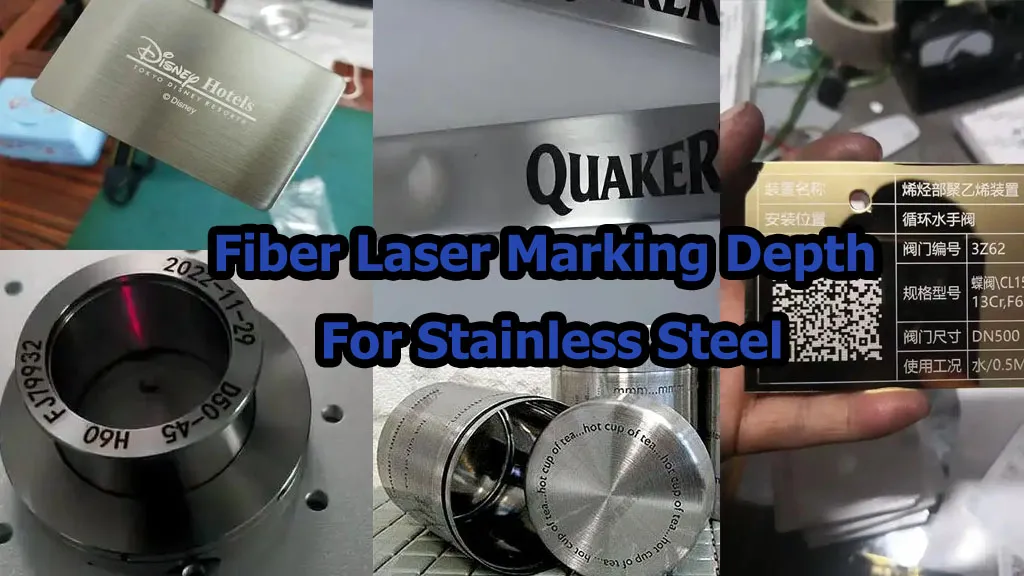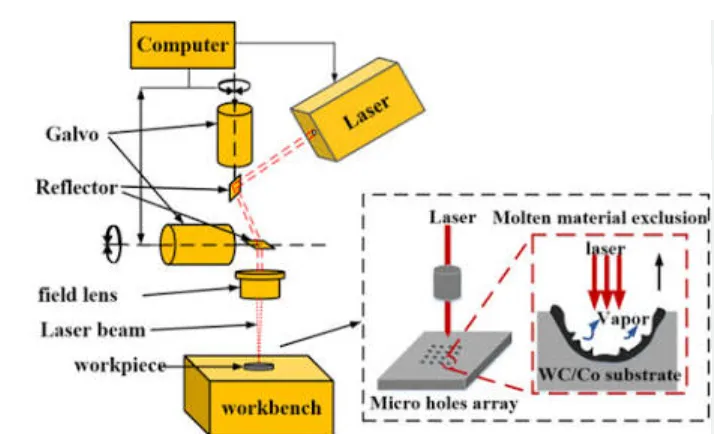
The main difference between 355nm UV, 532nm green and 1064nm fiber laser marking is wavelength, and wavelength strongly affects how efficiently a laser interacts with different materials. In simple terms, 1064nm fiber lasers are widely used for metals, 355nm UV lasers are particularly useful for plastics, glass, electronics and heat-sensitive materials, while 532nm green lasers can be valuable for selected plastics, semiconductor and specialized precision applications.
But there is an important point that buyers sometimes miss: laser color alone does not determine marking quality. The final result also depends on laser power, pulse width, repetition frequency, beam quality, focusing optics, material formulation and the marking parameters.
If you are choosing a laser marking machine, the better question is not “Which color laser is best?” It is “Which wavelength gives the required marking result on my material with acceptable production speed and thermal impact?”
Table of Contents
355nm, 532nm and 1064nm: Why Does Laser Wavelength Matter?
From a laser technician’s point of view, wavelength is one of the first things I look at when evaluating a new marking application.
Different materials absorb different wavelengths differently. This affects how efficiently the laser energy is converted into the desired surface effect.
Your supplied technical reference summarizes the basic distinction as three different “keys” for different material “locks”: 355nm UV, 1064nm infrared and 532nm green laser wavelengths. :contentReference[oaicite:0]{index=0}
| Laser Type | Wavelength | Typical Strength | Common Application Areas |
|---|---|---|---|
| UV Laser | 355nm | Fine, low-thermal-impact processing on suitable materials | Plastic, glass, PCB, electronics, ceramics |
| Green Laser | 532nm | Specialized absorption and precision processing | Selected plastics, semiconductor and specialized electronics |
| Fiber Laser | 1064nm | Efficient processing of many metals | Stainless steel, aluminum, steel, brass, copper and industrial parts |
This is why a machine supplier should ask about your material before recommending a laser.
If somebody tells you, “50W is better than 20W,” that answer is incomplete.
If the wavelength is not well matched to the material, adding power does not necessarily solve the problem.
355nm UV Laser
A 355nm UV laser operates at a much shorter wavelength than a conventional fiber laser.
UV laser processing can be particularly useful when the application requires fine marking or reduced thermal influence on suitable materials.
Typical applications include:
- Engineering plastics
- Electronic components
- PCB and semiconductor-related applications
- Glass
- Ceramics
- Medical plastics
- Packaging materials
The technical reference you provided identifies 355nm UV as particularly suitable for glass and ceramic applications and emphasizes its fine marking capability. :contentReference[oaicite:1]{index=1}
1064nm Fiber Laser
1064nm is the traditional wavelength used by many pulsed fiber laser marking systems.
It is particularly well suited to a wide range of metals.
Common applications include:
- Stainless steel
- Carbon steel
- Aluminum
- Brass
- Copper
- Titanium
- Industrial tools
- Automotive components
Your reference material describes 1064nm as the traditional infrared wavelength for metal applications and specifically mentions stainless steel and aluminum oxidation marking. :contentReference[oaicite:2]{index=2}
532nm Green Laser
532nm green laser systems operate in the visible green wavelength range.
They can be useful for certain materials that respond differently to 1064nm infrared processing, particularly selected plastics and semiconductor-related applications.
Your supplied reference specifically describes green laser as useful for plastics and silicon-wafer-related applications and highlights its potential for fine surface marking. :contentReference[oaicite:3]{index=3}
However, I would not recommend choosing a green laser simply because a material is called “plastic.” Different plastics can have very different compositions, additives, pigments and absorption characteristics.
For any commercial production application, the actual material should be tested before the machine configuration is finalized.
How Do the Three Lasers Produce Different Marking Results?
When customers compare samples, they usually notice three things first: color, detail and thermal effect.
Your reference material describes typical visual differences as gray-white results from UV, black oxidation marks on metals from 1064nm fiber lasers, and color-change effects on selected plastics from green lasers. :contentReference[oaicite:4]{index=4}
| Characteristic | 355nm UV | 532nm Green | 1064nm Fiber |
|---|---|---|---|
| Typical Marking Target | Plastic, glass, electronics and sensitive materials | Selected plastics and specialized materials | Metals and industrial components |
| Fine Detail | Very strong potential | Strong for suitable applications | Strong for metal marking |
| Thermal Influence | Generally lower for suitable UV processes | Application dependent | Application dependent |
| Metal Marking | Possible for specialized applications | Possible for specialized applications | Excellent for many common metals |
| Plastic Marking | Excellent for many suitable plastics | Useful for selected plastics | Material dependent |
| Glass | Strong application area | Specialized | Generally not first choice |
Does a Shorter Wavelength Always Mean a Better Mark?
No.
This is a common misunderstanding.
A shorter wavelength can provide advantages for certain materials and applications, but it does not automatically make a UV or green laser better than a fiber laser.
For example, if your factory marks stainless steel tools all day, a 1064nm fiber laser is usually a much more logical starting point than purchasing a UV or green system simply because the shorter wavelength sounds more advanced.
On the other hand, if your application is a heat-sensitive plastic component, a UV laser may be worth evaluating even if its power is much lower than the fiber machine you originally considered.
Which Laser Should You Choose for Different Applications?
This is where I would move from theory to the actual production floor.
| Application | First Technology to Evaluate | Why |
|---|---|---|
| Stainless Steel Parts | 1064nm Fiber | Well established for metal surface marking and engraving |
| Aluminum Parts | 1064nm Fiber | Suitable for many aluminum marking applications |
| Metal Tools | 1064nm Fiber | Good fit for logos, specifications and identification |
| Automotive Metal Parts | 1064nm Fiber | Suitable for serial numbers, codes and part identification |
| Engineering Plastics | UV / MOPA / Fiber depending on material | Material formulation determines the best process |
| PCB / Electronics | UV | Fine marking and reduced thermal impact can be important |
| Glass | UV | Short wavelength can be advantageous for precision processing |
| Ceramics | UV | Useful for fine marking on suitable ceramic surfaces |
| Selected Semiconductor Applications | Green / UV | Depends strongly on material and process requirements |
| Specialized Plastic Marking | Green / UV / MOPA | Requires application testing |
Example 1: Metal Saw Blade
Imagine you manufacture circular saw blades.
The product is metal, and you need to mark:
- Company logo
- Blade diameter
- Number of teeth
- Product specification
In this case, I would normally start with a 1064nm fiber laser.
There is little reason to choose a green or UV laser simply because those wavelengths are newer or more specialized.
JQ Laser has a real customer application involving metal saw blades where a 50W fiber laser was used to mark the product logo and specifications, with a reported cycle time of approximately one second per blade.
Important: that one-second result belongs to that particular product, marking file and process configuration. It should not be advertised as “all 50W fiber lasers can mark a saw blade in one second.”
Example 2: Plastic Electronic Component
Now change the application.
You have a small plastic electronic housing and need a dark, clean serial number without excessive melting or deformation.
This is where I would test the material with UV and MOPA fiber before deciding.
The right answer may depend on the polymer, color, additives and required contrast.
For this type of application, the question is not simply “How many watts?” but:
How does this specific plastic respond to this specific wavelength and pulse condition?
Example 3: Glass Product
If the customer wants to mark a glass bottle, glass component or another brittle material, I would not start with a standard 1064nm fiber machine just because fiber lasers are popular.
A 355nm UV laser is usually one of the technologies worth evaluating for precision glass marking.
The actual result still needs to be tested because glass composition, coating, curvature and required marking appearance can change the process.
What Should Buyers Check Before Choosing a Laser Color?
This is the section I would pay the most attention to if you are actually buying a machine.
Do not buy a laser based on wavelength alone.
Ask the supplier these questions first.
| Question | Why It Matters |
|---|---|
| What exactly is the material? | Material composition affects laser absorption |
| What is the material thickness? | Affects processing requirements |
| What marking result do you need? | Black, white, color, engraving or coating removal? |
| What is the smallest character? | Determines optical requirements |
| What is the marking area? | Determines lens selection |
| How many products per day? | Determines required productivity |
| What is the target cycle time? | Helps determine laser power and automation requirements |
| Does the product need deep engraving? | May require higher power or multiple passes |
| Is thermal damage acceptable? | Important for plastics, electronics and sensitive materials |
| Can the supplier test your sample? | Actual testing is more reliable than generic samples |
Ask for a Real Sample Test
This is the most practical advice I can give as a laser supplier.
Send the supplier your actual material.
Don’t send only a product photo.
Ask them to mark:
- Your real material
- Your actual logo
- Your actual QR code
- Your actual serial number
- Your required marking dimensions
Then ask for:
- Laser wavelength
- Laser power
- Frequency
- Pulse width where applicable
- Speed
- Number of passes
- Lens specification
- Actual cycle time
This creates a much more useful technical record than simply receiving a photograph of a sample that somebody marked in a showroom.
Don’t Confuse “Can Mark” With “Production Ready”
This distinction is extremely important.
A supplier may be able to produce a visible mark on your material.
That does not necessarily mean the process is suitable for your factory.
You also need to consider:
- Contrast
- Heat-affected area
- Mark durability
- Dimensional accuracy
- Cycle time
- Repeatability
- Production volume
- Operator workflow
A technically successful sample is only the beginning of the purchasing process.
Final Guide: 355nm vs 532nm vs 1064nm — Which One Is Right for You?
My Simple Selection Rule
Mostly metal?
Start by evaluating a 1064nm fiber laser.
Plastic, glass, PCB or heat-sensitive material?
Evaluate a 355nm UV laser where appropriate.
Specialized plastic or semiconductor application?
Consider 532nm green or UV depending on the actual material and process.
Not sure?
Test the actual material before buying the machine.
| Requirement | Recommended Starting Point | Buyer Note |
|---|---|---|
| Metal identification | 1064nm Fiber | Usually the first technology to evaluate |
| Deep metal engraving | Higher-power 1064nm Fiber | Power alone does not determine depth |
| Plastic marking | UV / MOPA / Fiber | Material-specific testing is essential |
| Glass marking | 355nm UV | Test actual glass and required appearance |
| PCB marking | 355nm UV | Thermal impact and feature size matter |
| Specialized plastic color change | 532nm / UV / MOPA | Depends on polymer and additives |
| Automotive metal parts | 1064nm Fiber | Good fit for identification and traceability |
| Metal tools | 1064nm Fiber | Suitable for logos and specifications |
The biggest mistake is choosing a laser because its specification sheet looks impressive.
The best laser is the one that gives you the required result on your actual product at an acceptable cycle time and with acceptable material impact.
That is why an experienced laser technician normally starts with three things:
- Material
- Required marking result
- Production requirement
Only after those three points are clear do we decide whether 355nm UV, 532nm green, 1064nm fiber or another laser configuration makes sense.
Your supplied technical reference also emphasizes the same basic selection logic: wavelength first, then marking appearance, depth and thermal effect, followed by application-specific selection. :contentReference[oaicite:5]{index=5} :contentReference[oaicite:6]{index=6}
In other words, don’t buy the “color.” Buy the process.
Frequently Asked Questions
What is the difference between 355nm, 532nm and 1064nm lasers?
They operate at different wavelengths and therefore interact differently with materials. 1064nm fiber lasers are widely used for metals, 355nm UV lasers are useful for many plastics, glass, electronics and sensitive materials, while 532nm green lasers are used for selected plastics, semiconductor and specialized precision applications.
Is 1064nm better than 355nm for metal marking?
For many common industrial metal-marking applications, 1064nm fiber lasers are the natural starting point because they are widely used for stainless steel, aluminum, steel and other metals.
Is UV laser better than fiber laser for plastic?
Not automatically. UV can be advantageous for many sensitive plastic applications, but the correct technology depends on the exact polymer, additives, color and required marking result.
What is a 532nm green laser used for?
Green lasers can be used for selected plastics, semiconductor-related materials and specialized precision applications where 532nm absorption provides an advantage.
Which laser is best for stainless steel?
A 1064nm fiber laser is usually the first technology to evaluate for stainless steel marking, including logos, serial numbers, QR codes, annealing and engraving.
Which laser is best for glass marking?
355nm UV is a technology commonly worth evaluating for precision glass marking. The final result should be verified using the actual glass product.
Does a higher laser power always produce a better mark?
No. Wavelength, pulse characteristics, optical configuration and process parameters can be just as important as average laser power.
How do I choose between fiber, UV and green laser marking?
Start with the material, required marking effect, thermal sensitivity, marking size and production cycle time. Then test the actual material before purchasing.