Table of Contents
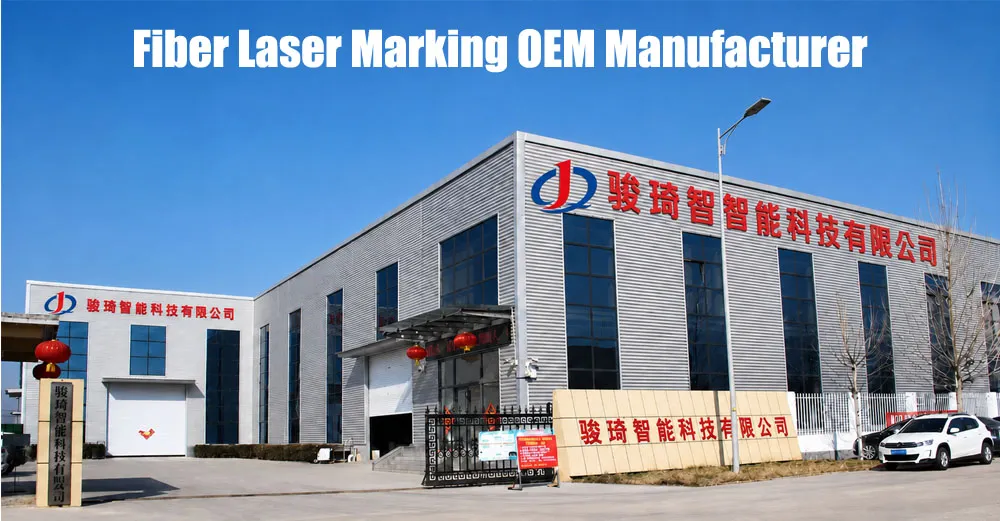
Our short answer: Do not choose a fiber laser marking OEM manufacturer based on the lowest quotation, a factory photo or the words “direct manufacturer.” Check who actually assembles and tests the machine, which laser source and scanner are included, whether the supplier can reproduce your approved sample, and who will support your customers after delivery.
If you are building your own laser equipment brand, the supplier is not just selling you a machine. They are becoming part of your product quality, delivery schedule, warranty process and reputation in your market.
We have seen buyers focus heavily on the laser power and unit price, then discover later that the quoted machine uses a different source, the lens is not the one they expected, the software workflow is unfamiliar, or replacement parts are difficult to obtain. These are avoidable problems. Put the important details in writing before the first order.
1. First, understand what kind of OEM partner you actually need
Not every buyer needs the same level of customization. Before contacting a manufacturer, decide whether you need a standard machine under your own brand, a modified machine configuration, or a new marking system designed around your application.
OEM: manufacture a machine under your brand
OEM is usually the right choice when you already know what you want to sell. You may have an established product range, target price, brand identity and technical requirements. The manufacturer supplies the agreed machine configuration, while the machine branding, labels, packaging and documentation are adapted where agreed.
Typical example: A distributor in Brazil already sells industrial equipment and wants to add a 20W and 30W fiber laser marking machine to its product line. The distributor needs its own logo on the machine, private-label packaging, an English manual and a stable configuration for repeat orders.
ODM: develop a machine around a specific application
ODM is more suitable when a standard desktop machine does not solve the customer’s production problem. The project may need a special worktable, rotary axis, positioning system, vision alignment, conveyor or communication with an existing production line.
Typical example: An automation company needs a laser marking station for metal components moving along a conveyor. The project requires a defined marking position, fixture arrangement, trigger signal, cycle-time target and an agreed interface with the customer’s line controller.
Private label: define exactly what is being changed
Private label is sometimes used as another name for OEM. In practice, it may mean nothing more than adding a logo and changing the packaging. If that is all you need, there is no reason to pay for unnecessary engineering work. If you need a different electrical layout, enclosure, software workflow or automation function, write those requirements separately.
One point to settle early: ask the supplier to identify what is standard, what is customized, and what requires a new design. A logo change and a production-line integration project are very different jobs.
2. The real problems buyers should prevent before placing an OEM order
Problem 1: The supplier calls itself a manufacturer, but cannot explain its production process
A supplier may have a showroom, a website and a range of machines. That does not tell you who performs assembly, electrical installation, optical alignment, laser testing and final inspection.
Practical solution: ask for a short video call showing the actual assembly and testing area. Ask which steps are performed by the supplier’s own team and which components or processes are outsourced. You do not need to demand that every component be manufactured in-house. You do need to know who is responsible for the complete machine.
Problem 2: The sample machine and the production machine are not the same configuration
This is one of the most expensive mistakes in private-label sourcing. A sample may use one laser source, scanner or lens, while the repeat order uses another component that the buyer did not approve.
Practical solution: attach a configuration sheet to the purchase order. Record the source brand and model, rated power, scanner, lens, marking field, controller, software, accessories and any agreed alternatives. Require written approval before a material substitution.
Problem 3: The machine marks the sample, but cannot meet the customer’s production target
A logo on one test plate is not enough to qualify an industrial marking machine. The real job may involve a small Data Matrix code, a curved component, a deep engraving requirement or hundreds of parts per shift.
Practical solution: send production parts and actual artwork. Ask for a test report that includes marking quality, cycle time, fixture method and the complete machine configuration. For automation projects, test the complete handling and triggering sequence, not just the laser head.
Problem 4: The OEM partner cannot support your customers after shipment
If your customer has a problem with the laser source, scanner, controller or marking software, you need a clear troubleshooting route. “Contact us if you have a problem” is not a service procedure.
Practical solution: agree on the technical contact, remote support method, warranty process, spare-parts list, diagnostic information and escalation route before ordering. If you are a distributor, decide which first-line support your team will handle and which issues the manufacturer must handle.
Problem 5: OEM customization creates a problem with repeat orders
A custom label, special enclosure or modified fixture may be easy to approve once. The bigger question is whether the same version can be supplied six months later.
Practical solution: assign a configuration revision or model code to the approved machine. Keep a record of the bill of materials, drawings, software version, label artwork and packaging files. Agree how engineering changes are communicated and approved.
3. What a real fiber laser marking machine configuration looks like
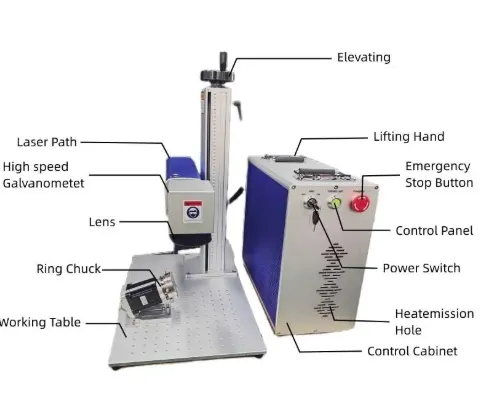
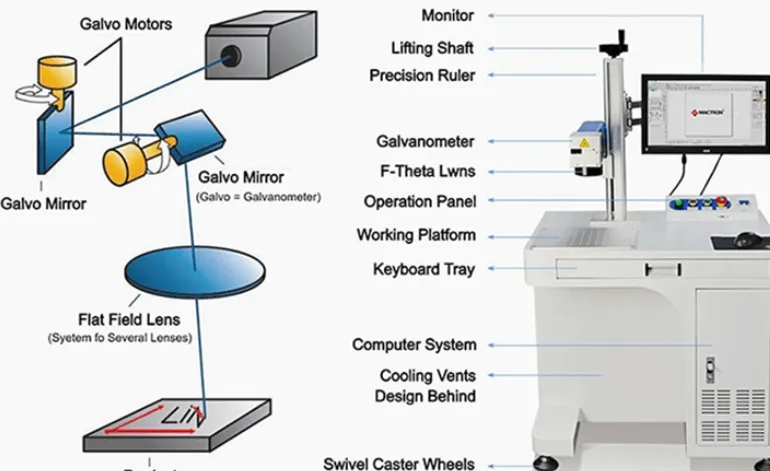
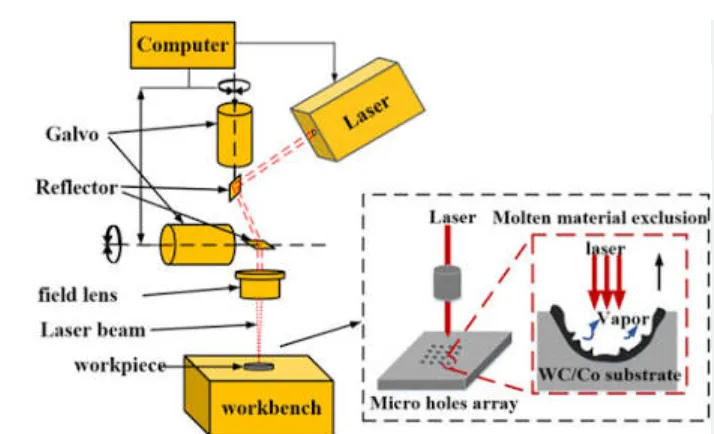
When a manufacturer quotes a 20W, 30W or 50W machine, that number is only the beginning. A fiber laser marking machine is a system made up of a laser source, scanner, F-theta lens, controller, software, frame, worktable and electrical components.
The following figures are published JQ Laser series-level specifications. They are useful for comparing configurations, but the final machine specification must be confirmed on the quotation and order documents.
| Specification | JQ Laser published reference | What an OEM buyer should confirm |
|---|---|---|
| Laser type | Pulsed fiber laser | Conventional pulsed or MOPA; exact source model. |
| Available power | 20W / 30W / 50W / 100W | Rated output, source brand, model and warranty terms. |
| Wavelength | 1064 nm typical | Confirm the source datasheet and application suitability. |
| Scanner speed | Up to approximately 7,000 mm/s in published configurations | Actual cycle time on the buyer’s part and marking file. |
| Standard marking field | 110 × 110 mm typical | Actual F-theta lens and field supplied. |
| Optional marking fields | 150 × 150 / 175 × 175 / 200 × 200 / 300 × 300 mm | Field size, spot size, detail and edge uniformity. |
| Cooling | Air cooling is common in published 20W–100W configurations | Requirements of the exact source and machine configuration. |
| Control system | BJJCZ / JCZ-compatible configurations | Exact control card, software version and license arrangement. |
| Power supply | 110V / 220V, 50/60Hz depending on destination configuration | Voltage, frequency, plug, grounding and local electrical requirements. |
Important: the specifications above describe the JQ product series, not every possible OEM configuration. A customized quotation may use different components. Ask for the exact bill of configuration before approving the order.
Why the laser source model matters
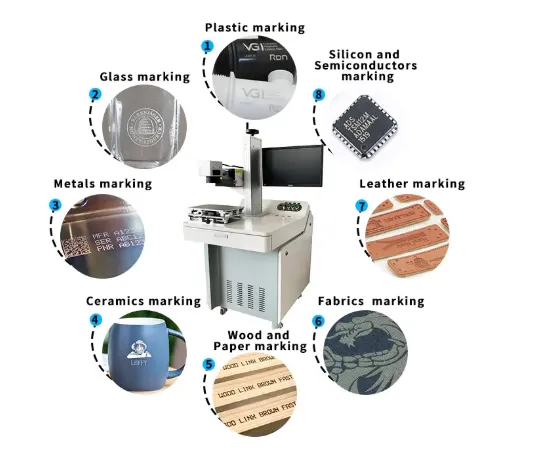
Two machines can both be advertised as 30W but use different source models. A conventional pulsed source and a MOPA source may behave differently on stainless steel, anodized aluminum and certain surface treatments.
For example, JQ Laser’s public product information lists Raycus, JPT, MAX and IPG among source options across its fiber laser configurations. That does not mean every source is included as standard in every model. The OEM quotation should name the actual brand and model.
Why the scanner and lens matter
The scanner moves the beam, while the F-theta lens determines the marking field and affects the optical spot and detail capability. A 300 × 300 mm field may be useful for a larger workpiece, but it is not automatically the best choice for a very small QR code.
Ask the supplier to mark your smallest required text and code at the actual field size you intend to purchase. Check the center and the required working positions, not just one convenient sample in the middle.
Why the controller and software matter
If you sell machines under your own brand, your customers will eventually ask how to import artwork, create serial numbers, mark QR codes or connect production data. Confirm the control card, software version, supported file formats, variable-data workflow and license arrangement.
Do not accept “EZCAD compatible” as a complete software specification. Ask which exact version is supplied, whether the license is included, and how updates and replacement computers are handled.
4. OEM application scenarios: what to customize for different buyers
Scenario A: A distributor building a standard machine product line
Typical products: 20W and 30W desktop fiber laser marking machines for metal workshops, hardware manufacturers and local industrial customers.
What matters: consistent machine configuration, your logo, product labels, manuals, packaging, stable spare parts and repeat-order control.
Recommended approach: start with a small number of standard configurations. For example, one 20W model for routine metal marking and one 30W model for customers who need additional output capacity. Keep the source, scanner, lens and controller consistent within each model unless a change is approved.
Do not do this: create too many slightly different versions before you understand which models sell. More variants mean more manuals, spare parts, training and service work.
Scenario B: A machine importer supplying industrial factories
Typical products: 30W or 50W fiber laser systems for stainless steel parts, aluminum components, nameplates, tools and industrial traceability.
What matters: application test evidence, source model, field size, production cycle time, safety arrangement and service support.
Recommended approach: send the customer’s actual parts before finalizing the model. If the buyer needs deep engraving, test depth and cycle time rather than selecting a 50W machine based on power alone. If the job is mainly serial numbers and QR codes, a lower-power configuration may be sufficient.
Scenario C: An automation company integrating a marking station
Typical products: fiber laser marking heads or complete marking stations with conveyor, rotary axis, fixture, vision positioning or other automation.
What matters: mechanical interfaces, trigger signals, PLC communication, part positioning, safety interlocks and line cycle time.
Recommended approach: create an interface document before production. Define the part presentation, sensor position, signal logic, marking coordinates, fault handling and who is responsible for the line-level integration.
Do not do this: approve an automation project based only on a video of the laser marking a stationary part. The complete system must be tested with the actual handling sequence.
Scenario D: A brand owner selling specialized marking equipment
Typical products: MOPA fiber, UV laser or application-specific systems for anodized aluminum, selected plastics, electronics or fine marking.
What matters: exact source specification, application know-how, repeatable sample results, manuals, technical claims and customer training.
Recommended approach: build the product around a clearly defined application. Keep a record of the materials tested, process settings and limitations. Avoid claiming that one machine can mark every plastic or every metal finish.
5. How to verify that an OEM supplier can actually deliver
Ask to see the production process
Request a live video call or a current production video. Ask to see machine assembly, wiring, source installation, scanner and lens setup, software checking and final laser testing. If the supplier outsources some steps, ask who checks the finished machine and who takes responsibility for problems.
Request a sample test with your own workpiece
Provide the actual material, surface finish, marking file, mark size and required result. If you have a target cycle time, include it. Ask the supplier to record the laser source, lens, field size and processing parameters used.
Ask for a pre-shipment inspection record
A useful inspection record should identify the machine and its configuration. It may include source power checking, electrical checks, software operation, marking tests and inspection of the accessories supplied.
Check whether the supplier can maintain the approved version
For repeat orders, ask how the supplier records component changes. If a laser source or controller becomes unavailable, what is the replacement approval process? Will the supplier notify you before changing the machine configuration?
Speak about service before there is a problem
Ask how technical support is requested, what information your team should provide, how spare parts are identified and how warranty claims are handled. If your market requires local service, define whether you or the manufacturer will handle the first response.
6. OEM procurement checklist: 12 items to confirm before ordering
Use the following checklist to evaluate each candidate supplier. The “evidence or test” column tells you what to request. The limitations column helps prevent a supplier’s general statement from being treated as a contractual guarantee.
1. Legal company identity and manufacturing responsibility
- Applicable condition: every first-time OEM relationship, especially when the buyer is importing machines under its own brand.
- Evidence / test: request the registered company name, business address, invoice and contract entity. Arrange a live video call to see the actual assembly and testing operation.
- Limitations: a factory visit or production video does not prove that every component is made in-house. Focus on who assembles, tests and takes responsibility for the finished machine.
2. Actual laser source brand and model
- Applicable condition: all fiber laser OEM orders, particularly when the buyer has a target application or a repeat-order product line.
- Evidence / test: ask for the source nameplate, exact model, official datasheet and written confirmation in the quotation.
- Limitations: a source brand name alone does not define the complete machine performance. Scanner, lens, control system and process settings also matter.
3. Laser power and application suitability
- Applicable condition: when comparing 20W, 30W, 50W and 100W configurations or when the buyer has a specific depth or cycle-time target.
- Evidence / test: mark the same production part with the proposed configurations. Compare mark quality, depth where relevant and complete cycle time.
- Limitations: higher rated power does not produce a proportional increase in accepted parts per hour. Artwork, hatch spacing, material and handling can become the real bottleneck.
4. Scanner, lens and marking field
- Applicable condition: large parts, small codes, multi-position marking or workpieces with restricted access.
- Evidence / test: confirm scanner and lens models, field size and working distance. Test the smallest required text or code at the actual marking position.
- Limitations: a larger marking field may affect spot size and fine-detail performance. Do not select a lens based on field size alone.
5. Controller, software and license
- Applicable condition: distributors who need to train customers, factories using variable serial numbers, and OEM buyers supplying multiple countries.
- Evidence / test: request the controller model, software version, license information, supported file formats and a demonstration of the customer’s actual marking workflow.
- Limitations: software compatibility does not automatically mean database integration, remote connectivity or unlimited software upgrades.
6. Sample test and acceptance criteria
- Applicable condition: every new material, surface finish, marking requirement or customized machine configuration.
- Evidence / test: submit real parts and actual artwork. Agree on contrast, depth, code readability, mark location, cycle time and acceptable surface condition.
- Limitations: one successful sample does not qualify every material batch or every future product. Keep the sample and test record as the approved reference.
7. Assembly and pre-shipment quality control
- Applicable condition: first orders, repeat orders and machines with customized electrical or mechanical components.
- Evidence / test: request a machine-specific inspection sheet covering the agreed electrical, software, laser and marking checks. Match the machine serial number to the report.
- Limitations: a generic QC checklist is not proof that the delivered machine passed every listed test. Ask for actual results or recorded inspection evidence.
8. OEM branding, labels and documentation
- Applicable condition: private-label and distributor programs.
- Evidence / test: approve logo artwork, machine labels, packaging, manual cover, language, model name and document revision before production.
- Limitations: branding changes do not automatically establish local regulatory compliance. The buyer and manufacturer should agree who is responsible for required market-specific documents and markings.
9. Repeat-order consistency and engineering change control
- Applicable condition: distributors, importers and brands planning multiple orders over several months.
- Evidence / test: assign a model or configuration revision. Keep the approved bill of materials, drawings, software version and sample record. Require written notification and approval for substitutions.
- Limitations: a supplier cannot promise permanent availability of every component. The agreement should explain how equivalent replacements are evaluated and approved.
10. Warranty, spare parts and technical support
- Applicable condition: every commercial order, especially when the buyer has no local laser engineer.
- Evidence / test: request written warranty coverage, exclusions, claim procedure, technical contact, spare-parts list and support workflow. Ask how common faults are diagnosed remotely.
- Limitations: warranty duration alone does not tell you response time or repair cost. Confirm which components are covered and who pays freight and labor.
11. MOQ, lead time, payment and shipping terms
- Applicable condition: new distributors, trial orders and OEM projects with customized packaging or machine structures.
- Evidence / test: obtain a written quotation showing MOQ, production lead time, payment milestones, packing method, shipping term, export documents and delivery responsibilities.
- Limitations: MOQ and lead time depend on the configuration, quantity, component availability and customization scope. Do not rely on a general website statement as the final commitment.
12. Market compliance and laser safety responsibilities
- Applicable condition: all exports, particularly where the buyer resells machines in a regulated market or integrates them into a production line.
- Evidence / test: identify the applicable destination-market requirements. Request relevant technical documents, risk assessment information, electrical documentation and safety information for the actual machine configuration.
- Limitations: a CE logo or a generic certificate image does not by itself prove that the exact delivered machine and its complete installation comply with every applicable requirement. Confirm the legal responsibilities of the manufacturer, importer and system integrator.
7. Comparison table: how to choose between OEM suppliers
Once you have collected the evidence, compare suppliers using the same criteria. A lower machine price may be attractive, but it should not compensate for unclear components, missing sample evidence or an undefined warranty process.
| Evaluation item | Supplier A: price-first | Supplier B: configuration-transparent | What a buyer should prefer |
|---|---|---|---|
| Company identity | Website and sales contact only | Legal entity, address and manufacturing responsibility documented | Supplier B |
| Laser source | “30W fiber laser” only | Brand, model, datasheet and quotation match | Supplier B |
| Optical configuration | Field size stated, lens model missing | Lens, scanner and marking field listed | Supplier B |
| Sample testing | Generic demonstration video | Actual part, settings and acceptance criteria recorded | Supplier B |
| Quality control | “Every machine is tested” | Machine-specific inspection record available | Supplier B |
| OEM branding | Logo placement discussed verbally | Artwork, labels, packaging and document revisions approved | Supplier B |
| Repeat orders | Configuration may change without a defined process | Approved BOM and change-control procedure | Supplier B |
| After-sales | Warranty duration only | Coverage, exclusions, support route and spare parts documented | Supplier B |
| Commercial terms | Unit price only | MOQ, lead time, packing, shipping and payment terms listed | Supplier B |
This is a purchasing comparison framework, not a claim that any named supplier has passed or failed these checks. Apply the same questions to every candidate and keep the answers in writing.
Suggested supplier scorecard
For a first OEM order, you can score each supplier out of 100 using the following weighting. Adjust the weights if your project is mainly automation, private label or standard machine distribution.
| Category | Suggested weight | What to score |
|---|---|---|
| Manufacturing responsibility and company verification | 15 | Clear legal entity, assembly/testing responsibility and evidence. |
| Machine configuration transparency | 15 | Exact source, scanner, lens, controller and software. |
| Application test and performance | 20 | Actual part test, acceptance results and cycle time. |
| Quality control and repeat-order consistency | 15 | Inspection records, configuration revision and change control. |
| OEM customization capability | 10 | Branding, packaging, documents and engineering scope. |
| After-sales and spare parts | 15 | Warranty, support route, parts and troubleshooting. |
| Commercial terms | 10 | MOQ, lead time, payment, shipping and total landed cost. |
Buying rule: do not let a low price compensate for a failed critical requirement. If the supplier cannot identify the laser source, cannot reproduce the sample, or will not document the agreed configuration, resolve that issue before scoring the commercial offer.
8. What JQ Laser offers for OEM and ODM projects
Jining Junqi Intelligent Technology Co., Ltd. (JQ Laser) states that it was established in 2011 in Qufu, Jining, Shandong, China. The company’s published information describes its work as including laser machine assembly, laser testing, sample testing, customized machine configurations and technical support.
For OEM and ODM projects, the public service page lists the following customization areas:
- Machine branding, logo and selected appearance elements.
- Laser source and machine configuration selection.
- Marking field and lens options.
- Rotary attachments for cylindrical products.
- Conveyor, positioning, CCD vision and other automation options where applicable.
- OEM packaging and product documentation.
JQ Laser’s published company profile also lists a 15,000 m² facility, a team of approximately 40–50 people, an application and technical team, and annual production information. These are company-published figures; buyers who require a formal factory audit should verify the current figures and manufacturing scope directly.
How we recommend starting an OEM project
- Tell us your target market. Let us know where you plan to sell the machines and whether you need a standard model or a private-label product line.
- Define the first configuration. Confirm the laser power, source model, lens, marking field, controller, software and accessories.
- Send your application details. Provide material, product dimensions, marking content, required depth or contrast and expected production volume.
- Review the sample and configuration. Check the marking result and the machine specification before confirming the order.
- Approve branding and documents. Confirm the logo, machine labels, packaging, manual and document language.
- Confirm delivery and service terms. Put MOQ, lead time, inspection, warranty, spare parts and support responsibilities in writing.
We do not recommend starting with a large order simply because the unit price looks attractive. For a new brand or distributor, a small trial order with a clearly approved configuration is usually a more controlled way to start. The appropriate quantity and MOQ still need to be confirmed for the actual project.
Explore JQ Laser OEM & ODM Solutions
9. Information to prepare before requesting an OEM quotation
If you send only “Please quote 30W fiber laser marking machine with my logo,” the supplier has to guess a lot of important details. That often leads to repeated questions and quotations that are difficult to compare.
Use this list to prepare your first inquiry:
- Company name and destination country.
- Whether you are a distributor, importer, brand owner, factory or automation integrator.
- Expected first-order quantity and estimated repeat-order volume.
- Target machine types and laser power options.
- Material and actual product photos or samples.
- Marking content, dimensions, depth or contrast requirements.
- Required marking field and any rotary or fixture requirements.
- Whether you need conveyor, CCD vision, PLC communication or other automation.
- Branding, packaging and manual language requirements.
- Target delivery date and destination shipping address or port.
- Any market-specific safety or compliance documentation requirements.
The more specific the information, the more useful the quotation will be. It also helps both sides identify what is included and what needs to be quoted separately.
10. Frequently asked questions about fiber laser marking OEM manufacturers
What is the difference between a fiber laser marking OEM and ODM manufacturer?
OEM generally means manufacturing an agreed machine under the buyer’s brand and specification. ODM usually involves more application-specific design or customization. The exact scope should be written into the project agreement because suppliers may use these terms differently.
Can I order one fiber laser marking machine with my own logo?
It depends on the supplier’s OEM policy and the type of customization. Some suppliers may accept a small trial order with limited branding, while customized packaging, enclosure changes or documentation may require a different MOQ. Confirm the actual MOQ in writing.
Which laser power should I choose for my OEM product line?
For a standard metal-marking product line, 20W and 30W are common starting configurations to evaluate. 50W and 100W may be appropriate for applications where higher throughput or deeper engraving is required. Test actual parts before deciding. More power does not automatically mean a better machine for every application.
Which laser source brands should I ask about?
Ask the supplier to identify the exact source model, not just the brand. JQ Laser’s published fiber machine information lists Raycus, JPT, MAX and IPG as available source options across configurations. Availability and compatibility depend on the selected machine and project.
Can an OEM manufacturer customize the marking field?
Different F-theta lenses can provide different marking fields. JQ Laser’s published series information includes a typical 110 × 110 mm standard field and optional larger fields. Confirm the exact lens and test the required marking detail at the selected field size.
How can I check whether the supplier is a real manufacturer?
Verify the legal company identity, ask who performs assembly and testing, request a live video call from the production area, and ask for machine-specific inspection records. A factory photo alone is not sufficient evidence.
What should an OEM quotation include?
At minimum, it should identify the source brand and model, rated power, scanner, lens, marking field, controller, software, accessories, branding scope, packaging, MOQ, lead time, payment terms, shipping terms and warranty coverage.
Can I change the laser source or scanner in repeat orders?
It may be possible, but a change can affect marking performance, software compatibility, spare parts and customer training. Require a written change notice and approval process. Re-test the machine if a change affects the approved application.
What is the most important test before placing an OEM order?
Test the actual production part using the agreed machine configuration and marking file. Record the result, cycle time and acceptance criteria. For an automation project, test the complete sequence, including part positioning and signal exchange.
How should I compare OEM manufacturer prices?
Compare the complete configuration and total landed cost, not only the unit price. Include packaging, shipping, taxes, spare parts, training, warranty, software and any customization or integration costs.
References and verification sources
The company and machine information below is based on JQ Laser’s published pages. The supplier-evaluation recommendations are supported by the external technical buying guide. Buyers should still request current documents and verify the configuration for the actual order.
- JQ Laser – Laser Marking Machine OEM & ODM Solutions. Published OEM and ODM customization scope, branding, machine configuration, marking area, automation, packaging and documentation.
- JQ Laser – About Us. Company background, location, manufacturing and testing descriptions, and company-published operational information.
- JQ Laser – Fiber Laser Marking Machine. Published series-level power options, wavelength, marking-field options, scanner-speed reference, control system and configuration notes.
- JQ Laser – Service & Support. Published service and technical support information.
- JQ Laser – Shipping & Delivery. Shipping and delivery information for export orders.
- KEYENCE – How to Evaluate Laser Marking Manufacturers: A Step-by-Step Guide. Independent supplier-evaluation considerations covering application testing, cycle time, integration, safety, references and total ownership cost.
Looking for a Fiber Laser Marking OEM Manufacturer?
Tell us what type of machine you want to sell, your target market, expected quantity and customization requirements. If you have an existing product specification or a sample part, send it with your inquiry.
We can review the required laser configuration, sample testing, branding, packaging and technical documentation before confirming the project scope.
Jining Junqi Intelligent Technology Co., Ltd. – JQ Laser