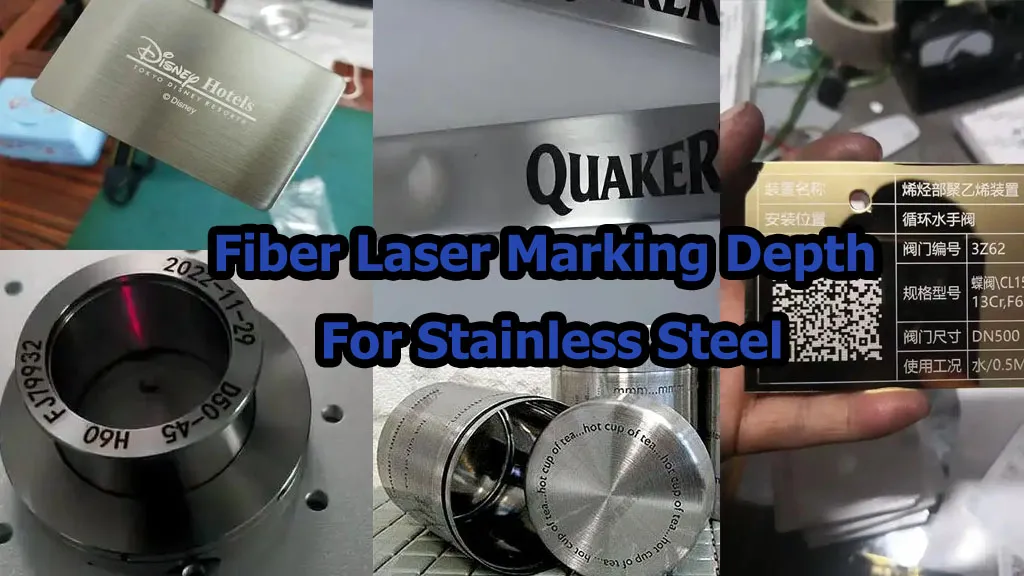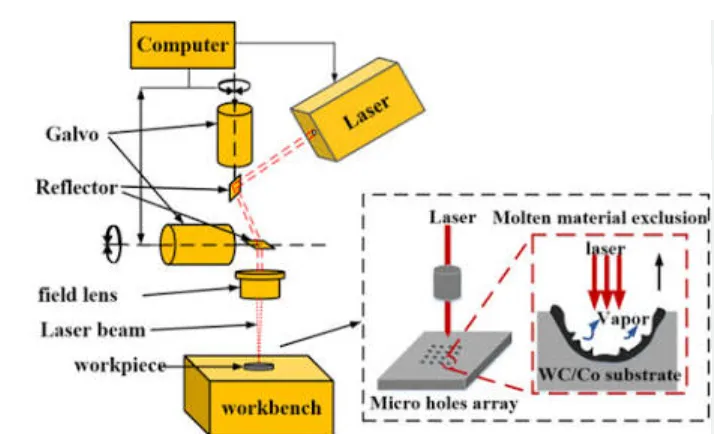
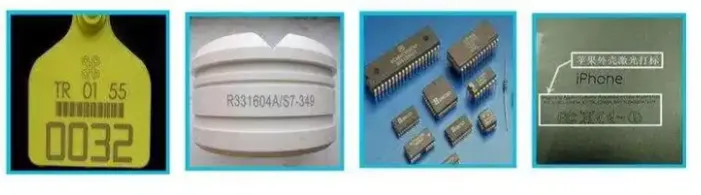
Engineering plastics have become essential materials in automotive components, electronics, medical devices, aerospace parts, and precision industrial products. However, achieving permanent, high-contrast identification marks on engineering plastics is significantly more challenging than marking metals.
Unlike stainless steel or aluminum, polymers have complex molecular structures, different absorption characteristics, and thermal sensitivity. A successful marking process requires a deep understanding of polymer chemistry, laser-material interaction, and optimized processing parameters.
This engineering guide explains the science behind laser marking on engineering plastic , including Photochemical Ablation, Carbonization, Foaming, and Heat-Affected Zone (HAZ) control.
The goal is not simply to create a visible mark, but to achieve:
- High contrast permanent identification
- Zero-burn or minimal thermal damage
- Excellent readability for QR codes and serial numbers
- Long-term resistance against chemicals, abrasion, and environmental aging
1. Why Engineering Plastic Laser Marking Requires Specialized Technology
Engineering plastics such as PEEK, PA66 Nylon, Polycarbonate (PC), and POM are designed for demanding industrial applications. They provide excellent mechanical strength, chemical resistance, lightweight performance, and dimensional stability.
However, these same characteristics create challenges during laser processing.
| Challenge | Reason | Impact During Laser Marking |
|---|---|---|
| Low Optical Absorption | Many plastics transmit or reflect traditional infrared laser wavelengths. | Weak contrast or incomplete marking. |
| Low Thermal Resistance | Excessive heat can melt polymer chains. | Burn marks, deformation, and damaged surfaces. |
| Different Polymer Additives | Glass fiber, carbon black, TiO₂ and pigments change laser response. | Different marking results between material batches. |
| Strict Industry Requirements | Automotive and medical parts require permanent traceability. | Need for stable and repeatable laser parameters. |
Modern laser marking systems solve these challenges by controlling wavelength, pulse duration, frequency, scanning speed, and energy density.
2. Understanding the Physics of Laser Marking on Engineering Plastics
When a laser beam interacts with a polymer surface, the marking result depends on how the material absorbs laser energy. The interaction can occur through several mechanisms:
- Photochemical Ablation
- Carbonization
- Foaming
- Thermal Modification
- Material Removal (Laser Engraving)
2.1 Photochemical Ablation: The Foundation of Cold Laser Marking
Photochemical Ablation is one of the most important mechanisms in precision plastic marking.
During this process, high-energy photons from ultraviolet laser radiation directly break molecular bonds inside polymer chains. Instead of transferring large amounts of heat into the material, the laser energy causes molecular decomposition at the surface level.
This process is often called cold processing because it minimizes thermal influence on surrounding areas.
Compared with traditional thermal engraving methods, photochemical ablation provides:
- Lower Heat-Affected Zone (HAZ)
- Reduced melting and deformation
- Sharper micro-text and QR code marking
- Better performance on heat-sensitive engineering plastics
UV laser wavelengths, commonly around 355nm, have higher photon energy compared with infrared lasers, allowing more direct interaction with polymer molecular structures. This is why UV laser systems are widely used for precision marking of plastics, medical components, electronic housings, and transparent materials.
For manufacturers requiring extremely fine plastic marking solutions, selecting an experienced Precision UV Laser Marking Machine Vendor is critical for achieving consistent production quality.
2.2 Carbonization: Creating Dark High-Contrast Marks
Carbonization occurs when laser energy heats the polymer close to its decomposition temperature. The polymer structure breaks down and produces carbon-rich residues, creating dark markings.
This method is commonly used on light-colored engineering plastics where black or gray contrast is required.
Typical applications include:
- Automotive connectors
- Electrical components
- Industrial sensors
- Machine identification parts
However, excessive carbonization can create unwanted burning effects. Therefore, engineers must carefully control:
- Laser power percentage
- Pulse frequency
- Scanning speed
- Number of passes
2.3 Foaming: Producing White Marks on Dark Plastics
Foaming is another important laser marking mechanism for polymers.
During laser exposure, gas bubbles form inside the polymer matrix. These microscopic structures change light reflection characteristics and create a raised white appearance.
Foaming technology is widely applied to:
- Black ABS housings
- Dark Nylon components
- Automotive switches
- Electronic enclosures
The final contrast depends on polymer composition, additives, laser wavelength, and processing parameters.
2.4 Heat-Affected Zone (HAZ) Control: The Key to Zero-Burn Results
The Heat-Affected Zone (HAZ) represents the area surrounding the laser interaction point where thermal energy may change the material structure.
For engineering plastics, minimizing HAZ is extremely important because excessive heat can cause:
- Melting
- Surface deformation
- Yellowing
- Mechanical property degradation
A properly optimized laser marking process achieves permanent identification while maintaining the original mechanical performance of the plastic component.
3. Why UV Laser Technology Is Preferred for Engineering Plastic Marking
For many engineering plastics, UV laser marking provides better contrast and less thermal damage compared with conventional infrared systems.
| Laser Type | Wavelength | Main Processing Method | Plastic Application |
|---|---|---|---|
| UV Laser | 355nm | Photochemical reaction / Cold marking | Precision plastic, medical parts, electronics |
| Fiber Laser | 1064nm | Thermal modification | Plastic with additives, some industrial polymers |
| CO₂ Laser | 10.6μm | Thermal engraving | Large plastic sheets, packaging materials |
Choosing the correct wavelength is the first step toward achieving reliable engineering plastic laser marking performance.
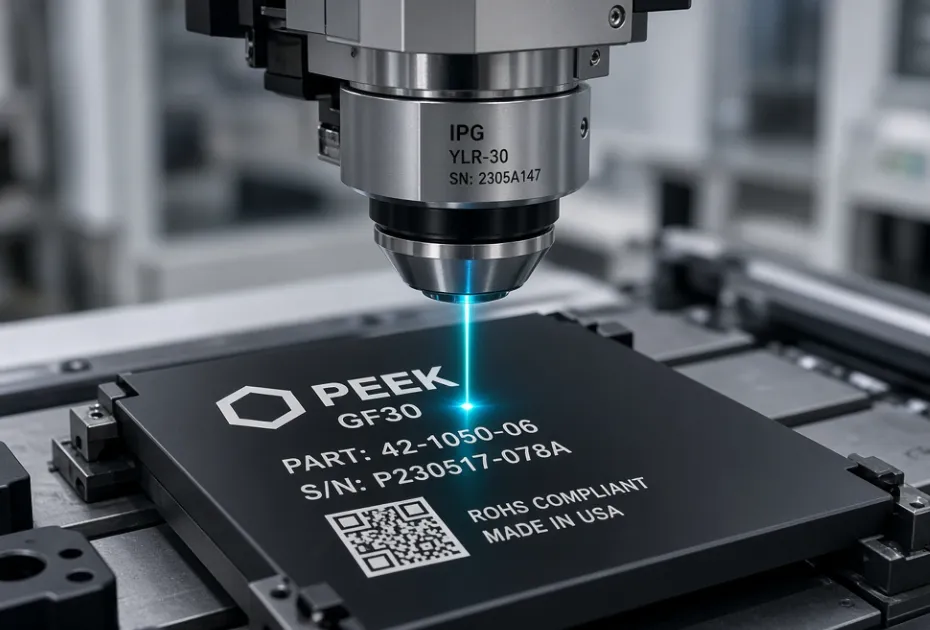
4. Optimized Laser Parameters for Different Engineering Plastics
There is no universal laser parameter that works for every engineering plastic. The optimal settings depend on polymer structure, color additives, glass fiber content, carbon filler, surface treatment, and the required marking effect.
Professional engineers normally optimize four critical parameters:
- Laser Power (%) – Determines the energy delivered to the polymer surface.
- Marking Speed (mm/s) – Controls interaction time between laser beam and material.
- Frequency (kHz) – Influences pulse overlap and marking smoothness.
- Hatch Distance (mm) – Controls line spacing and marking density.
The following table provides typical starting parameters for engineering plastic laser marking applications. Final production parameters should always be adjusted through material testing.
Engineering Plastic Laser Marking Parameter Comparison Table
| Material | Typical Application | Laser Type | Power | Speed | Frequency | Hatch Distance |
|---|---|---|---|---|---|---|
|
PEEK
Polyether Ether Ketone | Medical implants, aerospace components, semiconductor parts | UV Laser / Fiber Laser | 15-35% | 800-2500 mm/s | 30-60 kHz | 0.02-0.05 mm |
|
Nylon PA66
Polyamide 66 | Automotive connectors, gears, mechanical components | UV Laser / Fiber Laser | 20-45% | 1000-3000 mm/s | 20-80 kHz | 0.03-0.08 mm |
| Polycarbonate (PC) | Electronic housings, optical parts, safety components | UV Laser | 10-30% | 1200-3500 mm/s | 40-100 kHz | 0.02-0.06 mm |
|
POM
Polyoxymethylene / Acetal | Precision gears, bearings, industrial components | Fiber Laser / UV Laser | 20-40% | 1000-2800 mm/s | 30-70 kHz | 0.03-0.07 mm |
Note: The above parameters are general engineering references. Different plastic grades, pigments, additives, and surface finishes may require customized laser testing.
5. Material Science Analysis: How Different Engineering Plastics React to Laser Energy
5.1 Laser Marking PEEK (Polyether Ether Ketone)
PEEK is one of the highest-performance engineering plastics due to its excellent temperature resistance, chemical stability, and mechanical strength.
Because PEEK has a stable molecular structure, achieving high contrast marking requires precise energy control.
During laser exposure, PEEK marking typically occurs through:
- Surface molecular modification
- Controlled Carbonization
- Photochemical Ablation using UV wavelengths
UV laser systems are commonly selected for PEEK medical and aerospace components because they provide minimal Heat-Affected Zone (HAZ).
Typical applications:
- Medical surgical instruments
- Implantable components
- Aerospace insulation parts
- Semiconductor equipment components
5.2 Laser Marking Nylon PA66
Nylon PA66 is widely used in automotive and industrial manufacturing because of its high strength and wear resistance.
However, PA66 often contains glass fiber reinforcement. The glass fiber content changes laser absorption characteristics and can influence marking uniformity.
Engineers must balance:
- Energy density
- Pulse overlap
- Scanning speed
- Surface temperature
For black PA66 components, laser marking usually creates high contrast through pigment modification and controlled foaming effects.
5.3 Laser Marking Polycarbonate (PC)
Polycarbonate is a transparent engineering plastic widely used in electronic housings, optical components, and safety products.
Because PC is sensitive to thermal stress, excessive laser energy may cause:
- Cracking
- Yellow discoloration
- Surface deformation
UV laser technology is especially suitable for PC because photochemical ablation reduces thermal damage.
5.4 Laser Marking POM (Polyoxymethylene)
POM is commonly used for precision mechanical parts requiring low friction and dimensional stability.
The material response depends heavily on additives. For example:
| POM Type | Laser Marking Result |
|---|---|
| Natural White POM | Dark carbonized marking possible with controlled thermal parameters |
| Black POM | High contrast white marking through foaming reaction |
| Glass Fiber Reinforced POM | Requires optimized frequency and hatch distance |
6. Engineering Comparison: UV Laser vs Fiber Laser for Plastic Marking
| Feature | UV Laser Marking Machine | Fiber Laser Marking Machine |
|---|---|---|
| Processing Method | Photochemical Ablation | Thermal Modification |
| Heat-Affected Zone | Very Low | Higher |
| Plastic Compatibility | Excellent for sensitive polymers | Good for additive-filled plastics |
| Fine Detail Capability | Excellent | Good |
| Typical Applications | Medical, electronics, precision components | Industrial plastic parts, automotive components |
For companies producing high-value engineering plastic components, UV laser marking usually provides better consistency, lower thermal stress, and superior micro-marking quality.
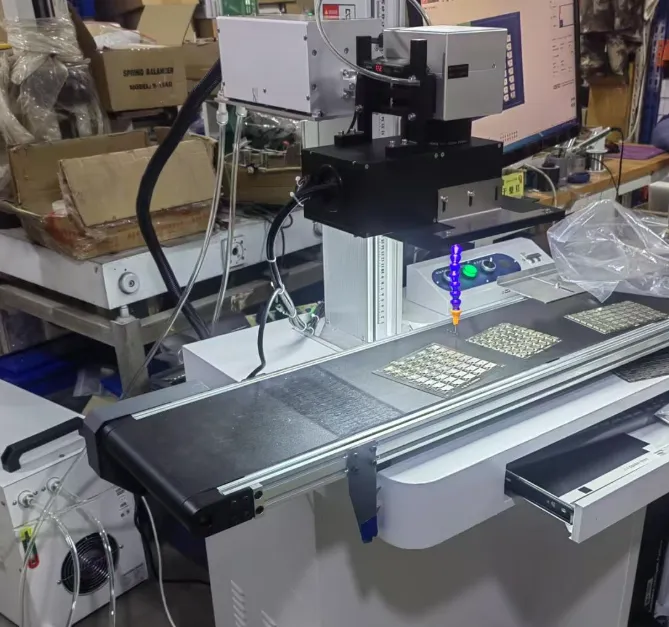
7. Industrial Applications of Laser Marking on Engineering Plastics
Engineering plastics are widely used in industries where lightweight performance, chemical resistance, electrical insulation, and mechanical durability are required. However, these components often need permanent identification, including serial numbers, QR codes, logos, production dates, and traceability information.
Compared with traditional printing methods, laser marking provides a permanent, contactless, and chemical-free identification solution. The final marking quality depends on the interaction between laser wavelength, polymer composition, additives, and processing parameters.
7.1 Automotive Industry: Permanent Marking on Plastic Components
The automotive industry is one of the largest users of engineering plastic laser marking technology. Modern vehicles contain thousands of plastic components including connectors, sensors, switches, housings, and electronic modules.
These parts require lifetime traceability because manufacturers must identify:
- Production batch information
- Supplier identification
- Component serial numbers
- Safety-related tracking codes
Common automotive engineering plastics include:
- PA66 reinforced with glass fiber
- POM precision components
- PC/ABS housings
- PEEK high-temperature components
For automotive plastic parts, laser marking must maintain excellent contrast while avoiding deformation. UV laser marking is frequently selected for sensitive components because it produces high-resolution marks with minimal thermal influence.
Typical Automotive Applications
| Component | Material | Required Marking |
|---|---|---|
| Electrical Connectors | PA66 + Glass Fiber | QR Code, Serial Number |
| Engine Sensors | POM / PEEK | Part Number, Traceability Code |
| Switch Components | PC/ABS | Logo, Identification |
7.2 Medical Industry: High Precision Plastic Marking
Medical devices require extremely strict identification standards. Plastic medical components must remain readable after sterilization, chemical cleaning, and long-term storage.
Common applications include:
- Surgical instrument handles
- Medical tubing components
- Disposable medical devices
- Laboratory consumables
Medical manufacturers often prefer UV laser marking because the process minimizes thermal damage and creates precise micro-text, barcodes, and Data Matrix codes.
The advantages include:
- No ink contamination
- Permanent identification
- High-resolution micro marking
- Compatibility with automated production lines
7.3 Electronics Industry: Micro Marking on Plastic Housings
Electronic products require smaller and more precise identification marks due to increasing miniaturization.
Engineering plastics used in electronics include:
- PC
- ABS
- LCP
- PEEK
Applications include:
- Mobile device components
- PCB housings
- Connector identification
- Semiconductor equipment parts
UV laser marking technology is especially suitable for electronic plastic components because it can create sharp edges and fine details without damaging surrounding structures.
7.4 Aerospace Industry: High Performance Polymer Identification
Aerospace manufacturers use advanced engineering plastics because of their lightweight properties and resistance to extreme environments.
Materials such as PEEK and high-performance polymer composites require reliable identification throughout their service life.
Laser marking applications include:
- Aircraft interior components
- Electrical insulation parts
- Composite components
- High-temperature polymer assemblies
8. How to Choose the Right Laser Marking Machine for Engineering Plastics
Selecting the correct laser marking system requires more than choosing laser power. Engineers should evaluate the complete interaction between material properties and laser technology.
Key Selection Factors
| Selection Factor | Why It Matters |
|---|---|
| Plastic Type | Different polymers require different laser wavelengths and parameters. |
| Required Contrast | Dark marking, white marking, or color change requires different processes. |
| Marking Size | Small QR codes require high precision scanning systems. |
| Production Speed | Mass production requires optimized scanning speed and automation. |
| Heat Sensitivity | Sensitive plastics require low HAZ processing. |
UV Laser vs Fiber Laser Decision Guide
| Requirement | Recommended Laser |
|---|---|
| Medical plastic components | UV Laser |
| Transparent PC materials | UV Laser |
| Glass fiber reinforced Nylon | UV Laser / Fiber Laser |
| Industrial plastic housings | Fiber Laser |
| Ultra-fine micro marking | UV Laser |
A professional supplier should provide material testing before final equipment selection. Because engineering plastics vary greatly by additives and formulation, sample testing is the most reliable method for confirming marking quality.
9. Quality Standards and Engineering Reliability
Industrial plastic marking systems are often required to meet strict quality management requirements. Manufacturers typically consider:
- ISO quality management systems
- Product traceability requirements
- Automotive supplier standards
- Medical device identification requirements
Organizations such as the Society of Plastics Engineers (SPE) provide technical knowledge and industry resources related to polymer materials and engineering applications.
For production environments, laser marking processes should be validated according to customer quality requirements and relevant industrial standards.
Engineering Experience Matters
Successful engineering plastic laser marking is not only about owning a laser source. It requires understanding:
- Polymer chemistry
- Laser-material interaction
- Parameter optimization
- Production requirements
- Quality inspection methods
A manufacturer with practical application experience can help customers reduce testing time, improve production stability, and achieve consistent marking results.
10. Frequently Asked Questions About Laser Marking on Engineering Plastics
1. What is the best laser for marking engineering plastics?
The best laser depends on the plastic material and marking requirements. UV laser marking machines are generally preferred for sensitive engineering plastics because they use Photochemical Ablation with low thermal impact. Fiber lasers are suitable for some additive-filled plastics where thermal modification creates sufficient contrast.
2. Can laser marking be used on PEEK plastic?
Yes. PEEK can be permanently marked using UV laser and fiber laser technology. UV laser is often recommended because it creates high-resolution marks while minimizing Heat-Affected Zone (HAZ) and maintaining the mechanical properties of PEEK components.
3. How does laser marking create contrast on plastic materials?
Laser marking contrast is created through several mechanisms including Carbonization, Foaming, pigment modification, and Photochemical Ablation. The final appearance depends on polymer composition, additives, laser wavelength, and energy density.
4. Why is UV laser better for some engineering plastics?
UV lasers have higher photon energy and can interact directly with polymer molecular structures. This allows cold processing with reduced thermal damage, making them suitable for medical plastics, electronic components, and precision engineering parts.
5. Can laser marking replace ink printing on plastic parts?
Yes. Laser marking provides permanent identification without consumables. Compared with ink printing, laser marks have better resistance against abrasion, chemicals, temperature changes, and aging.
6. What engineering plastics can be laser marked?
Common laser-markable engineering plastics include PEEK, PA66 Nylon, Polycarbonate (PC), POM, ABS, PC/ABS, LCP, and reinforced polymer materials.
7. Does laser marking damage plastic components?
When parameters are correctly optimized, laser marking only modifies the surface layer. Professional systems control energy density, frequency, speed, and hatch spacing to minimize thermal damage.
8. What causes plastic laser marking defects?
Common problems include excessive power, incorrect frequency, unsuitable wavelength, poor focus adjustment, and incompatible material additives. Material testing is recommended before mass production.
9. Can laser marking create QR codes on engineering plastics?
Yes. Laser marking is widely used for Data Matrix codes, QR codes, serial numbers, and traceability information on industrial plastic components.
10. What information should be provided when selecting a plastic laser marking machine?
Customers should provide:
- Plastic material type
- Component size
- Required marking content
- Production speed requirement
- Desired contrast effect
11. What is the difference between laser engraving and laser marking plastics?
Laser marking usually changes the surface characteristics of plastic without deep material removal. Laser engraving removes material and creates physical depth. For engineering plastics requiring traceability, laser marking is often preferred.
12. Is UV laser marking suitable for transparent plastic?
Yes. UV laser technology is widely used for transparent PC, acrylic, and optical plastic components because it provides precise surface modification with minimal cracking.
13. How long does a laser mark last on engineering plastics?
A properly optimized laser mark can remain readable throughout the service life of the component because the identification is permanently integrated into the material surface.
14. Do engineering plastics require different laser parameters?
Yes. PEEK, PA66, PC, and POM have different molecular structures and additives, therefore laser power, speed, frequency, and hatch distance must be optimized individually.
15. How can I test my plastic before buying a laser marking machine?
Professional laser manufacturers usually provide material testing services. Customers can send samples and evaluate marking contrast, durability, and production compatibility before investment.
11. Engineering Plastic Laser Marking Solutions from JQ Laser
JQ Laser specializes in industrial laser marking solutions for global manufacturers. Our experience covers fiber laser marking, UV laser marking, and customized marking systems for metal, plastic, glass, and composite materials.
For engineering plastic applications, we focus on:
- Material analysis before machine selection
- Optimized laser parameter testing
- Stable industrial marking performance
- Support for automotive, electronics, medical, and manufacturing applications
If you need professional advice for laser marking on engineering plastic , our engineering team can help evaluate your material and recommend a suitable solution.
Learn more about advanced laser technology from a reliable Precision UV Laser Marking Machine Vendor for industrial plastic marking applications.
12. Conclusion: Achieving High Contrast and Zero-Burn Plastic Marking
Laser marking on engineering plastics is a combination of polymer science, laser technology, and process optimization. Successful results require understanding how materials respond through Photochemical Ablation, Carbonization, Foaming, and controlled thermal modification.
By selecting the correct wavelength, optimizing processing parameters, and controlling Heat-Affected Zone (HAZ), manufacturers can achieve permanent, high-quality identification without damaging valuable components.
For demanding engineering applications, UV laser marking technology provides an effective solution for achieving high contrast, precision, and long-term reliability.