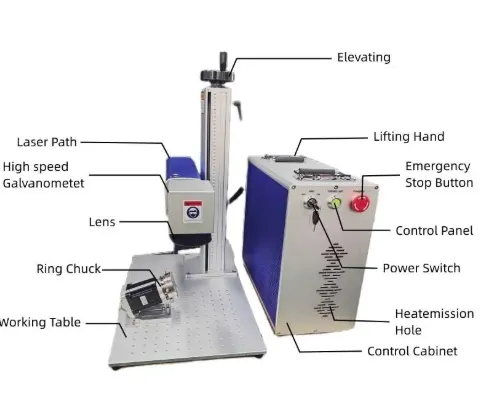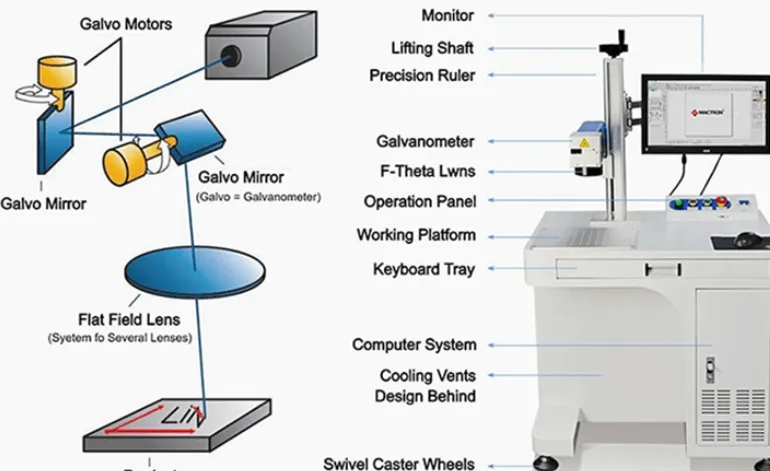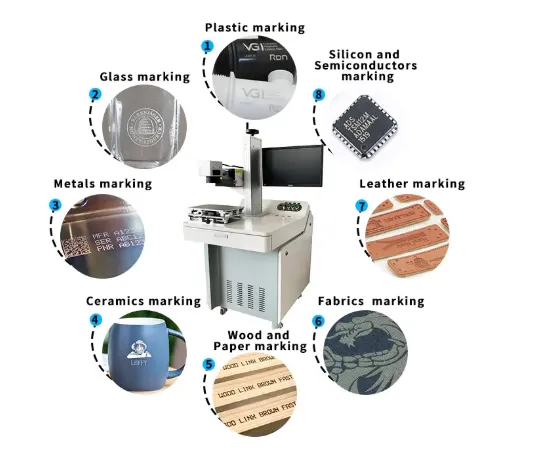
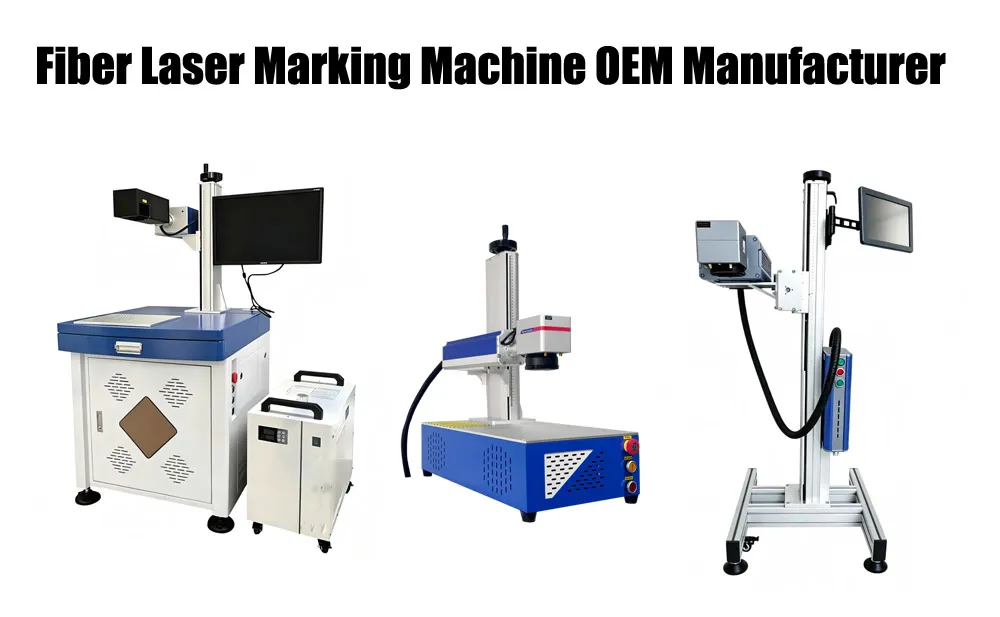
Choosing a fiber laser marking machine OEM manufacturer is not simply about finding a factory that can put your logo on a machine. You need a manufacturing partner that can supply the agreed laser configuration, reproduce your marking results, document the machine before shipment, and support your customers after installation.
If you are a distributor, importer, equipment brand owner or automation company, the seven checks below will help you avoid common OEM purchasing problems: unclear component specifications, inconsistent marking results, hidden customization costs, weak documentation and after-sales difficulties.
Our practical advice: Do not approve an OEM supplier based on a quotation or one attractive sample. Approve the actual machine configuration, sample acceptance criteria, customization scope and delivery inspection process in writing.
The 7 checks at a glance
- Verify that the supplier can actually manufacture and test the machine.
- Confirm the complete machine configuration, not just laser power.
- Test your own material and production application.
- Define exactly what OEM and ODM customization includes.
- Check quality control and pre-shipment acceptance.
- Review documentation, compliance and export readiness.
- Evaluate after-sales support and spare-parts availability.
Table of Contents
1. Verify the Manufacturer, Not Just the Trading Company
The first question is straightforward: Who is responsible for building, testing and supporting the machine you are buying?
A trading company can be a perfectly legitimate supplier. Some trading companies have strong engineering partners and good export experience. The risk appears when the supplier cannot clearly explain who assembles the machine, who checks the electrical and optical systems, who performs the marking test, and who handles technical problems after delivery.
For an OEM buyer, this matters even more. Your customers will contact your brand when a machine has a problem. If your supplier cannot identify the person responsible for technical support, you may end up managing complaints without having the engineering information needed to solve them.
What to check at the factory
Ask the supplier to show you the actual production and testing process, preferably through a live video call or a recent, unedited factory video.
Look for evidence of:
- Machine assembly and electrical installation.
- Laser source and galvanometer installation.
- Lens and marking-field configuration.
- Machine operation and marking tests.
- Final inspection before packing.
- Technical staff who can explain the machine configuration.
Do not rely on a factory building photo alone. A large building does not prove that the supplier controls the machine assembly or application testing.
A practical question to ask
“Can you show me the assembly and testing process for the same machine configuration that you are quoting to us?”
If the supplier can only show a generic production video, ask for a closer demonstration of the specific model, laser source and accessories in your quotation.
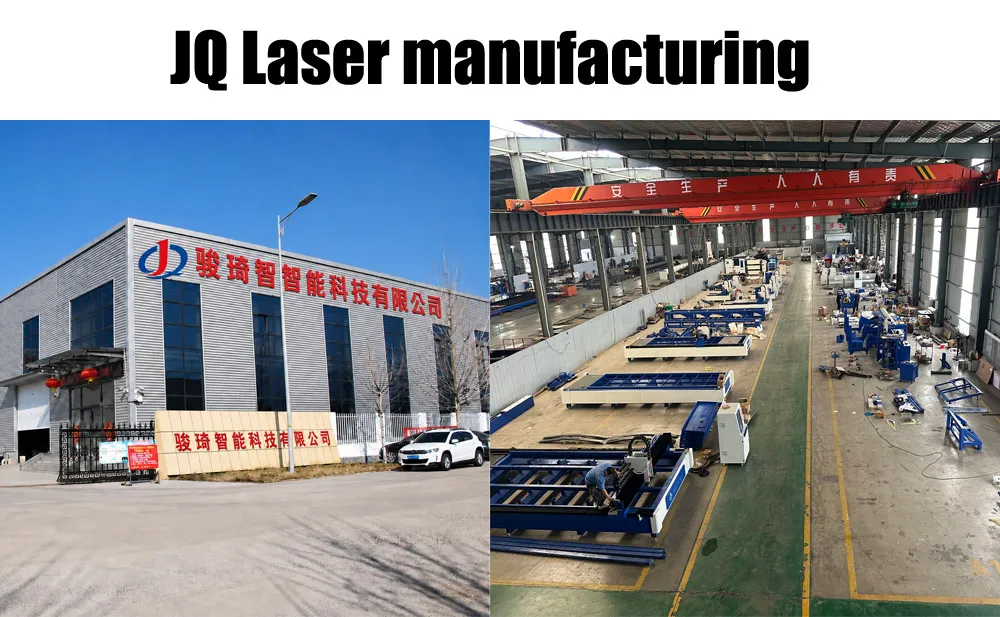
JQ Laser manufacturing information
Jining Junqi Intelligent Technology Co., Ltd. states that it was established in 2011 and manufactures fiber, UV and CO₂ laser marking equipment. Its company information describes machine assembly, laser testing, sample testing and customized solutions as part of its operations.
For an OEM project, the useful point is not simply the company’s age. It is whether the supplier can connect the people assembling the machine with the engineers testing your application and the team supporting your customers.
2. Confirm the Complete Machine Configuration
This is where many OEM purchasing mistakes begin.
Two suppliers may both quote a “30W fiber laser marking machine”, but the machines may not have the same laser source, galvanometer scanner, F-theta lens, controller, software, fixture or enclosure.
The wattage printed on the machine is only one part of the system.
The components you should specify
| Component | What to confirm | Why it matters |
|---|---|---|
| Laser source | Brand, exact model, rated output power, wavelength and warranty | Affects the available process capability and replacement options |
| Galvanometer scanner | Brand, model and supported marking field | Influences scanning performance and system integration |
| F-theta lens | Brand or model, focal length, marking field and working distance | Affects the usable marking area and achievable detail |
| Control card | Manufacturer, model and interface | Important for software compatibility and future maintenance |
| Marking software | Software name, version and license arrangement | Determines workflow, file compatibility and operator experience |
| Fixture and rotary axis | Included or optional, workpiece range and positioning method | Affects repeatability on different product shapes |
| Electrical system | Input voltage, frequency, plugs and electrical components | Must suit the destination market and installation |
| Enclosure and extraction | Included safety features and fume-extraction requirements | Important for installation and workplace risk control |
Real JQ Laser configuration references
JQ Laser’s published fiber laser machine information lists common power options of 20W, 30W, 50W and 100W, with a typical wavelength of 1064 nm for its pulsed fiber configurations.
Its published machine-family information also describes:
- A typical standard marking field of 110 × 110 mm.
- Optional marking fields such as 150 × 150, 175 × 175, 200 × 200 and 300 × 300 mm, depending on configuration.
- Air cooling as a common arrangement for 20W–100W pulsed fiber systems.
- Reference marking speeds of up to approximately 7,000 mm/s in published configurations.
- Approximately ±0.01 mm as a published reference accuracy figure for applicable configurations.
These are product-family references, not a guarantee that every combination of laser source, scanner and lens will achieve every listed value. The final configuration should be confirmed on the quotation and technical specification sheet.
Reference: JQ Laser Fiber Laser Marking Machine.Why the marking lens deserves special attention
A larger marking field is not automatically better.
For example, a 110 × 110 mm field may be suitable for small metal components, nameplates and compact QR codes. A larger field may be useful for bigger workpieces or multiple parts in one fixture. However, changing the lens and marking field can also affect spot size, energy density and the detail that can be achieved.
Ask the supplier to mark your actual artwork at the proposed field size. Do not approve a lens only because it gives you a larger advertised working area.
3. Test Your Own Material Before Approving the OEM Supplier
A supplier may show you beautiful stainless-steel samples. That does not prove the same machine will produce an acceptable result on your customer’s aluminum housing, brass fitting, coated component or production part.
Material names alone are not enough. Surface finish, alloy, coating, geometry, marking content and required contrast can all change the result.
Examples from real purchasing situations
Scenario A: Stainless-steel tools
A distributor wants to sell machines to tool manufacturers. The application may involve logos, model numbers, specifications and serial numbers.
The test should check:
- Whether the logo edges are clean.
- Whether small text remains readable.
- Whether the mark is consistent across multiple parts.
- Whether the cycle time meets the production target.
- Whether the marking changes the surface appearance in an acceptable way.
Scenario B: Anodized aluminum housings
An electronics manufacturer needs dark, readable product identification on anodized aluminum.
Do not accept a sample just because it looks black in a photograph. Ask for a physical sample and check the appearance under normal inspection lighting. The anodized layer, color and surface condition can influence the result.
Scenario C: Metal components with deep engraving requirements
A customer needs a recessed mark rather than a surface identification mark.
The supplier should test the required depth and measure it. A dark mark is not automatically a deep engraving. Ask for a measured depth, pass count and cycle time.
Scenario D: Cylindrical products
A customer needs to mark rings, tubes, bottles or round metal parts.
A flat sample does not prove that the machine can mark the curved product correctly. Test the actual rotary attachment, workpiece diameter, fixture and positioning method.
What a useful sample-test report should contain
| Test item | What to record |
|---|---|
| Workpiece | Material grade, surface finish, coating and dimensions |
| Laser configuration | Source model, rated power, scanner and lens |
| Marking content | Actual logo, text, serial number or QR code |
| Parameters | Power, speed, frequency, pulse settings where applicable, hatch and passes |
| Result | Contrast, readability, edge quality and visible defects |
| Depth | Measured value if engraving depth is a requirement |
| Cycle time | Clearly defined start and end points |
| Repeatability | Results from multiple samples, not only one selected part |
Our recommendation: Send the supplier the actual workpiece or a representative production sample. Agree on the marking result before mass production. If your material has several grades or surface treatments, test the variants that matter commercially.
A free sample test is useful, but the test is only meaningful when the supplier records the configuration and conditions used.
4. Define What OEM and ODM Customization Actually Includes
OEM and ODM are often used together in supplier marketing, but they do not mean exactly the same thing.
- OEM: You have an existing product specification or machine configuration and want the supplier to manufacture it under your brand.
- ODM: You need the supplier to adapt or develop a machine or marking solution around your application or product requirements.
Before paying a deposit, define what is included. “We support OEM” is not a complete project specification.
Common OEM customization items
| Customization | What to confirm before ordering |
|---|---|
| Brand logo | Logo position, size, color, file format and approval sample |
| Machine appearance | Which panels, colors, labels or external parts can be changed |
| Nameplate | Brand, model, electrical rating and required identification details |
| Packaging | Carton or wooden case, labels, protection and destination requirements |
| Manuals | Language, branding, operating instructions and maintenance information |
| Software | Startup branding, language options and agreed software configuration |
| Accessories | Rotary axis, fixtures, foot switch, enclosure or other agreed options |
| Product range | Whether the same brand appearance can be maintained across multiple power levels |
Common ODM requirements
ODM projects need more engineering discussion. You may need:
- A special marking fixture for a particular product.
- A rotary system for cylindrical workpieces.
- A camera or positioning system.
- Conveyor or production-line integration.
- A customized marking field.
- A dedicated workflow for serial numbers or variable data.
For example, a customer marking metal tubes may need a rotary attachment and a fixture that prevents the product from moving during marking. A customer marking parts on a conveyor may need sensors, positioning, PLC communication and a defined trigger sequence.
These are not just branding changes. They affect the machine design, project cost, delivery schedule and acceptance test.
Put the customization boundary in writing
Your OEM agreement or purchase order should identify:
- What the supplier will customize.
- What remains a standard component.
- Which parts are subject to customer approval.
- Whether tooling, fixtures or engineering fees apply.
- The approved logo and artwork files.
- What happens if the sample or final machine does not match the agreed specification.
JQ Laser’s OEM/ODM information lists machine configuration, branding, marking area, accessories, automation, packaging and documentation as areas that can be discussed according to the project.
Read more: JQ Laser OEM & ODM Solutions.5. Check Quality Control and Pre-Shipment Acceptance
A machine that works for five minutes during a video call is not necessarily ready for your customer.
For OEM orders, the inspection process should be agreed before production. Otherwise, the supplier may consider the machine finished while you still have concerns about marking consistency, software operation or accessories.
What should be checked before shipment?
Incoming components
Confirm that the supplied laser source, scanner, lens, controller and accessories match the purchase order. Record model numbers where possible.
Assembly and electrical checks
Check wiring, connectors, grounding arrangements, power input and machine functions. Electrical inspection should be performed by qualified personnel using procedures appropriate to the delivered equipment.
Optical and marking checks
Use the agreed material and artwork. Verify marking position, field size, focus, contrast and repeatability.
Software and operation
Test the agreed workflow, including file import, parameter selection, marking start/stop and any required variable-data process.
Accessories and options
Check every purchased fixture, rotary attachment, foot switch, enclosure, sensor or other accessory.
Packing and identification
Verify machine labels, accessories, manuals, spare parts and packaging against the order.
Ask for evidence, not just the words “100% tested”
Request a pre-shipment inspection record that identifies:
- Machine model and serial number.
- Laser source and other key component models.
- Marking sample and test material.
- Test date and inspection result.
- Included accessories.
- Outstanding items, if any.
- Photos or video of the actual machine being tested.
If you are ordering several machines, agree whether inspection will be performed on every unit or on a defined sampling basis. Do not assume that a test on one machine automatically verifies the entire batch.
A simple factory acceptance test
For a standard OEM fiber laser marking machine, an acceptance test can include:
- Power-on and basic function check.
- Confirmation of the agreed laser source and lens.
- Marking of the approved sample file.
- Inspection of marking position and appearance.
- Repeated marking on several workpieces.
- Software and accessory check.
- Verification of the machine label and packing list.
For an automated system, add the actual production sequence: sensor trigger, part positioning, marking cycle, signal exchange and recovery from a defined fault condition.
The acceptance criteria should be measurable. “Good marking quality” is too vague to resolve a disagreement.
6. Review Documentation, Compliance and Export Readiness
An OEM machine is not finished when it leaves the factory. It still needs to be installed, operated and maintained in the destination market.
This is particularly important if you sell under your own brand. Your customer may expect manuals, electrical information, spare-parts identification and safety instructions in a language they can understand.
Documents to request
| Document | Why you may need it |
|---|---|
| Machine specification sheet | Confirms the ordered configuration |
| User manual | Supports installation and daily operation |
| Electrical information | Helps qualified technicians understand the system |
| Component list | Makes future replacement and maintenance easier |
| Packing list | Helps check the delivery |
| Warranty terms | Defines coverage, exclusions and claim procedures |
| Maintenance guidance | Helps operators care for the machine |
| Safety instructions | Explains operating precautions and protective measures |
| Test or inspection record | Documents the agreed pre-shipment checks |
Do not treat a logo or certificate image as proof of compliance
Ask which regulations and standards apply to the complete machine in your destination market. The answer may depend on the machine design, laser class, enclosure, electrical configuration, installation and intended use.
If the machine is supplied with an enclosure, confirm the protective design, interlocks and safety functions that are actually included. If it is an open-frame system, confirm the required operating controls and protective arrangements for the intended installation.
Do not assume that a component certificate automatically proves that the complete machine meets every destination-market requirement. Ask for the relevant documents for the exact delivered configuration and have local compliance requirements checked by a qualified party where necessary.
Export details to settle before production
- Destination voltage and frequency.
- Plug and cable requirements.
- Shipping dimensions and gross weight.
- Wooden packaging or other agreed export packing.
- Shipping terms and insurance responsibilities.
- Spare parts included with the order.
- Required language for labels and manuals.
These details are easy to overlook when the discussion focuses only on laser power and price.
7. Evaluate After-Sales Support Before You Place the Order
This is one of the most important checks for distributors and private-label brands.
Your customer will not care whether a problem is caused by the laser source, scanner, controller, software or incorrect operation. They will contact the company whose name is on the machine.
You need to know whether your OEM partner can help you identify the problem and provide a practical solution.
Questions to ask
- Who provides technical support after delivery?
- Can the supplier communicate directly with your technician when necessary?
- What information is needed to diagnose a marking problem?
- Which spare parts can be supplied separately?
- Are replacement parts identified by model or part number?
- What is covered by the warranty, and what is excluded?
- Is remote troubleshooting available?
- Can the supplier provide operating and maintenance training?
- What happens if a component is discontinued?
- Can the supplier support future orders with the same agreed configuration?
Ask for a clear warranty and service arrangement
A useful warranty document should explain:
- Warranty period and start date.
- Covered components.
- Consumables and exclusions.
- Shipping responsibilities for replacement parts.
- Remote support arrangements.
- Procedures for diagnosing faults.
- Whether labor, travel or on-site service is included.
Avoid accepting vague promises such as “lifetime support” unless the supplier explains exactly what that means.
Keep the configuration traceable
For every machine you purchase, retain:
- Machine serial number.
- Laser source model and serial number, where available.
- Scanner and lens details.
- Controller and software information.
- Final inspection record.
- Warranty start date.
- Customer and shipment information.
This makes future troubleshooting much easier, especially when you are selling several models under your own brand.
OEM Supplier Purchasing Decision Checklist: 7 Checks Before You Order
Use this checklist when comparing two or more manufacturers. Each item includes the operating condition, the evidence or test method, and the limitation you should understand.
Check 1 – Manufacturer Capability
- Applicable condition: You are planning repeat orders, private-label sales or long-term cooperation.
- Evidence / test method: Arrange a live factory call. Ask to see machine assembly, component installation, application testing and final inspection. Confirm who is responsible for engineering and after-sales support.
- Limitation: A factory visit or video proves only what you can actually observe. It does not independently verify production capacity, financial stability or every quality-management claim.
Check 2 – Complete Configuration
- Applicable condition: You are comparing quotations from different suppliers or ordering several machine models.
- Evidence / test method: Request a signed configuration sheet listing laser source model, power, wavelength, scanner, lens, controller, software, marking field, cooling, electrical input and accessories.
- Limitation: A component brand alone does not guarantee the performance of the integrated machine. The complete configuration still needs application testing.
Check 3 – Application Sample Test
- Applicable condition: Your customers use specific alloys, coatings, surface finishes, small text, QR codes or deep engraving.
- Evidence / test method: Send representative workpieces. Ask for the actual artwork, test parameters, multiple samples, cycle-time measurement and depth measurement where relevant.
- Limitation: A sample result applies to the tested material and conditions. Different batches, coatings, geometry or production environments may produce different results.
Check 4 – OEM / ODM Scope
- Applicable condition: You need your own brand, customized appearance, special fixtures, automation or a dedicated workflow.
- Evidence / test method: Approve a written customization list, artwork, machine drawings or photos, packaging requirements, documentation language, costs and acceptance criteria.
- Limitation: Not every customization is economical for a small order. Some changes may require additional engineering time, tooling or a minimum order quantity.
Check 5 – Quality Control and Acceptance
- Applicable condition: You are ordering multiple machines or supplying industrial customers who require consistent performance.
- Evidence / test method: Agree on a pre-shipment checklist. Request serial-number-linked test records, photos or video of the actual machine, and repeated sample marking.
- Limitation: A short test cannot prove long-term reliability. For critical production applications, consider a longer run test or a defined factory acceptance procedure.
Check 6 – Documentation and Compliance
- Applicable condition: You are importing, reselling, installing or integrating machines in a regulated or safety-sensitive market.
- Evidence / test method: Review the manual, electrical information, machine specification, safety instructions, labels and relevant conformity documents for the exact machine configuration.
- Limitation: Requirements vary by destination and machine design. Do not assume that a generic certificate or component document covers the complete machine.
Check 7 – After-Sales and Spare Parts
- Applicable condition: You are building a local distribution business or supporting customers who depend on the machine for daily production.
- Evidence / test method: Obtain written warranty terms, support contact details, spare-parts list, troubleshooting process and response arrangements. Ask how a real fault would be diagnosed.
- Limitation: Remote support cannot replace every on-site repair. Confirm who pays for shipping, labor and travel when physical service is required.
Comparison Table: How to Evaluate Two OEM Manufacturers
The following is a practical comparison framework. It is not a claim that one supplier category is automatically better than another.
| Evaluation item | Supplier A: evidence-based approach | Supplier B: information still missing |
|---|---|---|
| Factory capability | Shows assembly and testing process | Only provides factory photos |
| Laser configuration | Lists exact source, scanner and lens models | Only states “30W fiber laser” |
| Sample testing | Tests buyer’s actual workpiece | Shows unrelated demonstration samples |
| Cycle time | Records the agreed production sequence | Quotes maximum scanner speed only |
| OEM scope | Provides written branding and packaging details | Says “OEM available” without a scope |
| Quality inspection | Provides machine-specific inspection records | Says every machine is tested |
| Documentation | Lists manuals, electrical and safety documents | Documents to be confirmed after payment |
| Warranty | Defines coverage and exclusions | Uses vague “full support” language |
| Spare parts | Provides part identification and supply process | No spare-parts information |
| Project acceptance | Agrees measurable acceptance criteria | Uses subjective terms such as “good quality” |
How to use this table: Do not automatically choose the supplier with the longest specification sheet. Choose the supplier that can provide the most relevant evidence for your application and put the important commitments into the purchase agreement.
What JQ Laser Can Discuss for OEM and ODM Projects
Jining Junqi Intelligent Technology Co., Ltd. supplies fiber, UV and CO₂ laser marking equipment and describes OEM/ODM support for distributors, importers, industrial manufacturers and automation companies.
Depending on the project, the following areas can be discussed:
- Machine power: Published fiber machine options include 20W, 30W, 50W and 100W configurations.
- Laser wavelength: 1064 nm is the typical published wavelength for the fiber configurations.
- Marking field: 110 × 110 mm is a typical standard field, with larger lens options available depending on configuration.
- Branding: Customer logo, machine identification and selected appearance details.
- Accessories: Rotary devices, fixtures and other application-specific options.
- Automation: Positioning, conveyor and other integration requirements can be evaluated for the project.
- Documentation: Manuals and selected technical documentation can be discussed for OEM orders.
- Sample testing: Actual material and marking requirements can be evaluated before confirming a configuration.
These are project discussion points, not a promise that every option is available on every model or at every order quantity. The final scope, cost and delivery schedule should be confirmed in a written quotation.
Explore the relevant pages:
OEM & ODM Laser Marking Machine SolutionsFiber Laser Marking Machine Models30W Fiber Laser Marking MachineContact JQ LaserWhat Information Should You Send When Requesting an OEM Quote?
A short but complete project brief can save several rounds of emails. If you are contacting an OEM manufacturer for the first time, prepare the following information.
| Information | Example |
|---|---|
| Your business type | Distributor, importer, brand owner or automation integrator |
| Target market | Country or region where the machine will be sold |
| Expected quantity | Trial order and estimated repeat-order quantity |
| Laser requirement | Fiber laser, required power or application to be evaluated |
| Workpiece material | Stainless steel, aluminum, brass, coated metal or other material |
| Marking content | Logo, serial number, QR code, barcode or text |
| Product dimensions | Workpiece size and marking area |
| Production target | Parts per hour or required cycle time |
| Customization | Logo, color, packaging, manual language and accessories |
| Automation | Manual loading, rotary, conveyor, vision or PLC integration |
| Required documents | Manual, electrical details, inspection records and market-specific documents |
If you are not sure whether you need 20W, 30W or 50W, do not guess. Send the workpiece and marking requirement first. The correct power depends on the material, required appearance, engraving depth and production target.
Final Advice: Choose a Manufacturing Partner, Not Just a Low OEM Price
A low quotation may look attractive when you are starting a new laser equipment brand. But the purchase price is only one part of your business cost.
If the machine configuration is unclear, the marking result is inconsistent, the documentation is incomplete or replacement parts are difficult to obtain, the savings can disappear when your customer needs support.
Before you choose a fiber laser marking machine OEM manufacturer, make sure you can answer these seven questions:
- Can I verify who manufactures and tests the machine?
- Do I know the exact components included in the quotation?
- Has the supplier tested my actual material and application?
- Is the OEM or ODM customization scope written down?
- Can I review the pre-shipment inspection evidence?
- Are the documentation and destination-market requirements clear?
- Do I know how technical support and spare parts will be handled?
If the supplier can answer these questions with specific evidence, you have a much stronger basis for placing an OEM order.
At JQ Laser, we recommend starting an OEM discussion with your target market, workpiece, marking requirements and expected order quantity. This gives our team a practical basis for discussing the machine configuration, branding, accessories and testing requirements.
Discuss Your OEM / ODM Project with JQ LaserFrequently Asked Questions
1. What is a fiber laser marking machine OEM manufacturer?
A fiber laser marking machine OEM manufacturer produces machines according to an agreed specification for another company’s brand or sales channel. The project may include private-label branding, machine configuration, packaging and documentation. The exact scope should be agreed in writing.
2. What is the difference between OEM and ODM laser marking machines?
OEM usually means manufacturing a machine based on an existing specification under the buyer’s brand. ODM involves more product or application customization, such as a special fixture, marking field, automation arrangement or dedicated machine design.
3. What laser power should I choose for an OEM fiber laser marking machine?
Common industrial options include 20W, 30W, 50W and 100W. The right power depends on the material, marking content, required contrast or depth, and production cycle time. Test the actual workpiece before confirming the configuration.
4. Can an OEM manufacturer put my logo on the machine?
Many OEM suppliers can provide machine branding, labels and selected packaging customization. Confirm logo position, artwork, color, nameplate details, packaging and any additional costs before production.
5. Can I order a customized marking area?
Different F-theta lenses can provide different marking fields. The appropriate field depends on workpiece dimensions, required detail and optical configuration. A larger field should be tested with the actual marking artwork before approval.
6. How do I know whether a supplier is a real factory?
Ask for a live factory demonstration and request to see assembly, component installation, marking tests and final inspection. Also ask who is responsible for engineering and after-sales service. A website or factory photo alone is not sufficient evidence.
7. Should I request a sample before placing an OEM order?
Yes, especially if you plan to sell the machine for a specific material or industrial application. Ask the supplier to test your actual workpiece and record the machine configuration, parameters, marking result and cycle time.
8. What should an OEM laser marking machine quotation include?
It should identify the laser source, scanner, lens, marking field, controller, software, accessories, electrical configuration, branding scope, packaging, documentation, warranty, lead time and shipping terms.
9. Can an OEM manufacturer provide automation?
Some manufacturers can evaluate rotary marking, fixtures, sensors, conveyors, vision systems and PLC integration. These options need application-specific engineering and should be included in the project scope and acceptance test.
10. Why is after-sales support important when buying OEM machines?
Your customers will contact your brand when a machine stops working or produces an unexpected marking result. You need a supplier that can help identify the problem, provide technical guidance and supply the correct replacement parts.
Sources and Technical References
The following sources support the company-specific information and configuration references used in this article. Product specifications should always be checked against the final quotation for the exact machine.
- JQ Laser – OEM & ODM Solutions: https://fiberlasermarking.com/oem-odm/
Company-published information about branding, machine configuration, marking fields, accessories, automation, packaging and documentation. - JQ Laser – About Us: https://fiberlasermarking.com/about/
Company-published information about manufacturing, assembly, laser testing, sample testing and technical support. - JQ Laser – Fiber Laser Marking Machine: https://fiberlasermarking.com/fiber-laser-marking-machine/
Published fiber laser power options, typical wavelength, marking-field options and configuration references. - JQ Laser – 30W Fiber Laser Marking Machine: https://fiberlasermarking.com/30w-fiber-laser-marking-machine/
Product-specific reference for the 30W configuration. - JQ Laser – Contact: https://fiberlasermarking.com/contact/
Contact information for project and configuration discussions.
Technical note: The specifications in this article are published configuration references, not universal performance guarantees. Actual marking speed, resolution, contrast, depth and cycle time depend on the laser source, scanner, lens, material, artwork, parameters, fixture and production process. Confirm the exact delivered configuration and acceptance criteria before ordering.