When overseas buyers start looking for laser equipment from China, they often ask me the same question: Which Chinese laser manufacturer should I choose?
My answer is usually: it depends on what you want to do with the laser.
A company that makes laser sources is not necessarily the company that builds your complete marking machine. A manufacturer specializing in high-power cutting equipment may not be the best choice for marking tiny serial numbers on medical components. And a well-known brand does not automatically mean its machine is the right fit for every factory.
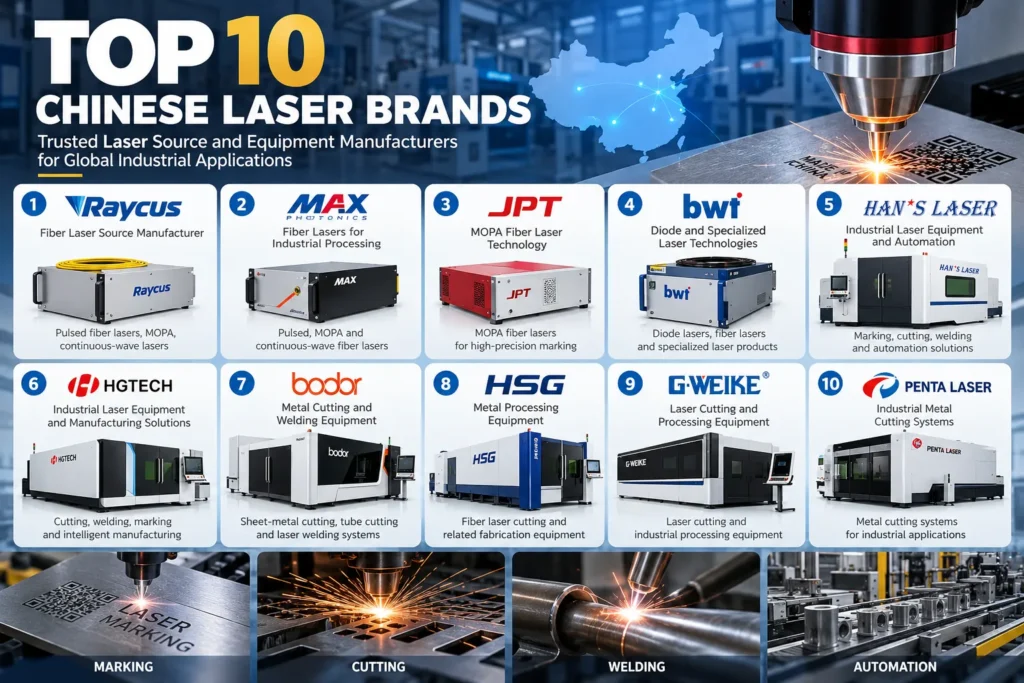
China has developed a broad laser industry, covering laser sources, marking systems, cutting machines, welding equipment and automated production lines. Below are ten Chinese laser brands and manufacturers worth researching, based on their publicly described product portfolios and areas of specialization.
One important note: This is a practical shortlist, not a definitive ranking by sales, market share or overall quality. The companies operate in different segments, so buyers should compare them according to their actual applications.
Table of Contents
1. Raycus Laser — Fiber Laser Source Manufacturer
Raycus, officially Wuhan Raycus Fiber Laser Technologies Co., Ltd., is one of the established Chinese manufacturers of industrial fiber laser sources. The company develops pulsed and continuous-wave fiber lasers, along with other laser-source technologies.
Its product portfolio includes Q-switched pulsed fiber lasers, MOPA fiber lasers and high-power continuous-wave lasers. These products serve different processing requirements, from precision marking to cutting and welding.
For buyers of laser marking machines, Raycus is a name worth knowing because its pulsed fiber laser sources are used in industrial marking systems.
Where it may fit
- General marking of stainless steel and other metals
- Serial numbers, logos and QR codes
- Industrial part identification
- Applications requiring a conventional pulsed fiber laser
My practical advice: Do not choose a machine simply because the quotation says “Raycus laser.” Ask for the exact source model, output power and relevant specifications. Then test your own material. A good laser source cannot compensate for poor optical alignment, unsuitable parameters or weak machine integration.
Official website: https://en.raycuslaser.com/
2. MAX Photonics — Fiber Lasers for Industrial Processing
MAX Photonics is another Chinese laser-source brand that international buyers may encounter when comparing industrial laser equipment.
Its product range includes pulsed and MOPA fiber lasers, as well as continuous-wave laser sources used in industrial processing. The distinction between these technologies matters because the best source depends on the required marking or processing result.
For example, a standard pulsed fiber laser may be suitable for routine metal marking, while a MOPA source can provide more flexibility when adjusting pulse duration and other processing characteristics.
Where it may fit
- Metal marking and engraving
- Industrial cutting and welding systems
- Applications requiring different fiber-laser configurations
- Buyers comparing alternative laser-source brands
My practical advice: Compare the actual technical specifications, not just the logo on the laser cabinet. If two suppliers offer the same nominal power, ask them to mark the same sample and compare contrast, edge quality, cycle time and repeatability.
Official website: https://www.maxphotonics.com/
3. JPT Laser — A Brand to Consider for MOPA Applications
JPT Laser is a Chinese laser technology company known for fiber lasers, including MOPA fiber laser sources.
MOPA technology is particularly relevant when the application needs more control over pulse characteristics. Depending on the material and process settings, this flexibility can help users achieve results such as black marking on anodized aluminum, certain stainless-steel color effects and controlled marking on selected plastics.
That does not mean every MOPA machine will automatically produce these results. The material, surface finish, laser configuration and process parameters all matter.
Where it may fit
- Black marking on suitable anodized aluminum
- Selected stainless-steel marking applications
- Electronics and precision components
- Applications requiring adjustable pulse characteristics
My practical advice: If a supplier recommends MOPA, ask what specific problem it solves in your application. If you only need basic serial numbers on ordinary metal parts, a standard pulsed fiber laser may already be sufficient. Paying for extra capability only makes sense when you can use it.
Official website: https://en.jptoe.com/
4. BWT — Diode and Specialized Laser Technologies
BWT, associated with Beijing-based laser technology operations, develops diode lasers, fiber lasers and other laser products for industrial and specialized applications.
Its product portfolio is broader than the small pulsed fiber sources commonly found inside desktop marking machines. Some of its products target laser pumping, materials processing and other applications that require specific optical characteristics.
For that reason, buyers should first identify whether they need a laser source, a component or a complete processing machine.
Where it may fit
- Specialized industrial laser systems
- Diode and fiber-laser applications
- Buyers sourcing laser components or subsystems
- Projects with specific optical or integration requirements
My practical advice: Check the exact product category before requesting a quotation. A supplier of laser components may be a good technical partner for a system integrator, but it may not supply a ready-to-run marking machine with software, a scanner and a worktable.
Official website: https://www.bwtlasertech.com/
5. Han’s Laser — Broad Industrial Laser Equipment and Automation
Han’s Laser is one of the more widely recognized Chinese industrial laser equipment groups. Its portfolio covers laser marking, cutting, welding, specialized equipment and automation-related solutions.
The company offers different types of marking equipment, including fiber, UV and CO₂ systems, as well as equipment for applications such as electronics and semiconductor processing.
For industrial buyers, one advantage of evaluating a broad equipment supplier is the possibility of finding a solution that extends beyond a standalone laser machine.
Where it may fit
- Industrial laser marking
- Electronics and PCB-related applications
- Automated production equipment
- Buyers looking for multiple types of laser processing systems
My practical advice: A large product portfolio is useful, but it does not remove the need for application testing. Ask which machine model is designed for your specific material, marking content and production volume. Also confirm who will handle commissioning and technical support in your country.
Official website: https://www.hanslaser.net/
6. HGTECH / HGLASER — Industrial Laser Equipment and Manufacturing Solutions
HGTECH is a Chinese technology group with activities in laser equipment and intelligent manufacturing. Its laser business covers applications including cutting, welding, marking and other industrial processing processes.
The company describes manufacturing and automation solutions for industries that need more than a basic standalone machine.
This makes HGTECH worth investigating when the project involves industrial production, process integration or specialized equipment rather than only low-volume manual marking.
Where it may fit
- Industrial laser processing
- Metal fabrication
- Laser marking and welding
- Automation-oriented manufacturing projects
My practical advice: For a production-line project, ask the supplier to explain the complete workflow. Can the machine receive data from a PLC? How will parts be positioned? Is a sensor or vision system required? How will the system respond if a marking fails inspection?
Those questions tell you more about a supplier’s suitability than a general claim that it provides intelligent manufacturing solutions.
Official website: https://www.hgtech-laser.com/
7. Bodor Laser — Metal Cutting and Welding Equipment
Bodor Laser is particularly associated with metal fabrication equipment, including sheet-metal cutting, tube cutting and laser welding systems.
For a factory processing steel plates, metal tubes or structural components, these processes may be more important than small-part laser marking.
Bodor is therefore a useful name to research when the primary investment is a metal fabrication machine rather than a conventional marking workstation.
Where it may fit
- Sheet-metal cutting
- Tube and profile cutting
- Metal fabrication workshops
- Laser welding applications
My practical advice: Be clear about the process you are buying. Cutting, welding and marking use different configurations and have different performance criteria. A supplier’s strength in high-power cutting does not automatically tell you how suitable its marking solution is for small, detailed identification codes.
Official website: https://www.bodor.cn/
8. HSG Laser — Metal Processing Equipment
HSG Laser is another Chinese equipment brand associated with metal processing, particularly fiber laser cutting and related fabrication equipment.
For buyers comparing industrial cutting systems, useful evaluation points include the machine structure, cutting-head configuration, available power options, software, automation features and local service arrangements.
If the factory also needs permanent identification on finished parts, it may need a separate marking station or an integrated marking solution.
Where it may fit
- Metal sheet and tube processing
- Industrial fabrication
- Production environments with repeated cutting operations
- Factories evaluating automated metalworking equipment
My practical advice: Do not assume that every machine in a manufacturer’s portfolio is designed for the same production environment. Ask for a demonstration using your material thickness, part geometry and expected workload. For any marking requirement, request a separate application assessment.
Official website: https://www.hsglaser.com/
9. GWEIKE Laser — Laser Cutting and Processing Equipment
GWEIKE is a Chinese laser equipment brand that buyers may encounter when researching cutting and other industrial laser systems.
As with any equipment supplier, the most useful comparison depends on the actual product category and configuration. A quotation for a basic machine should not be compared directly with one that includes automation, additional safety features or application-specific engineering.
Where it may fit
- Laser cutting equipment
- Industrial processing applications
- Buyers comparing machine configurations and investment levels
- Workshops evaluating different levels of automation
My practical advice: Request a written configuration list. It should identify the laser source, optics, control system, included accessories, installation requirements and warranty terms. If you are comparing several quotations, make sure you are comparing equivalent configurations.
Before making a purchase, verify the exact model, specifications and service arrangements directly with the manufacturer.
Official website: https://www.gweike.com/
10. Penta Laser — Industrial Metal Cutting Systems
Penta Laser is another brand to investigate for industrial metal cutting applications. Buyers considering this category should focus on the complete cutting system rather than the laser source alone.
Machine design, motion control, cutting-head configuration, process software, automation and service support can all influence production results.
For factories operating multiple shifts or processing a large volume of metal parts, uptime and support arrangements can be just as important as the initial purchase price.
Where it may fit
- Industrial metal cutting
- Sheet-metal fabrication
- Production environments with demanding workloads
- Buyers comparing integrated cutting systems
My practical advice: Ask for a production-oriented demonstration rather than relying only on a maximum cutting-speed specification. The useful number is the actual result on your material and part geometry, with the proposed configuration and process settings.
As with every manufacturer on this list, verify current product availability and local service coverage before making a decision.
Official website: https://www.pentalaser.com/
Laser Source Manufacturer vs. Complete Machine Manufacturer: What Is the Difference?
This is one of the most important distinctions for overseas buyers.
A laser source manufacturer develops and produces the laser generator itself. Examples in this article include Raycus, MAX Photonics, JPT and BWT.
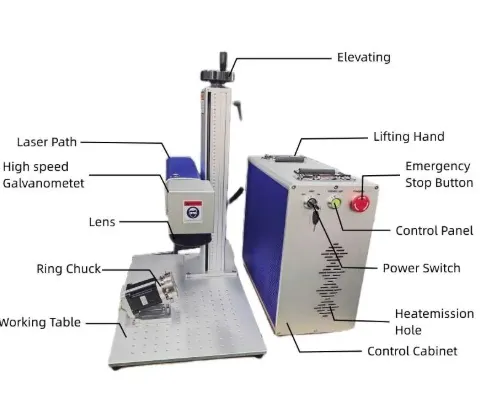
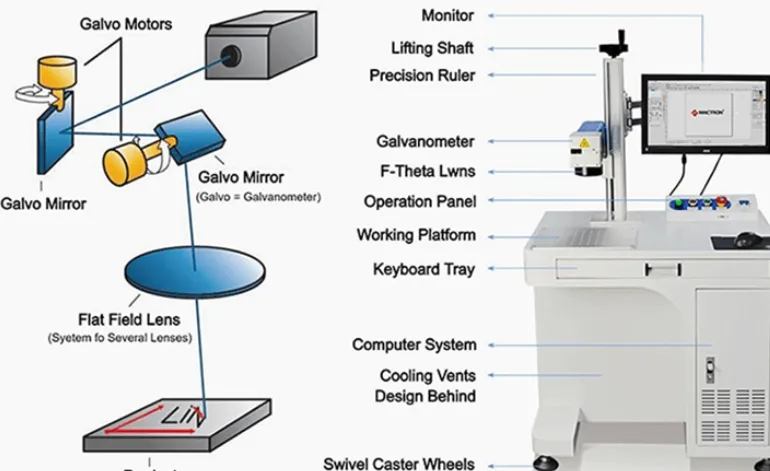
A complete equipment manufacturer supplies a machine that combines the laser source with other components and systems. Depending on the application, these may include a galvanometer scanner, F-theta lens, control board, software, frame, fixtures, safety enclosure and automation hardware.
Some companies operate across more than one part of the supply chain, so the categories are not always mutually exclusive.
Here is a simple comparison:
| What You Need | What to Evaluate First |
|---|---|
| A replacement laser source | Source model, compatibility, specifications and warranty |
| A standard metal marking machine | Source, scanner, lens, software and application test |
| A MOPA marking solution | Pulse characteristics and demonstrated material results |
| A production-line marking system | Complete cycle time, PLC interface, positioning and inspection |
| A high-power cutting machine | Cutting capability, machine structure, process performance and service |
| A customized industrial system | Engineering capability, integration scope and commissioning plan |
The key point is simple: buying a good laser source and buying a good complete machine are two different purchasing decisions.
How I Would Compare Chinese Laser Manufacturers as a Buyer
If I were purchasing a laser machine for a factory, I would not start with a brand ranking. I would start with a real part.
I would send the same sample and marking file to three or four shortlisted suppliers. Then I would ask each supplier to provide a test result and a written configuration.
For a marking application, I would check:
- Mark quality: Is the code, logo or text clear enough for the actual application?
- Repeatability: Do repeated samples look consistent?
- Cycle time: How long does the complete job take, including positioning and handling?
- Material suitability: Does the process damage the surface or create an unacceptable appearance?
- Configuration: Are the source, scanner, lens and control system clearly identified?
- Support: Who helps if the machine needs adjustment after installation?
- Total cost: What accessories, fixtures, training or integration work are excluded from the quotation?
This approach is much more useful than asking which company is “number one.”
A supplier may be excellent at one process and less suitable for another. A brand’s reputation is a starting point for research, not a substitute for a test.
What About Chinese Laser Marking Machine Manufacturers?
If your goal is to buy a complete laser marking machine rather than a laser source or a cutting system, narrow the shortlist to companies that can demonstrate the exact marking application.
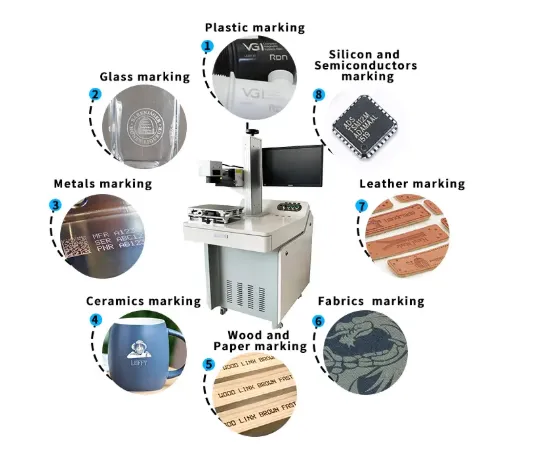
For example, marking a serial number on stainless steel is different from producing a dark mark on anodized aluminum. Marking a plastic electronic housing is different again.
The right choice may involve a standard pulsed fiber laser, a MOPA fiber laser, a UV laser or a CO₂ laser, depending on the material and the result required.
Before ordering, ask the supplier to confirm:
- The recommended laser type and power
- The exact laser-source model
- The marking field and lens configuration
- The software and data-import options
- The actual sample-test results
- The estimated complete cycle time
- The included fixtures and accessories
- The warranty and after-sales process
Do not accept “it can mark all materials” as a complete technical answer. Ask for evidence on your own material.
Final Thoughts
China has a broad laser industry, from companies that specialize in laser sources to manufacturers that build complete machines and automated production systems.
Raycus, MAX Photonics and JPT are useful starting points when researching fiber laser sources. Han’s Laser and HGTECH offer broader industrial equipment portfolios. Bodor, HSG, GWEIKE and Penta Laser are names to investigate for metal processing and cutting applications. BWT is relevant to buyers researching diode, fiber and specialized laser technologies.
These companies should not be treated as interchangeable, and this list should not be interpreted as a universal ranking.
My advice to any overseas buyer is straightforward: define the application first, shortlist manufacturers that actually serve that application, test the real material, and compare the complete configuration.
The best laser brand is not necessarily the biggest or the cheapest. It is the one whose technology, machine design and service capability match your production requirements.