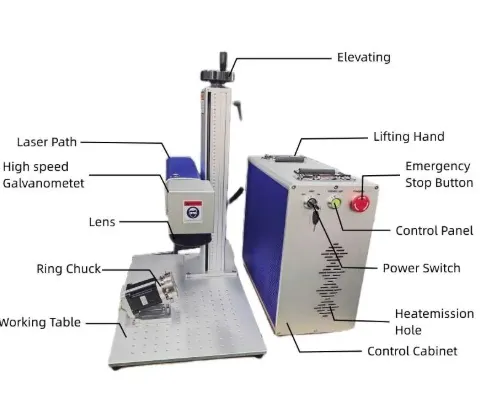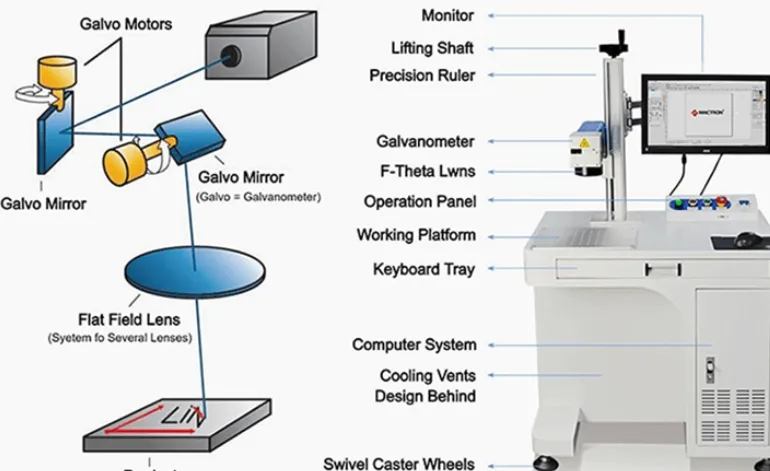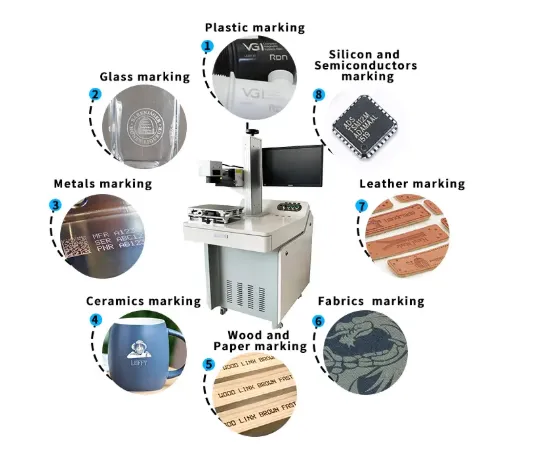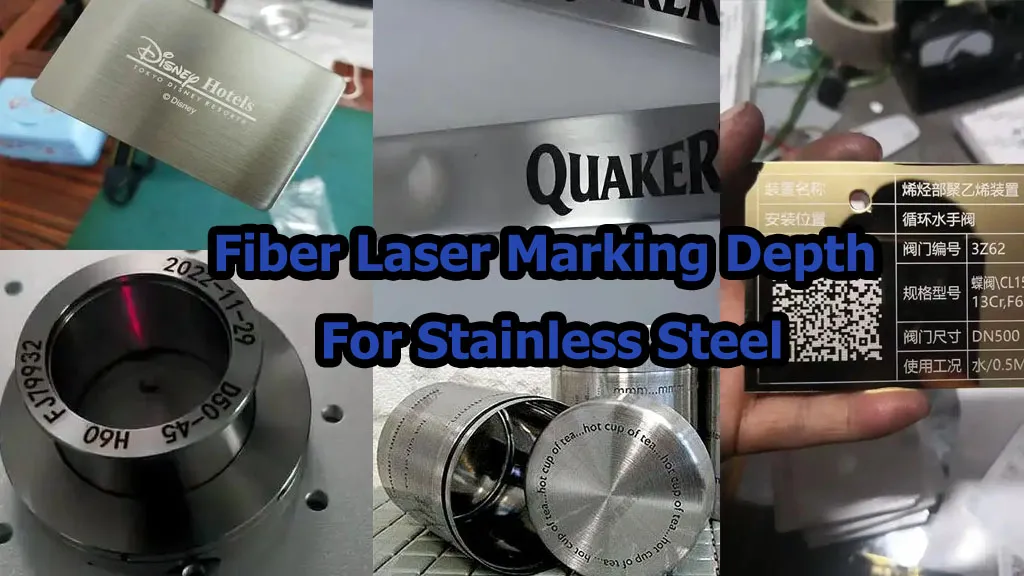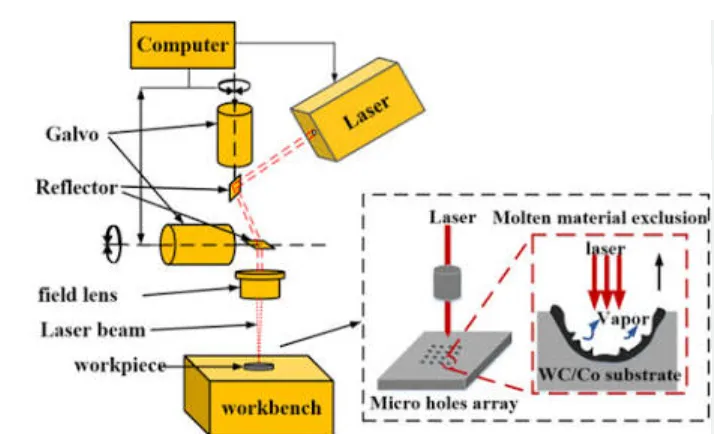
Laser marking stainless steel is one of the most widely used industrial identification methods for creating permanent logos, serial numbers, QR codes, barcodes and decorative patterns.
This guide explains how manufacturers mark stainless steel with lasers, which laser technology is suitable, how to choose the right machine and how to achieve high-quality marking results.
Explore Fiber Laser Marking MachineTable of Contents
What Is Laser Marking On Stainless Steel?
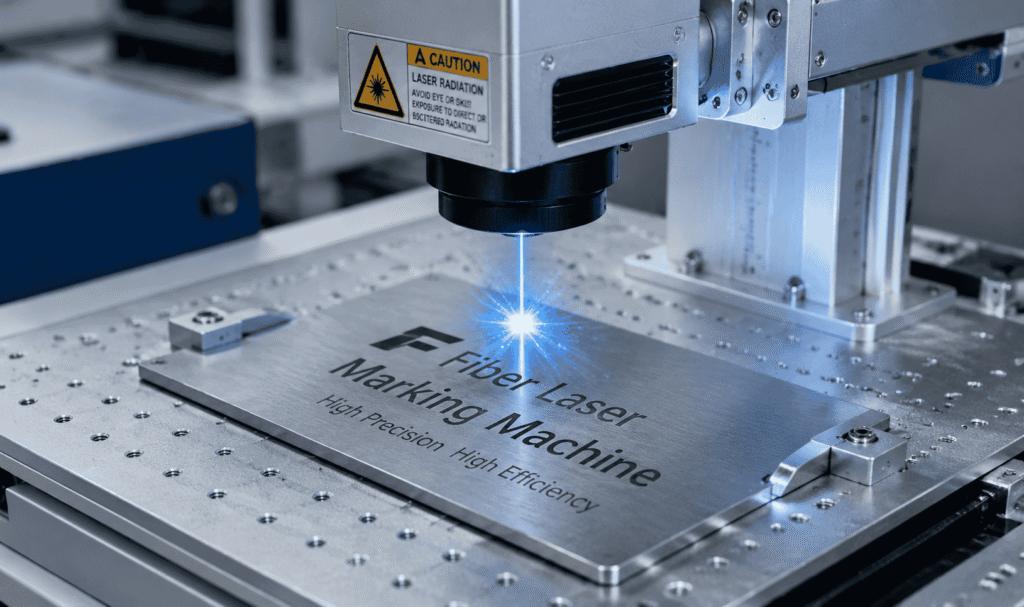
Laser marking stainless steel is a process that uses a focused laser beam to permanently modify the surface of stainless steel materials.
Unlike traditional methods such as ink printing, stickers or mechanical engraving, laser marking creates a direct permanent mark without additional consumable materials.
Manufacturers commonly use laser marking on stainless steel for:
- Product logos and brand identification
- Serial numbers
- QR codes and barcodes
- Traceability information
- Safety markings
- Decorative patterns
For industrial manufacturers, laser marking provides better durability, accuracy and production efficiency compared with traditional marking methods.
Why Use Laser To Mark Stainless Steel?
Stainless steel is widely used in automotive, medical, electronics, kitchenware and machinery industries because of its corrosion resistance and durability.However, traditional marking methods often face problems such as:
1. Ink Marking Problems
Ink printing can fade, require regular maintenance and create additional consumable costs.
2. Mechanical Engraving Limitations
Mechanical engraving may cause tool wear and is difficult for high-speed production.
3. Poor Traceability
Modern industries require permanent identification that remains readable throughout the product lifecycle.
Advantages Of Laser Marking Stainless Steel
- Permanent and wear-resistant marking
- No ink or consumables required
- High-speed industrial production
- High precision for small characters and QR codes
- Easy integration with automation systems
Which Laser Is Best For Stainless Steel Marking?
The most common laser technologies used for stainless steel marking are fiber lasers, UV lasers and CO2 lasers.
For most stainless steel industrial applications, fiber laser marking machines are the preferred solution because stainless steel has excellent absorption characteristics for 1064nm infrared laser wavelengths.
| Laser Type | Suitability For Stainless Steel | Recommended Application |
|---|---|---|
| Fiber Laser | ★★★★★ Excellent | Industrial parts, tools, metal products |
| UV Laser | ★★★★ Very good | Fine marking and sensitive materials |
| CO2 Laser | ★★ Limited | Coated stainless steel surfaces |
For most stainless steel engraving applications, we recommend: Fiber Laser Marking Machine
How Does Laser Marking Work On Stainless Steel?
Laser marking stainless steel works by focusing a high-energy laser beam onto the metal surface. The laser energy interacts with the stainless steel surface and creates a permanent visual change through oxidation, material removal or surface modification.
The marking result depends on several factors:
- Laser power
- Marking speed
- Frequency settings
- Focus distance
- Stainless steel grade
- Required marking depth and color
Professional laser marking machines allow operators to adjust these parameters to achieve different effects, including black marking, deep engraving and surface annealing.
Step-by-Step Process For Marking Stainless Steel With Laser
A professional stainless steel laser marking process usually includes the following steps:
Step 1: Prepare Stainless Steel Surface
Clean the stainless steel surface and remove oil, dust or contamination. A clean surface helps achieve consistent marking quality.
Step 2: Fix The Workpiece
Secure the stainless steel product to prevent movement during marking.For mass production, customized fixtures or automation systems can improve efficiency.
Related:Automation Marking Solution
Step 3: Set Laser Parameters
Adjust laser power, speed, frequency and hatch distance according to the required marking effect.
Step 4: Focus Laser Beam
Correct focus positioning ensures a sharp laser spot and high-quality marking details.
Step 5: Perform Laser Marking
The laser system scans the programmed graphics, text or code and creates a permanent mark.
Step 6: Quality Inspection
Check marking contrast, readability and durability before mass production.
Stainless Steel Laser Marking Methods Explained
Different applications require different marking effects. Fiber laser marking machines can create several types of stainless steel marks.
| Marking Method | Working Principle | Typical Application |
|---|---|---|
| Laser Annealing Marking | Laser changes the oxidation layer without removing material | Medical instruments, stainless steel products |
| Black Laser Marking | Creates dark high-contrast surface marks | Logos, QR codes, product identification |
| Laser Engraving | Removes material to create physical depth | Tools, molds, industrial components |
Black Marking vs Laser Engraving Stainless Steel
Many customers ask whether they should choose black laser marking or deep engraving for stainless steel products. The correct choice depends on application requirements.
| Feature | Black Laser Marking | Laser Engraving |
|---|---|---|
| Surface Change | Color change | Material removal |
| Marking Speed | Faster | Slower |
| Surface Damage | Minimal | Creates depth |
| Best For | Logos, QR codes, serial numbers | Deep industrial engraving |
For deep stainless steel engraving applications, check: Deep Engraving Solution
Recommended Fiber Laser Power For Stainless Steel Marking
Choosing the correct laser power is important for achieving the required marking speed, depth and production efficiency.
| Laser Power | Recommended Application | Suitable Products |
|---|---|---|
| 20W Fiber Laser | Standard stainless steel marking | Small metal parts, logos, serial numbers |
| 30W Fiber Laser | Higher speed and deeper marking | Industrial components, tools |
| 50W Fiber Laser | Heavy-duty engraving applications | Molds, automotive parts, machinery |
Recommended products:
Best Fiber Laser Settings For Stainless Steel Marking
Laser parameter settings have a direct impact on stainless steel marking quality. The same laser machine may produce completely different results by adjusting power, speed, frequency and scanning settings.
For industrial production, operators usually optimize the following parameters:
Laser Power
Laser power determines the energy delivered to the stainless steel surface.
- Higher power → deeper engraving
- Lower power → surface marking and color change
Marking Speed
Speed controls how long the laser stays on each area.
- Slower speed → stronger marking effect
- Higher speed → faster production
Frequency
Frequency affects pulse density and surface interaction.
Different stainless steel products may require different frequency settings.
Hatch Distance
Hatch spacing controls the distance between laser scanning lines.
Smaller hatch distance can improve marking density.
Recommended Fiber Laser Parameters For Stainless Steel
The following parameters are common reference ranges for stainless steel marking. Actual settings should be adjusted according to laser source, lens configuration and product requirements.
| Application | Power | Speed | Result |
|---|---|---|---|
| Black Marking Stainless Steel | 30%-70% | Medium speed | High contrast black mark |
| Logo Marking | 40%-80% | Medium speed | Clear permanent logo |
| Deep Engraving | 70%-100% | Lower speed | Visible engraving depth |
| QR Code Marking | 30%-60% | High speed | Readable traceability code |
For production applications, we recommend testing samples before final parameter confirmation.
How To Engrave Stainless Steel With Fiber Laser?
Fiber laser engraving removes a small amount of stainless steel material to create a permanent physical mark.
Compared with surface marking, engraving is commonly used when manufacturers require:
- Long-term durability
- Resistance to abrasion
- Identification in harsh environments
- Deep product traceability
Steps For Stainless Steel Laser Engraving
- Create the design file using laser marking software.
- Select appropriate engraving parameters.
- Adjust focus position.
- Perform multiple laser passes if deeper engraving is required.
- Inspect engraving depth and quality.
For deep engraving applications, higher-power fiber lasers such as 50W or 100W models are commonly selected.
Related: 100W Fiber Laser Marking Machine
304 Stainless Steel vs 316 Stainless Steel Laser Marking
304 and 316 stainless steel are two of the most commonly used stainless steel grades in manufacturing. Although both materials can be marked with fiber lasers, their applications and surface characteristics are different.
| Feature | 304 Stainless Steel | 316 Stainless Steel |
|---|---|---|
| Common Applications | Kitchen equipment, hardware, general products | Medical, marine, chemical equipment |
| Laser Marking Difficulty | Easy | Slightly more demanding |
| Recommended Laser | Fiber Laser | Fiber Laser / UV Laser |
| Typical Marking | Logo, serial number, QR code | Medical identification, traceability |
Industrial Applications Of Stainless Steel Laser Marking
Stainless steel laser marking is widely used across industries because it provides permanent identification without affecting product performance.
Automotive Industry
Used for engine components, metal parts, VIN information and traceability codes.
Medical Equipment
Used for surgical instruments and medical devices requiring permanent identification.
Food Equipment
Used for stainless steel containers, processing equipment and safety information.
Hardware Tools
Used for branding, product numbers and anti-counterfeit marking.
Electronics Industry
Used for metal housings, components and product identification.
Aerospace Components
Used for permanent part identification under strict traceability requirements.
Common Stainless Steel Laser Marking Problems And Solutions
Although fiber laser marking is a reliable technology for stainless steel, incorrect machine selection or parameter settings may affect marking quality. Understanding common problems helps manufacturers achieve better production results.
| Problem | Possible Cause | Solution |
|---|---|---|
| Laser Mark Is Too Light | Low power, high speed or incorrect focus | Increase power, reduce speed or adjust focus position |
| Marking Is Not Clear | Dirty surface or wrong parameters | Clean material surface and optimize settings |
| Uneven Marking Depth | Unstable fixture or incorrect focus | Improve positioning accuracy |
| Excessive Heat Effect | Too much laser energy | Optimize speed, power and frequency |
| Slow Production Speed | Insufficient laser power | Upgrade to higher-power fiber laser system |
Fiber Laser Marking VS Traditional Stainless Steel Marking Methods
Many manufacturers are replacing traditional marking methods with fiber laser marking because of higher efficiency, lower operating cost and better marking durability.
| Method | Advantages | Limitations |
|---|---|---|
| Ink Printing | Low initial investment | Requires ink, maintenance and may fade |
| Mechanical Engraving | Creates physical depth | Tool wear and slower production |
| Laser Marking | Permanent, fast and maintenance-free | Higher initial equipment investment |
Why More Factories Choose Fiber Laser Marking?
- No consumable materials required
- Low maintenance cost
- High marking accuracy
- Suitable for automation production
- Permanent product identification
How To Choose The Right Stainless Steel Laser Marking Machine?
Selecting the correct laser marking machine depends on your material, production requirements and marking objectives.
1. Determine Your Marking Purpose
Different applications require different laser configurations.
| Requirement | Recommended Solution |
|---|---|
| Logo & Serial Number | 20W-30W Fiber Laser Marking Machine |
| High-Speed Production | 30W-50W Fiber Laser |
| Deep Stainless Steel Engraving | 50W-100W Fiber Laser |
| Automatic Production Line | Flying Laser Marking System |
Related: Flying Laser Marking Machine
2. Consider Production Volume
Small workshops may choose standard desktop fiber laser machines. Large factories often require:
- Automatic feeding
- Vision positioning
- Conveyor integration
- MES system connection
3. Test Your Stainless Steel Samples
Before purchasing equipment, professional manufacturers should provide sample testing to confirm marking quality.
Stainless Steel Laser Marking Cost And Return On Investment
Although laser marking machines require an initial investment, many manufacturers achieve long-term savings because laser systems eliminate consumable materials and reduce maintenance costs.
| Cost Factor | Traditional Marking | Fiber Laser Marking |
|---|---|---|
| Consumables | Ink, labels, chemicals | No consumables |
| Maintenance | Frequent replacement | Low maintenance |
| Production Efficiency | Manual operation | High automation capability |
For manufacturers with continuous production needs, laser marking often provides better long-term value.
Frequently Asked Questions About Stainless Steel Laser Marking
1. What laser is best for stainless steel marking?
Fiber laser marking machines are the most commonly used solution for stainless steel because they provide high precision, permanent marking and excellent metal processing capability.
2. Can a fiber laser engrave stainless steel?
Yes. Fiber lasers can engrave stainless steel by removing material from the surface to create permanent depth marks.
3. Can laser marking turn stainless steel black?
Yes. By adjusting laser parameters, fiber lasers can create black annealed marks on stainless steel surfaces.
4. What power fiber laser is needed for stainless steel?
20W and 30W fiber lasers are suitable for standard marking, while 50W and 100W systems are recommended for deeper engraving.
5. Does laser marking damage stainless steel?
With correct parameters, laser marking creates precise marks without affecting the structural strength of stainless steel products.
6. Can laser mark stainless steel bottles?
Yes. Stainless steel bottles are commonly marked with fiber lasers for logos, brands and product information.
7. How long does stainless steel laser marking last?
Laser marks are permanent and can withstand normal wear, cleaning and environmental exposure.
8. Can QR codes be marked on stainless steel?
Yes. Fiber laser systems are widely used for QR code and product traceability marking.
9. What is the difference between engraving and marking stainless steel?
Laser marking changes the surface appearance, while engraving removes material to create physical depth.
10. How do I choose a stainless steel laser marking machine supplier?
Choose a manufacturer that provides application testing, technical support, customization capability and reliable after-sales service.
Need A Professional Stainless Steel Laser Marking Solution?
Jining Junqi (JQ) Laser provides fiber laser marking machines for stainless steel, metal components, tools and industrial products worldwide.
Send your stainless steel sample and marking requirements. Our engineers can recommend the right laser solution.
Get Free Laser Test