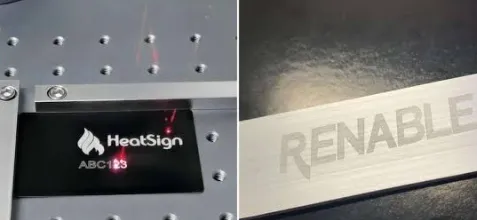
50W Fiber Laser Marking Machine for Komatsu Excavator Identification Plates
How JQ Laser configured a 50W pulsed fiber laser marking system for permanent identification marking on construction machinery nameplates.
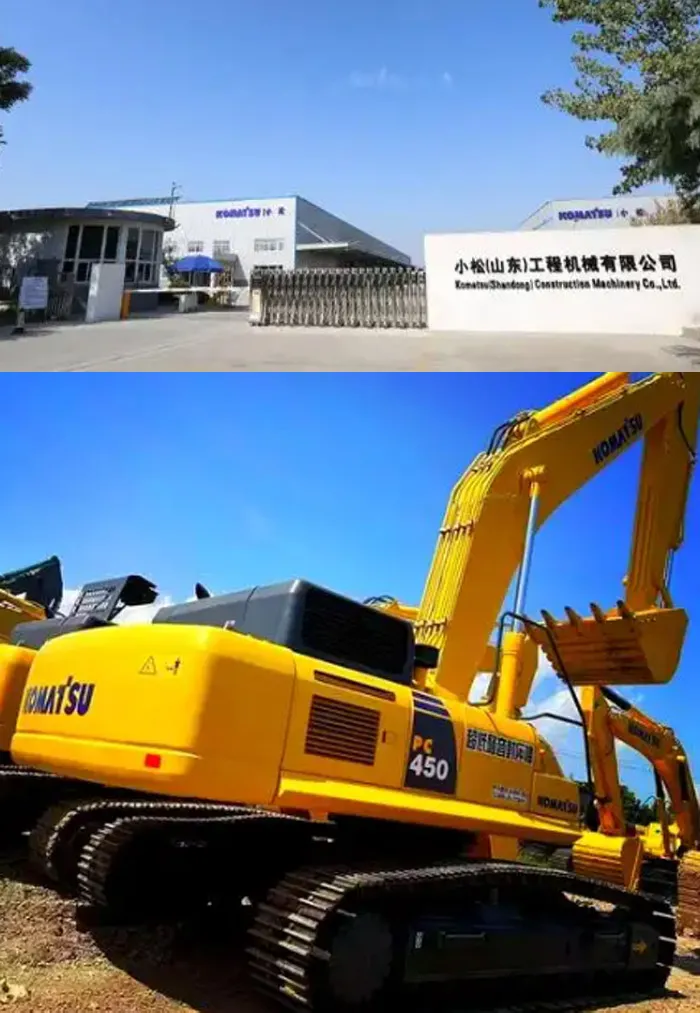
A Laser Marking Solution for Heavy Equipment Identification
The project required a reliable fiber laser marking system for identification plates used on excavator products. The marking needed to be permanent, clear and repeatable rather than simply visually attractive.
Rated Laser Power
nm Wavelength
mm Main Marking Field
Reference Marking Cycle
A Laser Marking Solution for Heavy Equipment Identification
The project required a reliable fiber laser marking system for identification plates used on excavator products. The marking needed to be permanent, clear and repeatable rather than simply visually attractive.
Rated Laser Power
nm Wavelength
mm Main Marking Field
Reference Marking Cycle
What Needed to Be Marked?
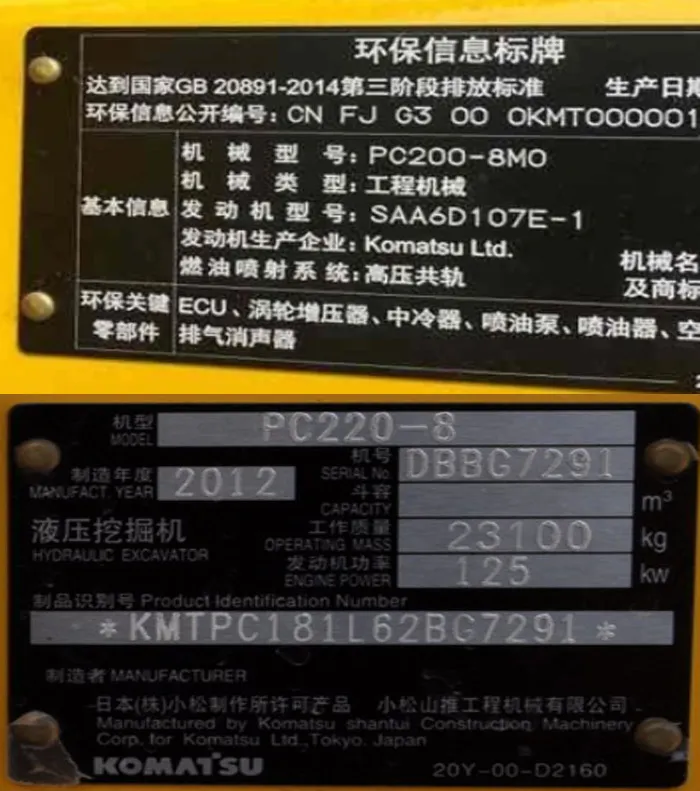
The application involved identification plates for excavator products. According to the project delivery specification, the marking content could include the company logo, model information, serial number, manufacturing date, technical parameters, safety warnings and QR codes.
Product Identification
Model information and other product identification details.
Serial Numbers
Variable serial numbers can be generated through the marking software workflow.
Technical Information
Technical parameters and safety-related information can be included in the marking layout.
Logo
The laser system can reproduce detailed logos and vector graphics.
QR Code
QR code marking is supported when required by the customer’s identification workflow.
Permanent Identification
The target was a clear and durable mark suitable for industrial equipment identification.
Why We Chose a 50W Pulsed Fiber Laser
From a technician’s point of view, the important question was not simply whether a laser could mark metal. The machine needed enough processing capability for industrial nameplates while remaining suitable for detailed text, logos and identification information.
The delivered configuration used a 50W pulsed fiber laser at 1064 nm. The project specification calls for an actual average output power of 50W, with factory testing documentation, and a power stability target of ±5% or better.
A 50W configuration also gives the customer more processing capacity than a basic low-power system when the same machine may later be used for deeper engraving or a wider range of industrial parts.
Our practical view: We would not recommend 50W simply because “more power is better.” If a customer’s only requirement is shallow marking on small nameplates, a lower-power fiber laser may already be sufficient. The reason for using 50W here is the industrial application range and the need for additional processing capability.
Actual Delivery Configuration
The following specifications are based on the project delivery data rather than generic catalogue specifications.
| Item | Delivered / Specified Configuration |
|---|---|
| Laser Type | Pulsed Fiber Laser |
| Rated Power | 50W |
| Wavelength | 1064 nm |
| Cooling | Forced Air Cooling |
| Power Supply | AC 220V ±10%, 50/60 Hz, Single Phase |
| Power Consumption | ≤600–800W |
| Main Marking Field | 110 × 110 mm |
| Additional Lens | 150 × 150 mm |
| Scanning Speed | ≥7,000–8,000 mm/s reference |
| Software | EZCAD2 / EZCAD3 |
| Control Card | JCZ / Jincheng Electronics or equivalent industrial control card |
| Positioning | Red-light positioning |
| Laser Life | ≥100,000 hours reference |
Reference Process Parameters
Laser parameters are starting references only. Final settings need to be adjusted according to the actual material, surface finish, marking content and required result.
| Parameter | Reference Range |
|---|---|
| Laser Power | 40–100% |
| Marking Speed | 500–3000 mm/s |
| Frequency | 20–80 kHz |
| Hatch Spacing | 0.01–0.05 mm |
| Reference Cycle Time | Approx. 5–30 seconds / piece |
These values should not be treated as universal production parameters. Our technician would normally establish the final recipe through sample testing before production.
Production Efficiency
For medium-complexity nameplates, the project data gives a reference marking cycle of approximately 5–20 seconds including loading and unloading under suitable conditions. A broader reference range of 5–30 seconds per piece is provided depending on marking content and size.
Single Machine
Reference pieces/day for one machine and one 8-hour shift, including loading, focusing and part changes.
With Efficient Fixturing
Reference pieces/day with fixtures and faster loading/unloading. Actual output depends on marking content and production workflow.
For Nameplates, Positioning Can Matter as Much as Laser Power
When operators mark hundreds of nameplates, the laser is only one part of the production process. If every plate is positioned slightly differently, the logo and serial number can gradually move away from the intended position.
For this reason, the project specification recommends a standard worktable with a quick fixture or positioning jig. The system can also be expanded with CCD vision positioning, rotary equipment, motorized Z-axis or production-line integration when the customer’s workflow requires it.
How the Machine Was Prepared for Delivery
For an industrial customer, shipping the machine is not the final step. The marking system needs to be checked before it leaves the factory.
Laser Output Test
The delivery specification requires power testing and a factory test report.
Sample Marking
The customer’s actual nameplate material and marking content should be used for final sample confirmation.
Stability Test
The delivery requirement specifies a continuous operation test of at least 8 hours without failure.
Optical System
The optical and galvanometer system is checked before shipment.
Software
Marking software and required functions are checked and configured.
Operator Training
The project specifies 1–2 days of training covering operation, parameter adjustment and routine maintenance.
How the Machine Was Prepared for Delivery
For an industrial customer, shipping the machine is not the final step. The marking system needs to be checked before it leaves the factory.
Laser Output Test
The delivery specification requires power testing and a factory test report.
Sample Marking
The customer’s actual nameplate material and marking content should be used for final sample confirmation.
Stability Test
The delivery requirement specifies a continuous operation test of at least 8 hours without failure.
Optical System
The optical and galvanometer system is checked before shipment.
Software
Marking software and required functions are checked and configured.
Operator Training
The project specifies 1–2 days of training covering operation, parameter adjustment and routine maintenance.
What This Project Tells Us About Buying a Laser Marker
1. Do Not Choose by Wattage Alone
The laser power should match the required marking depth, production cycle and material. A larger number does not automatically produce a better nameplate.
2. Confirm the Marking Area
The lens and marking field should be selected according to the actual plate dimensions and marking layout.
3. Test the Actual Material
Stainless steel, aluminum, anodized surfaces and coated metals can behave differently. A sample test is more useful than a generic demonstration.
4. Ask About Production Workflow
For batch production, fixture design and operator workflow can have a major effect on actual throughput.
5. Separate Scanning Speed From Output
A quoted galvanometer scanning speed is not the same thing as pieces per hour. Ask for a production test using your actual marking.
6. Define Acceptance Criteria Before Ordering
Agree on marking depth, contrast, positioning, cycle time and sample quality before the machine is finalized.
Project Delivery Summary
| Project Item | Project Specification |
|---|---|
| Machine Type | 50W Pulsed Fiber Laser Marking Machine |
| Main Application | Excavator identification/nameplate marking |
| Laser Wavelength | 1064 nm |
| Main Lens | 110 × 110 mm |
| Backup Lens | 150 × 150 mm |
| Cooling | Forced air cooling |
| Software | EZCAD2 / EZCAD3 |
| Power Supply | 220V ±10%, 50/60Hz, single phase |
| Delivery Inspection | Power test, sample marking, system inspection and ≥8-hour stability test |
| Training | 1–2 days operation, parameter adjustment and maintenance training |
Need to Mark Metal Nameplates for Construction Machinery?
Send us your nameplate material, dimensions, marking content and production requirements. We can evaluate the marking process and recommend the appropriate laser power, lens and fixture configuration.
Material + plate dimensions + marking file + daily quantity are enough for an initial evaluation.