Table of Contents
CO2 Laser Marking And Engraving Machine For Wood
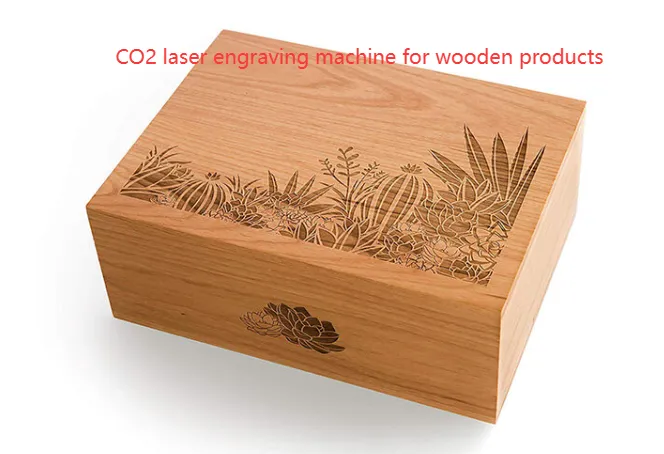
Wood is one of the most common materials used for laser engraving. From wooden signs and gift boxes to furniture components and customized products, a CO2 laser can create detailed text, logos and graphics without physically touching the workpiece.
A CO2 laser marking machine for wood can be used for both surface marking and engraving applications. The right settings allow manufacturers to create light surface marks, darker engraved designs or deeper engraving effects depending on the wood type and the desired result.
Unlike traditional mechanical engraving tools, laser processing does not require a cutting bit to contact the wood surface. This makes it possible to process detailed patterns, small text and complex graphics with a digital file.
Looking for a wood laser engraver? A CO2 laser engraving machine is a popular choice for many wood and non-metallic applications. The best configuration depends on your wood type, thickness, product size and required engraving depth.
Why Use A CO2 Laser For Wood?
CO2 laser technology offers a flexible way to mark and engrave wooden products without mechanical contact. It is especially useful when you need detailed graphics, repeatable results or customized designs.
Detailed Engraving
A CO2 laser can reproduce fine text, logos, photographs, patterns and other digital graphics on suitable wood surfaces.
Non-Contact Processing
The laser processes the surface without a mechanical cutting tool physically contacting the workpiece.
Easy Design Changes
Digital designs can be changed through software without producing a new engraving plate or physical template.
Customization
Ideal for personalized names, logos, dates, artwork and other customized wooden products.
Repeatable Results
Once the laser parameters are established, the same design can be reproduced consistently across suitable products.
Production Friendly
The system can be used as a desktop workstation or integrated with fixtures, rotary devices and automation equipment.
What Types Of Wood Can A CO2 Laser Engrave?
CO2 lasers can process many types of natural and engineered wood. However, different wood species and manufactured boards can produce different colors, contrast and engraving depths. Resin content, density, moisture and surface finish can all affect the final result.
Natural Wood
Suitable for many signs, decorative products, furniture components, gifts and customized wooden products.
Plywood
Frequently used for laser-cut and laser-engraved signs, models, packaging, decorations and craft products.
MDF
MDF can be used for selected laser engraving and cutting applications, with settings adjusted for thickness and composition.
Bamboo
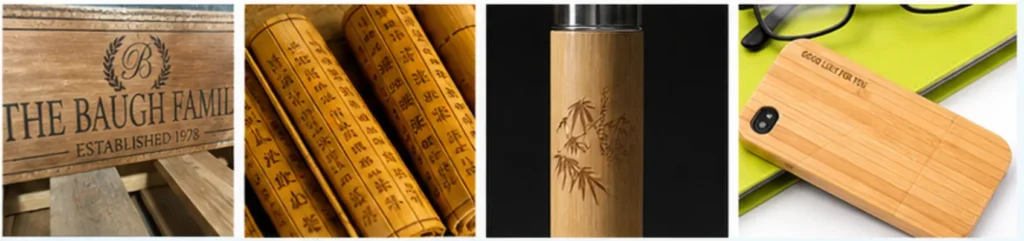
Bamboo products can be laser engraved for names, logos, patterns and customized designs.
Wood Veneer
Thin wood veneer can be processed with carefully controlled laser parameters to create detailed surface designs.
Wood Composite Materials
Certain engineered wood products can also be laser processed, but their adhesives and additives should be evaluated first.
Material Testing Is Important
Not all wood behaves the same way under a laser. Before production, we recommend testing the actual material to determine the appropriate speed, power, focus and number of passes.
What Can You Laser Engrave On Wood?
A wood laser engraving machine can process much more than simple text. Digital laser systems can reproduce logos, graphics, patterns and variable information on suitable wooden surfaces.
Wood Logo Engraving
Engrave company logos, brand names and product identification directly onto wooden products.
Text & Names
Create personalized names, messages, dates, numbers and other text-based designs.
Graphics & Patterns
Detailed decorative graphics and patterns can be engraved from compatible digital files.
QR Codes
QR codes can be engraved on suitable wood products when sufficient contrast and resolution can be achieved.
Barcodes
Suitable wooden products can be marked with machine-readable identification codes.
Photos
Laser engraving can reproduce grayscale-style images on suitable wood surfaces by varying the laser processing pattern.
Wood Laser Marking vs Wood Laser Engraving
When people search for a “wood laser marking machine,” a “wood laser engraving machine” or a “wood laser engraver,” they are often looking for very similar equipment. The main difference is usually the desired processing result rather than the basic laser technology.
| Application | Laser Marking | Laser Engraving |
|---|---|---|
| Logo | Surface identification | Visible engraved logo |
| Text | Readable text | Engraved text with visible depth |
| Artwork | Surface graphics | Detailed engraved graphics |
| Customized Gifts | Possible | Very common application |
In simple terms: if you mainly need logos, product identification or simple information, think “laser marking.” If you want visible material removal and a darker or deeper design, you are usually looking for “laser engraving.”
Related Laser Solutions
If you are comparing different laser technologies or applications, these pages may also help:
- CO2 Laser Marking Machine — Explore the complete CO2 laser product range.
- Laser Marking Machine — Compare the main factors that affect laser machine pricing.
- Flying Laser Marking Machine — For continuous and online production applications.
- Automation Marking Solution — For integrating laser marking into automated production lines.
CO2 Laser Engraving Applications For Wood
From personalized gifts and wooden signs to industrial components and packaging, CO2 laser technology can handle a wide range of wood engraving applications.
Wood Sign Engraving
Engrave letters, logos, numbers, decorative patterns and directional information on wooden signs. The laser can create clean and repeatable designs without requiring a physical engraving template.
Personalized Wood Gifts
Names, dates, messages, portraits and custom artwork can be engraved on wooden gifts for weddings, birthdays, anniversaries and promotional events.
Wooden Packaging
Add brand logos, product information, decorative graphics or identification details to wooden boxes and other suitable packaging products.
Wooden Crafts
Laser engraving is suitable for customized crafts, ornaments, decorative panels, souvenirs and other detailed wooden products.
Furniture Components
Manufacturers can use laser marking to add logos, model information, decorative details or identification marks to suitable wooden components.
Wooden Promotional Products
Wooden keychains, coasters, pens, boards and promotional products can be customized with company logos and other branding informat
Laser Engraving Wooden Signs
Wooden signs are one of the most popular applications for a wood laser engraver. A CO2 laser can create lettering, logos, decorative borders, numbers and custom graphics directly from a digital design.
This is useful for businesses producing house signs, shop signs, wedding signs, directional signs, room signs and decorative wooden boards. Different engraving depths and power settings can be tested to achieve a lighter or darker appearance.
Names, numbers and decorative designs.
Company names, logos and branding.
Names, dates and personalized messages.
Arrows, numbers and easy-to-read information.
Plywood And MDF Laser Engraving
Plywood and MDF are widely used in woodworking, crafts, packaging, signs and model making. A CO2 laser can be configured for engraving these materials, while the appropriate parameters depend on thickness, composition, adhesive content and the required finish.
Plywood Laser Engraving
Laser engraving plywood can create text, logos, patterns, decorative artwork and product identification. Different plywood types may produce different engraving colors and edge characteristics.
- Wooden signs
- Decorative panels
- Models and prototypes
- Packaging
- Craft products
MDF Laser Engraving
MDF can also be processed with a CO2 laser for selected applications. Because MDF contains binders and other components, actual material testing is recommended before production.
- Decorative boards
- Signs
- Models
- Customized products
- Industrial components
Important: Engineered wood products can contain adhesives, coatings or additives that affect laser processing. Always confirm the material composition and perform a sample test before production.
Photo Engraving On Wood
A CO2 laser can also be used to engrave grayscale-style photographs on suitable wood surfaces. The software converts the image into a laser-compatible engraving pattern, while the machine controls the laser output to create different shades across the surface.
Family Photos
Create personalized wooden photo gifts and decorative panels.
Pet Photos
Turn pet photographs into customized wooden artwork.
Portraits
Suitable for personalized gifts and commemorative products.
Artwork
Process compatible digital artwork and illustrations.
Wood Logo Engraving For Branding
For manufacturers and businesses, laser engraving provides a simple way to add permanent branding to suitable wooden products. Company logos can be engraved on packaging, signs, promotional items, furniture components and customized products.
Can A CO2 Laser Marking Machine Cut Wood?
A CO2 laser can cut certain wood-based materials when the machine has sufficient laser power and the material thickness is within the system’s processing capability. However, cutting and engraving are different applications and may require different machine configurations and operating parameters.
For Wood Engraving
The focus is usually on surface detail, contrast, text, logos, images and decorative patterns.
For Wood Cutting
The laser must remove material through the entire thickness. Power, focal length, air assistance, speed and material thickness become more important.
Wood Laser Engraving vs Laser Cutting
| Factor | Laser Engraving | Laser Cutting |
|---|---|---|
| Main Purpose | Remove material from the surface | Cut through the material |
| Typical Applications | Logos, text, images and patterns | Shapes, panels and components |
| Material Removal | Surface or controlled depth | Through the material |
| Main Parameters | Power, speed, DPI, focus | Power, speed, focus, air assistance |
CO2 Laser Parameters For Wood
There is no single laser setting that works for every type of wood. The correct parameters depend on the laser power, wood species, density, moisture, surface finish and the result you want to achieve.
Laser Power
Higher laser power provides more processing capability, but the required power depends on the application rather than simply being “more is better.”
Marking Speed
Higher speed can reduce heat input, while slower processing can increase material removal. The correct balance depends on the desired result.
Focus
Correct focusing helps maintain a concentrated laser spot and improve engraving detail.
Number Of Passes
Multiple passes may be used when a deeper engraving effect is required, although additional heat must be considered.
Air Assistance
Air assistance can be useful for suitable cutting and processing applications and may help manage smoke and combustion around the processing area.
Material Testing
Testing the actual wood sample is the most reliable way to establish production parameters.
How Deep Can A CO2 Laser Engrave Wood?
The achievable engraving depth depends on the wood material, laser power, focal conditions, processing speed and number of passes. There is no universal depth specification for all wood products.
For logos, text and decorative designs, many applications only require controlled surface removal. If deeper engraving is required, multiple passes can be considered, but the additional heat may change the appearance of the surrounding material.
Need A Specific Engraving Depth?
Send us your wood sample or product information. We can evaluate the application and recommend a suitable laser configuration and testing process.
Request Sample TestingHow Much CO2 Laser Power Do You Need For Wood?
The right CO2 laser power for wood depends on what you actually want to do. If your main goal is surface engraving, you may not need the same power as a customer who wants to cut thicker plywood or process large wooden components.
Instead of choosing a laser only by wattage, consider the material, thickness, working area, production speed and whether you need engraving, cutting or both.
| Laser Power | Typical Wood Applications | Best For |
|---|---|---|
| 30W–40W | Light engraving, signs, gifts and small products | Small businesses and customized products |
| 50W–60W | General wood engraving and selected cutting applications | Workshops and commercial production |
| 80W–100W | Faster engraving and greater cutting capability | Higher-volume production |
| 100W+ | Demanding cutting and larger production applications | Industrial and continuous production |
Important: These ranges are general guidance, not guaranteed processing specifications. Actual performance depends on the wood type, thickness, machine configuration and desired result. Sample testing should be used before finalizing a production setup.
30W vs 60W vs 80W vs 100W CO2 Laser For Wood
If you are comparing different CO2 laser powers, the key question is not simply which machine has the highest wattage. The better question is what kind of wood processing you need and how much production capacity you expect.
30W CO2 Laser
A practical choice for lighter engraving work, personalized products, signs and small-scale production where extreme cutting performance is not the priority.
60W CO2 Laser
A versatile option for businesses that need both wood engraving and additional cutting capability.
80W CO2 Laser
Suitable when production speed and additional material-processing capability become more important.
100W CO2 Laser
A stronger configuration for customers who need higher production capacity or more demanding wood processing applications.
Choose The Right Working Area For Wood Products
The working area determines the maximum size of the material or product that can be processed in one setup. For small personalized products, a compact working area may be enough. For large wooden signs, panels or furniture components, a larger work area can save time by reducing repositioning.
Small Working Area
Good for small gifts, ornaments, signs, keychains and customized products.
Medium Working Area
A flexible choice for workshops producing a mixture of small and medium-sized wooden products.
Large Working Area
Better suited to large signs, panels, sheets and larger wooden components.
Recommended CO2 Laser Machine Configuration For Wood
A good wood laser engraving machine is more than just the laser tube. The mechanical structure, optics, control system, exhaust system and optional accessories all affect the actual user experience.
CO2 Laser Source
The laser source determines the available processing capability and should be selected according to the required application.
Laser Head & Optics
Good optical alignment and suitable focusing components help maintain consistent processing results.
Motion System
The motion system affects positioning accuracy, engraving speed and repeatability.
Exhaust System
Wood processing generates smoke and particles, so an appropriate exhaust and filtration setup is important.
Air Assistance
Air assistance can be useful for cutting and selected processing applications.
Cooling System
The cooling system helps maintain stable operation of the CO2 laser source during production.
Rotary Attachment For Cylindrical Wood Products
If you need to engrave cylindrical wooden products, a rotary attachment can expand the machine’s application range. Instead of engraving only on a flat surface, the rotary device rotates the workpiece while the laser processes its surface.
Wooden Cups
Engrave names, logos and decorative graphics.
Wooden Handles
Add identification or branding to cylindrical handles.
Wooden Bottles
Customize suitable cylindrical wooden products.
Wooden Pens
Personalize pens with names and logos.
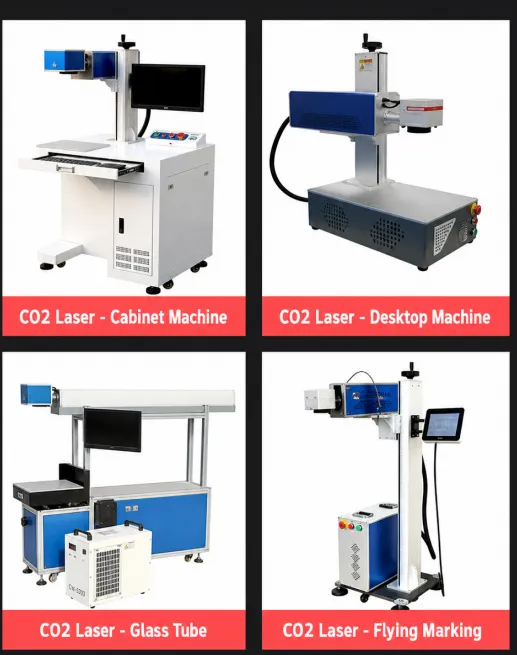
Flying CO2 Laser Marking For Wood Production Lines
For continuous production, a flying laser marking system can mark products while they move along a conveyor. This approach can be useful when wooden products need to be marked without stopping the production line.
When Should You Consider Flying Laser Marking?
- Products are continuously moving on a conveyor.
- The production line needs online marking.
- Each product needs variable information.
- Manual positioning would slow down production.
- The laser needs to communicate with production equipment.
Desktop vs Enclosed CO2 Laser Engraving Machine
| Feature | Desktop Configuration | Enclosed Configuration |
|---|---|---|
| Footprint | Compact | Larger |
| Typical Users | Small businesses and workshops | Professional production environments |
| Large Materials | More limited | More flexible depending on configuration |
| Production | Small to medium | Medium to high |
CO2 Laser vs Diode Laser For Wood
Both CO2 and diode lasers can be used for some wood applications, but they are not identical systems. Your choice should depend on the material, required processing capability, production speed and budget.
| Factor | CO2 Laser | Diode Laser |
|---|---|---|
| Wood Engraving | Excellent choice for many applications | Suitable for selected applications |
| Cutting Capability | Generally stronger for many wood cutting applications | More application dependent |
| Production | Suitable for commercial production | Often used for smaller-scale applications |
| Machine Cost | Depends strongly on configuration | Often lower for entry-level systems |
CO2 vs Fiber vs UV Laser For Wood
Different laser wavelengths are suited to different materials. For wood and other organic materials, CO2 laser technology is commonly considered first. Fiber and UV lasers are more commonly selected for other material requirements.
| Laser Type | Wood Applications | Typical Strength |
|---|---|---|
| CO2 Laser | Wood, plywood, MDF, bamboo and many non-metallic materials | Strong choice for wood processing |
| Fiber Laser | Generally not the first choice for ordinary wood | Metal marking |
| UV Laser | Specialized applications | Fine processing of sensitive materials |
Simple rule: If wood is your main material, start by evaluating a CO2 laser. If you also need to mark metals, plastics or other materials, tell us your complete application so the laser type can be selected based on the actual production requirements.
How Much Does A Wood Laser Engraver Cost?
The price of a wood laser engraver can vary significantly depending on the laser power, working area, laser source, machine structure, cooling system, exhaust configuration, software and optional accessories.
A small desktop machine designed for personalized products can have a very different price from a high-power CO2 laser system designed for continuous industrial production. Instead of comparing machines only by price, it is better to compare the complete configuration with your actual application.
Laser Power
Higher-power configurations generally provide greater processing capability, especially when cutting or processing thicker materials.
Working Area
A larger working area usually requires a larger mechanical structure and can increase the overall machine cost.
Machine Configuration
Cooling, exhaust, motion control, optics, enclosure and other components all affect the final configuration.
Optional Accessories
Rotary attachments, automatic feeding, conveyors and other accessories can increase the machine’s application range.
Looking for an exact price? Send us your wood type, product size, material thickness, desired engraving area and production requirements. We can recommend a suitable configuration instead of giving you a generic machine price that may not match your application.
What Determines The Cost Of A Wood Laser Engraving Machine?
Two machines with the same laser power can have very different prices because their overall configurations may be completely different.
| Cost Factor | Why It Matters |
|---|---|
| Laser Source | Affects processing capability, stability and expected service life. |
| Laser Power | Higher power can provide greater processing capability. |
| Working Area | Larger work areas require larger machine structures and motion systems. |
| Motion System | Affects positioning accuracy, speed and repeatability. |
| Cooling System | Important for maintaining stable CO2 laser operation. |
| Exhaust & Filtration | Important for managing smoke and particles generated during wood processing. |
| Automation | Automatic feeding and production-line integration can increase the system cost. |
How To Choose A CO2 Laser Engraving Machine For Wood
Choosing a wood laser engraver becomes much easier when you start with the product instead of starting with the machine. Before asking for a quotation, define what you want to engrave, how large the products are and how many pieces you expect to process.
Define Your Material
Tell the supplier whether you are processing solid wood, plywood, MDF, bamboo, veneer or another material.
Define Product Size
The largest product size determines how much working area you need.
Define The Application
Decide whether you need engraving, marking, cutting or a combination of applications.
Choose Laser Power
Select power according to material thickness, required speed and production requirements.
Consider Production Volume
A hobby application and a factory producing thousands of products per day need different configurations.
Test Your Material
A sample test is one of the best ways to confirm whether the proposed laser configuration can achieve the desired result.
Not Sure Which Wood Laser Machine You Need?
Send us your wood material and product information. We can help evaluate the application and recommend a suitable CO2 laser configuration based on your actual requirements.
Questions To Ask Before Buying A Wood Laser Engraver
Ask the supplier to test your actual material rather than relying only on general specifications.
Power should be selected according to the application, thickness and production speed.
Measure your largest product before choosing the machine.
Consider this if you plan to engrave cylindrical wooden products.
Wood processing generates smoke, so proper ventilation should be part of the machine planning.
If production is expected to grow, check whether feeding or conveyor integration is possible.
A real sample is much more useful than a generic demonstration.
Ask about installation, software, training, troubleshooting and spare parts.
Why Choose JQ Laser For Wood Laser Marking?
We focus on matching the laser configuration to the customer’s material and production requirements instead of recommending the same machine for every application.
Application-Based Selection
We evaluate material, product size, processing requirements and production volume before recommending a configuration.
Sample Testing
Material testing helps determine whether the proposed laser configuration can achieve the required marking or engraving effect.
Complete Machine Configuration
Laser source, optics, motion system, cooling and exhaust can be configured according to the application.
Flexible Solutions
Options such as rotary devices, automatic feeding and production-line integration can be considered for different applications.
Technical Support
We can provide guidance on machine operation, software setup and application testing.
Global B2B Supply
The equipment can be configured for international customers and different production environments.
Related Laser Machines & Applications
Explore related laser marking machines and application solutions based on your material and production requirements.
CO2 Laser Marking Machine
Explore CO2 laser systems for wood, plastic, packaging and other non-metallic materials.
View CO2 Laser Machines →CO2 Laser Marking Machine For Plastic
Explore CO2 laser applications for plastic products and components.
Explore Plastic Applications →UV Laser Marking Machine
Consider UV laser technology when your application requires specialized fine marking on sensitive materials.
View UV Laser Solutions →Flying Laser Marking Machine
For continuous online production and conveyor-based laser marking.
Explore Flying Laser →Automation Marking Solution
For customers who need laser marking integrated into an automated production process.
Explore Automation →Laser Marking Machine Cost
Learn which factors affect laser machine pricing and how to compare different configurations.
Learn About Machine Cost →CO2 Laser For Wood
Recommended starting point for most wood engraving applications, especially when wood is the main material.
Explore CO2 Laser →Flying Laser Marking
Consider this configuration when wooden products need to be marked continuously on a conveyor production line.
Explore Flying Laser →Automated Laser System
A better option for factories that need loading, positioning, marking and production-line integration.
Explore Automation →Looking For A CO2 Laser Marking Machine For Wood?
Tell us what wood you need to process, the product size, material thickness and your production requirements. We can help you choose a suitable laser power, working area and machine configuration.
CO2 Laser Marking Machine For Wood FAQ
Can a CO2 laser engrave wood?
Yes. CO2 lasers are widely used for engraving and processing many types of wood, including suitable natural wood, plywood, MDF, bamboo and veneer. The exact result depends on the material and laser parameters.
What is the best laser for wood engraving?
For many wood engraving applications, a CO2 laser is a strong choice. The best configuration depends on the wood type, product size, engraving detail, required speed and whether you also need cutting.
What laser power do I need to engrave wood?
The required power depends on the wood, engraving depth, working area and production speed. Lower-power systems may be suitable for light engraving, while higher-power CO2 lasers provide more processing capability for demanding applications.
Can a CO2 laser cut plywood?
Yes, a suitably configured CO2 laser can cut certain plywood materials. The achievable thickness depends on laser power, plywood composition, speed, focus and other machine parameters. Testing the actual plywood is recommended.
Can a laser engrave MDF?
Yes, MDF can be processed with CO2 lasers for selected engraving applications. However, MDF contains binders and other components, so material composition and ventilation requirements should be considered before production.
Can I engrave photos on wood with a CO2 laser?
Yes. A CO2 laser can reproduce grayscale-style photographs on suitable wood surfaces. Image quality depends on the wood surface, image preparation, focus and laser settings.
How much does a wood laser engraver cost?
The price varies according to laser power, working area, machine configuration, cooling, exhaust, automation and optional accessories. Contact us with your application details for a configuration-based quotation.
Can I engrave cylindrical wooden products?
Yes. A suitable rotary attachment can allow a CO2 laser machine to engrave cylindrical wooden products such as wooden cups, handles, pens and other compatible products.
Can a CO2 laser engrave both wood and plastic?
Yes. CO2 lasers can process many non-metallic materials, including suitable wood and plastic products. The correct settings and configuration depend on the specific material.
Can I use a CO2 laser for mass production?
Yes. CO2 laser systems can be configured for commercial and industrial production. For higher-volume applications, options such as larger working areas, rotary devices, automatic feeding, conveyors or production-line integration may be considered.
Related Laser Marking & Engraving Guides
Learn more about laser marking machine selection, laser engraving costs and different laser technologies.
Laser Marking Machine Cost
Understand the main factors that affect laser marking machine prices and how to compare different configurations.
Read More →How To Mark Stainless Steel With Laser
Learn how laser technology is selected for stainless steel marking and different industrial applications.
Read More →Flying Laser Marking Machine
Explore online laser marking for continuous production lines and conveyor-based applications.
Read More →UV Laser Marking Machine
Learn when UV laser technology may be a better choice for fine marking applications.
Explore UV Laser →