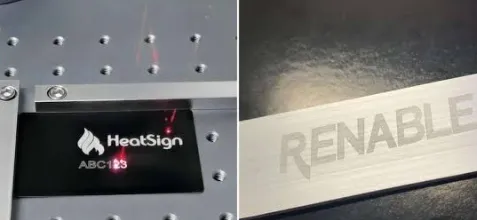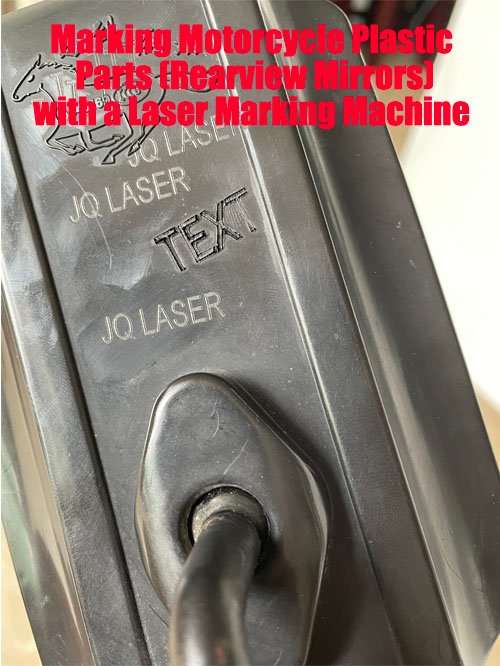
Germany Metal Hardware Manufacturer Fiber Laser Marking Solution Case Study
A German metal hardware manufacturer successfully upgraded its product identification process with JQ Laser fiber laser marking technology. The solution provides permanent, high-speed and high-precision marking for stainless steel, aluminum and industrial hardware components.
Get Free Laser Test
Table of Contents
Germany Metal Hardware Laser Marking Project
This case study presents a successful cooperation between JQ Laser and a German metal hardware manufacturer requiring a reliable industrial laser marking solution.The customer produces precision metal components for industrial equipment, machinery manufacturers, and professional engineering applications.With increasing requirements for product traceability, quality management, and permanent identification, the company needed to replace traditional marking methods with a modern laser engraving system.
| Project Information | Details |
|---|---|
| Customer Location | Germany |
| Industry | Metal Hardware Manufacturing |
| Materials | Stainless Steel, Aluminum, Carbon Steel, Metal Components |
| Application | Logo Marking, Serial Number Marking, QR Code Marking, Product Identification |
| Laser Equipment | Fiber Laser Marking Machine |
Customer Background
The customer is an experienced metal hardware manufacturer based in Germany, specializing in the production of precision industrial components and customized hardware products.The company supplies high-quality metal parts to various industrial sectors, where product reliability, accuracy, and traceability are essential.
Their manufacturing processes involve different types of metal materials, including stainless steel, aluminum, and carbon steel.These materials require permanent identification solutions that can withstand mechanical friction, environmental exposure, and long-term industrial usage.
Before implementing laser marking technology, the customer used traditional identification methods for some product lines.However, with increasing production requirements and stricter quality standards, the existing marking process could no longer provide the required efficiency and consistency.
Main Product Categories
- Industrial metal hardware components
- Precision mechanical parts
- Customized metal accessories
- Machine equipment components
- Stainless steel hardware products
- Aluminum industrial parts
Metal Hardware Manufacturing Requirements
Modern metal hardware manufacturers require more than basic product marking.They need a complete identification solution that supports production management, quality control, and product traceability.
Permanent Identification
Metal hardware products often operate in demanding industrial environments.The marking must remain readable after long-term usage, transportation, and mechanical contact.
High Precision Marking
Many hardware components contain limited marking areas.The customer required accurate marking for small characters, serial numbers, logos, and QR codes.
Production Efficiency
The marking process needed to match the customer’s production speed without reducing manufacturing efficiency.
Low Operating Cost
The customer wanted to reduce consumable costs and maintenance requirements compared with traditional printing systems.
Customer Laser Marking Requirements
After communication with the customer, JQ Laser engineers analyzed the production environment and identified the following requirements:
- Permanent marking on metal surfaces
- Clear and readable serial numbers
- High-quality logo engraving
- QR code and barcode marking capability
- Stable operation for continuous production
- Easy operation and low maintenance
- Compatibility with different metal materials
Based on these requirements, JQ Laser designed a customized fiber laser marking solution specifically optimized for industrial metal hardware production.
Project Challenges
Before selecting JQ Laser as the laser marking solution provider, the German metal hardware manufacturer faced several production challenges.Although the company already had a mature manufacturing process, the existing identification methods could not meet the increasing requirements of modern industrial production.The customer needed a marking technology that could provide higher durability, better accuracy, and improved production efficiency.
Challenge 01: Insufficient Marking Durability
Traditional labels and printing methods could become damaged during transportation, assembly, and long-term industrial usage.The customer required permanent identification that could remain readable throughout the entire product lifecycle.
Challenge 02: High Precision Requirements
Many hardware components had limited surface areas.The customer needed accurate marking for small characters, product codes, logos, and QR codes without damaging the component surface.
Challenge 03: Production Efficiency
The previous marking process required additional manual operations.This affected production speed and increased labor costs.The customer required a faster and more automated marking solution.
Challenge 04: Different Metal Materials
The customer processed multiple metal materials, including stainless steel, aluminum, and carbon steel.The marking system needed to achieve excellent results on different surfaces.
Problems With Traditional Marking Methods
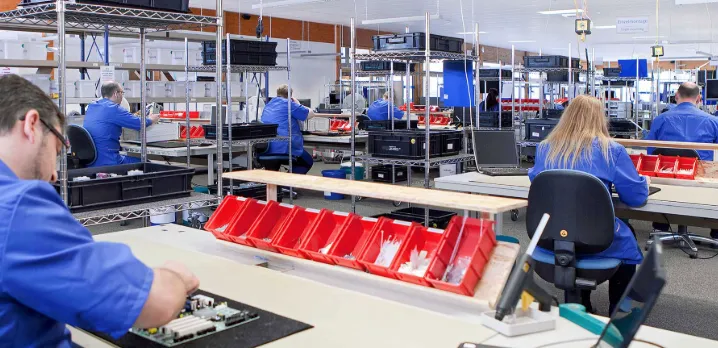
Before introducing fiber laser marking technology, the customer used conventional identification methods for some products.However, these methods created several limitations in modern manufacturing environments.
1. Limited Durability
Printed labels and ink-based marks could not always withstand harsh industrial conditions.Factors such as:
- Mechanical friction
- Oil contamination
- Temperature changes
- Outdoor exposure
- Long-term handling
could affect the readability and reliability of product information.
2. Higher Operating Costs
Traditional printing solutions require continuous replacement of consumables, including:
- Ink cartridges
- Printing materials
- Maintenance components
These additional costs increased the total production expense over time.
3. Inconsistent Marking Quality
Manual or traditional marking methods may produce inconsistent results.Different operators, different production conditions, and different materials can affect marking quality.
4. Difficult Product Traceability
Modern manufacturing requires accurate tracking of every component.The customer needed a reliable solution for:
- Serial number identification
- QR code tracking
- Production management
- Quality control
JQ Laser Customized Fiber Laser Marking Solution
After analyzing the customer’s production requirements, JQ Laser engineers recommended a fiber laser marking system designed specifically for metal hardware applications.The solution focused on achieving:
- Permanent metal marking
- High-speed processing
- Excellent marking clarity
- Stable industrial operation
- Low maintenance requirements
The selected fiber laser marking machine provided an ideal balance between marking quality, processing speed, and operating cost.
Solution Highlights
- Professional fiber laser source
- High-speed galvanometer scanning system
- Precision focusing technology
- Flexible marking software
- Support for various metal materials
- Expandable rotary marking options
Why Fiber Laser Is The Best Choice For Metal Hardware
Fiber laser marking technology has become one of the most widely used solutions for industrial metal identification.It provides excellent performance for hardware manufacturers requiring high-quality permanent marks.
High Compatibility With Metals
Fiber laser systems are suitable for:
- Stainless Steel
- Aluminum
- Copper
- Brass
- Titanium
- Carbon Steel
This makes fiber laser technology ideal for diversified metal hardware production.
Permanent Marking Quality
Laser marking creates marks directly on the material surface.The result is:
- Long-lasting identification
- Excellent resistance
- Clear readability
- Professional appearance
Low Maintenance Operation
Compared with traditional printing systems, fiber laser marking requires no ink, no chemicals, and minimal maintenance.This helps manufacturers reduce long-term operating costs.
Laser Marking Machine Configuration
Based on the customer’s application, JQ Laser provided a fiber laser marking machine configured for industrial metal component marking.
| Configuration | Specification |
|---|---|
| Laser Type | Fiber Laser Marking System |
| Laser Power | 30W Fiber Laser |
| Marking Materials | Stainless Steel, Aluminum, Carbon Steel |
| Marking Contents | Logo, Serial Number, QR Code, Barcode |
| Operation | Computer Controlled Laser Marking Software |
Professional Material Testing Before Production
Before final installation, JQ Laser engineers performed material testing to determine the optimal marking parameters.Different metals require different laser settings to achieve the best marking results.
Testing Process Included:
- Laser power adjustment
- Marking speed optimization
- Frequency parameter testing
- Surface quality evaluation
- Marking depth verification
- Contrast improvement testing
Through professional testing, the final solution achieved excellent marking quality for the customer’s metal hardware products.
Metal Hardware Laser Marking Applications
The Germany metal hardware manufacturer produces a wide range of industrial components that require permanent identification.After implementing JQ Laser fiber laser marking technology, the company achieved stable and high-quality marking for different types of metal products.
Stainless Steel Parts Marking
Stainless steel components require durable and corrosion-resistant identification.Fiber laser marking provides:
- Clear serial numbers
- Permanent logos
- High contrast marking
- Excellent surface quality
Aluminum Component Marking
Aluminum products often require lightweight and precise identification.The fiber laser system creates:
- Fine characters
- Readable QR codes
- Product tracking information
Industrial Hardware Engraving
For industrial hardware parts, laser engraving ensures reliable identification throughout the product lifecycle.
Laser Marking Contents For Product Identification
Modern manufacturers require more than simple logos.The customer uses laser marking technology for complete product identification and production management.
| Marking Type | Purpose |
|---|---|
| Company Logo | Brand identification and product authenticity |
| Serial Number | Product tracking and quality management |
| QR Code | Digital information management and traceability |
| Model Number | Product classification and identification |
| Date Code | Production batch management |
Integration Into The Manufacturing Process
A successful industrial laser marking solution requires not only excellent equipment, but also smooth integration into the customer’s workflow.JQ Laser engineers provided complete technical support to ensure efficient operation.
Step 1: Production Analysis
The engineering team analyzed:
- Product dimensions
- Material characteristics
- Production volume
- Marking position requirements
- Operator workflow
Step 2: Equipment Installation
The fiber laser marking machine was installed according to the customer’s production environment.The installation process included:
- Machine setup
- Software configuration
- Parameter adjustment
- Marking test verification
Step 3: Operator Training
JQ Laser provided operation guidance to ensure the customer team could efficiently use the laser marking system.Training included:
- Basic machine operation
- Marking software usage
- Parameter adjustment
- Daily maintenance procedures
Results After Implementing Fiber Laser Marking
After replacing traditional marking methods with JQ Laser fiber laser marking technology, the customer achieved significant improvements in production quality and efficiency.
Permanent Marking Quality
Products received durable laser markings that remain readable under industrial conditions.
Improved Production Efficiency
The faster marking process reduced manual operations and improved production workflow.
Better Product Traceability
Serial numbers and QR codes improved quality management and product tracking.
Reduced Operating Cost
No ink, no consumables, and lower maintenance requirements helped reduce long-term expenses.
Business Benefits Of The Laser Marking Solution
The investment in fiber laser marking technology provided long-term value beyond simple product marking.
1. Enhanced Product Quality
Professional laser marking improved the appearance and reliability of finished hardware products.Clear identification helps customers recognize product information quickly.
2. Improved Manufacturing Management
With permanent serial numbers and QR codes, the company improved internal management, quality inspection, and production tracking.
3. Stronger Customer Confidence
Professional identification solutions help manufacturers demonstrate higher quality standards to global customers.
4. Long-Term Cost Saving
Compared with traditional printing systems, fiber laser marking reduces operating costs because it does not require ink, labels, or frequent replacement materials.
Fiber Laser Marking Compared With Traditional Marking
| Item | Fiber Laser Marking | Traditional Printing |
|---|---|---|
| Durability | Permanent marking | May fade or damage |
| Consumables | No ink required | Requires consumables |
| Maintenance | Low maintenance | Higher maintenance |
| Precision | High precision | Limited accuracy |
| Environmental Impact | Clean processing | Chemical materials required |
Customer Feedback
“JQ Laser provided a reliable fiber laser marking solution for our metal hardware production.The marking quality is excellent, the operation is stable, and the system significantly improved our product identification process.”
— Germany Metal Hardware Manufacturer
Related Laser Marking Applications
The Germany metal hardware laser marking project is highly related to multiple industrial applications.JQ Laser provides customized marking solutions for different industries, materials, and production requirements.Explore more industrial laser marking applications:
Hardware Industry Laser Marking
Permanent identification solutions for tools, metal components, and industrial hardware products.
Automotive Parts Marking
High precision laser marking for automotive metal components, VIN codes, and traceability information.
Aerospace Component Marking
Reliable marking solutions for aerospace parts requiring strict identification standards.
Stainless Steel Laser Marking
Professional laser engraving solutions for stainless steel surfaces.
Recommended Laser Marking Machines
Based on this Germany metal hardware project, the following laser marking machines are commonly recommended for similar applications.
Fiber Laser Marking Machine
The ideal solution for stainless steel, aluminum, brass, copper, and industrial metal components.
MOPA Laser Marking Machine
Suitable for advanced metal marking applications including color marking on stainless steel and high contrast engraving.
Portable Laser Marking Machine
Flexible marking solution for large metal parts, on-site engraving, and industrial maintenance.
Germany Metal Hardware Laser Marking FAQ
What laser marking machine is suitable for metal hardware products?
Fiber laser marking machines are widely used for metal hardware applications because they provide high precision, permanent marking, and excellent compatibility with metals such as stainless steel, aluminum, brass, and carbon steel.
Can fiber laser marking machines engrave stainless steel parts?
Yes.Fiber laser marking machines are one of the best solutions for stainless steel engraving.They can create clear logos, serial numbers, QR codes, and deep engraving marks with excellent durability.
What information can be marked on metal hardware components?
Common laser marking contents include:
- Company logos
- Serial numbers
- QR codes
- Barcodes
- Model numbers
- Production dates
Why do manufacturers choose laser marking instead of printing?
Laser marking provides permanent identification without ink, labels, or chemical consumables.It offers better durability, lower maintenance costs, and higher production reliability.
Can laser marking systems be integrated into production lines?
Yes.Industrial fiber laser marking systems can be integrated with automation equipment, conveyor systems, robot arms, and customized fixtures.
What materials can fiber laser marking machines process?
Fiber laser marking machines are suitable for many materials, including:
- Stainless steel
- Aluminum
- Copper
- Brass
- Titanium
- Carbon steel
How long does a fiber laser marking machine operate?
A quality fiber laser source can provide long service life with stable performance and low maintenance requirements, making it suitable for continuous industrial production.
Can JQ Laser test customer samples before purchase?
Yes.Customers can send samples to JQ Laser.Our engineers can test different materials and recommend suitable laser parameters before equipment selection.
Need A Custom Metal Hardware Laser Marking Solution?
Whether you manufacture stainless steel parts, aluminum components, industrial hardware, or customized metal products,JQ Laser can provide professional laser testing, equipment recommendations, and complete marking solutions.
Contact JQ Laser Today